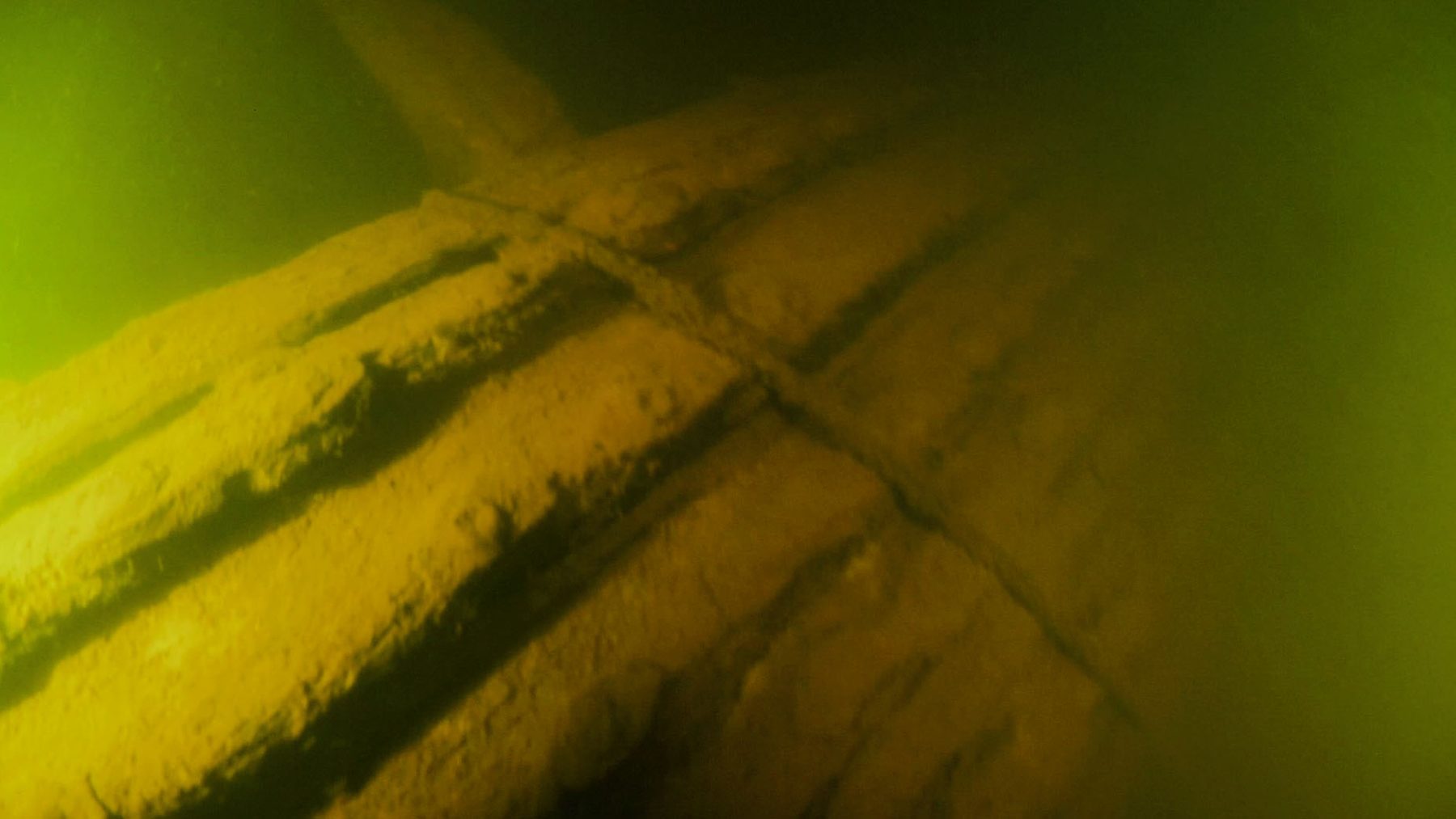
Marine archaeologists from Vrak, Sweden’s Museum of Wrecks, have filmed Kantinen, a barge that sank in Lake Hugn in 1808. It went down on December 1 of that year with five heavy cannons on board. The museum says these were the first archaeological dives on the wreck in several decades.
The barge lies about 33 feet (10 meters) down in Eda municipality, in western Sweden’s Värmland region. Divers found the hull but not the guns. Vrak believes they may lie buried, and well preserved, in the mud.
A barge 46 feet long
Jim Hansson and Marco Ali, both marine archaeologists at Vrak, carried out the dives. Visibility was only about 3 feet (1 meter) in water the museum called pitch black. Even so, they traced the outline of the hull and checked it inside and out.
By the museum’s figures, Kantinen is roughly 46 feet (14 meters) long. It capsized as it sank. Its port side is now pressed almost entirely into the lake sediment.
During the dives the team located and measured the wreck and filmed the whole barge in high-definition video. Vrak hopes to use that footage to build a 3D model. Divers themselves can only see a few feet of it at a time.
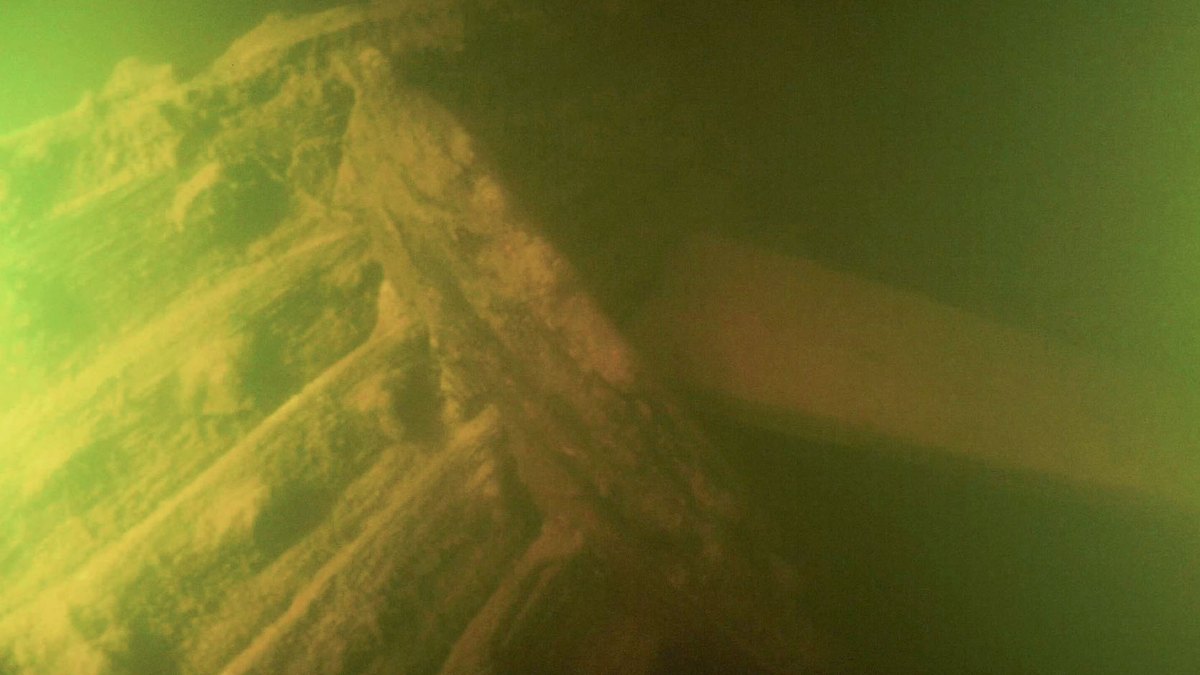
Photos released by the museum show a clinker-built hull, where each plank overlaps the one below. Frames are visible on the starboard side. Inside the hull, the camera picked up more frames and what may be a deck plank or a thwart, a crosswise brace.
Five cannons for Eda skans
The museum calls Kantinen a crown barge, meaning a vessel owned by the Swedish state. On its last trip it was bound for Eda skans, a fort near the Norwegian border. The cannons and their ammunition had been shipped from Gothenburg.
According to Vrak, Sweden was badly exposed at the time after the loss of Finland. It feared an attack from Denmark-Norway. Eda skans was being reinforced against that threat from the west, and the barge was part of the buildup.
Eleven people were on board when Kantinen went down. The museum says nothing is known of what became of them.
Recreational divers found it first
Sport divers came across the wreck in the 1970s, and archaeologists studied it from 1988 to 1990. Since then a diving ban has protected the site.
To go back, Vrak needed permission from the County Administrative Board, the regional state authority. The goal was to map the remains. The team also wanted to see how the wreck had fared since the last dives in the 1990s.
For the museum, the project also shows heritage that is much harder to visit than ruins on land. Sweden has other hidden wrecks, such as the centuries-old ships that construction workers uncovered. Inland waterways once carried iron, copper, grain and timber, Vrak notes.
In remarks reproduced on the museum’s website, Hansson said marine archaeology lags far behind archaeology on land. Studying history only on land, he argued, misses part of the picture. In his view, history does not stop at the shoreline.
A defense minister in the water
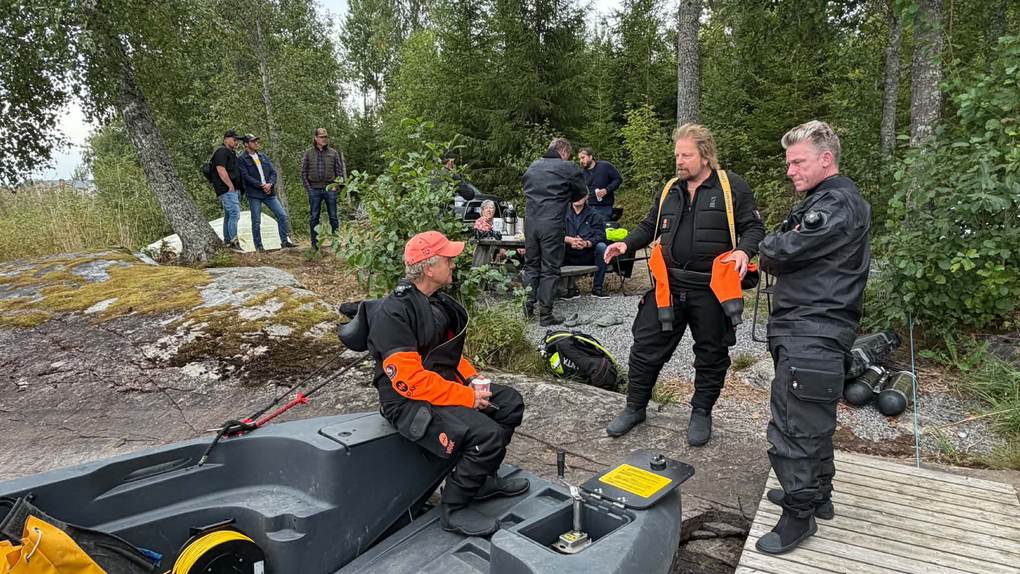
Sweden’s defense minister, Pål Jonson, joined the dives with his own team, according to Vrak. He did it in the middle of the election campaign. Jonson is an experienced recreational diver.
He also has a personal link to the lake, because his grandmother lived nearby. She told him about the wreck when he was a child. Odd Johansen, Vrak’s museum director, was there too.
No salvage planned at Hugn
No salvage is planned, Vrak wrote in its September announcement. In the cold, dark water of Hugn the wreck can go on being preserved on site, it said, while the new photos and video open it up to people who will never dive there.
That fits UNESCO’s 2001 underwater heritage principles. They say preservation in place “shall be considered as a first option before intrusive actions.” Objects may be raised if that makes a significant contribution to protecting or understanding a site, as with the finds from a 1680 shipwreck traced through a handwritten note.
Researchers at the University of Gothenburg have studied how wrecks decay in the Baltic and in fresh water. Marine borers eat through wood fast in salty seas, their research page says. In fresh water and sediment, they write, the processes are “much slower and quite different.”
Even there, so-called erosion bacteria slowly break down waterlogged wood where oxygen is scarce. Whole streets survive under Kyrgyzstan’s Lake Issyk-Kul, where archaeologists mapped the ruins of a drowned town in 3 to 13 feet of water. A wooden hull, though, can hold its shape after its timber has gone soft.
Eleven crew left no record
The museum’s announcement does not say why Kantinen sank on December 1, 1808. The five heavy cannons are an obvious suspect, but Vrak never names them as the cause.
Nobody saw the cannons or the cannonballs during the latest dives either. Their good condition is a judgment by the archaeologists, not an observation. Vrak has also not published a detailed comparison with the records from 1988 to 1990.
The 3D model is still only a goal, and the fate of the 11 people aboard is unknown. Vrak calls the dives a first step toward understanding Kantinen better.
The museum’s announcement, with underwater photos by Jim Hansson under a CC BY license, was published September 10, 2026, on Vrak’s website.
Photo: Jim Hansson/Vrak/SMMTF, CC BY