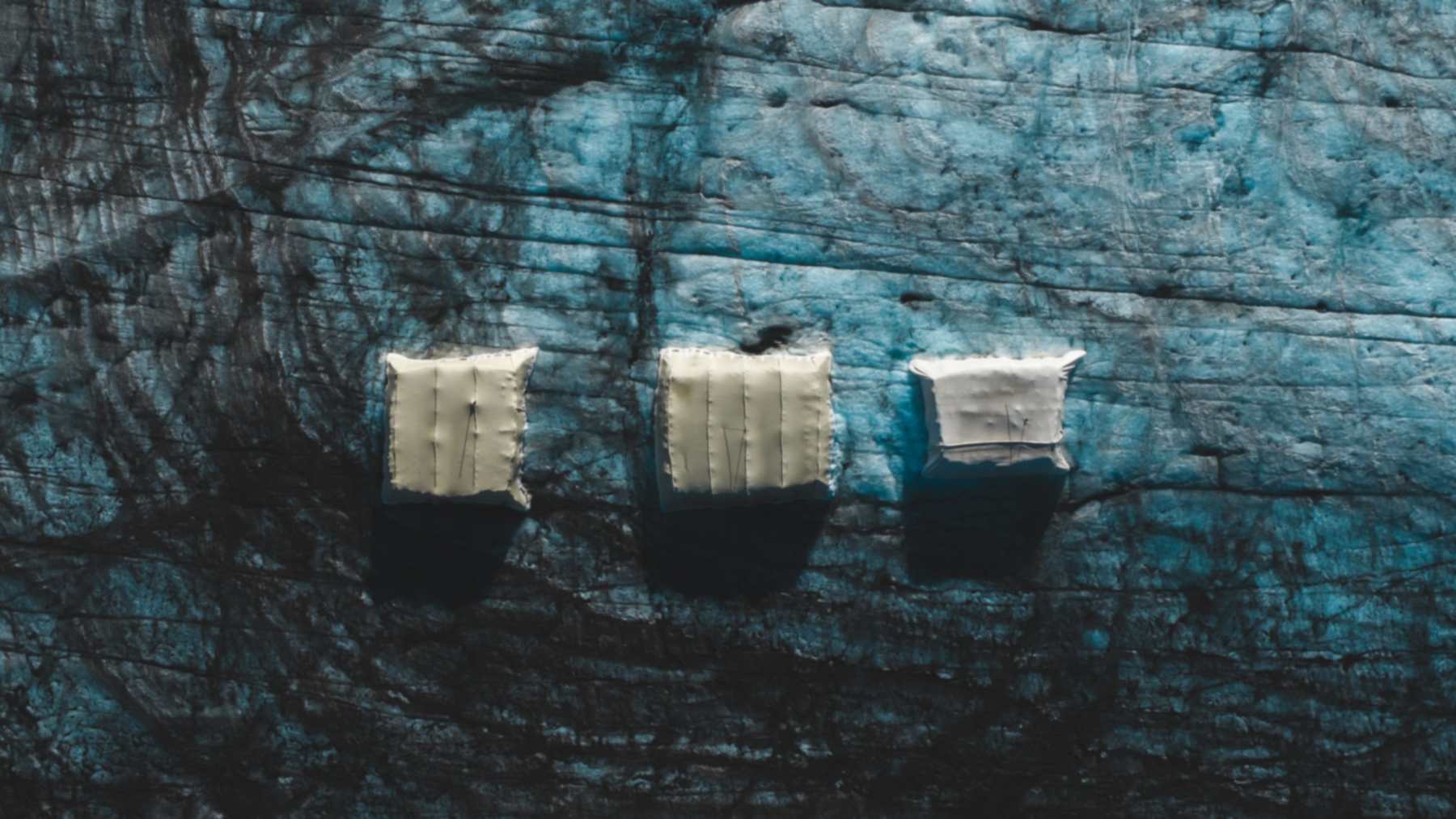
Two blankets made of sheep’s wool spent the summer of 2026 on the ice at Glacier 3000, a ski area above Les Diablerets in Switzerland. Crews laid them out on June 22, beside a regular synthetic cover. After readings through September, the Summit Foundation reports that both wool covers gave “protection comparable to that of the conventional geotextile cover.”
It is an early result, though. The foundation’s project page says plainly that “the data collected still needs to be analysed,” so no one has yet put a number on the melt the wool held off.
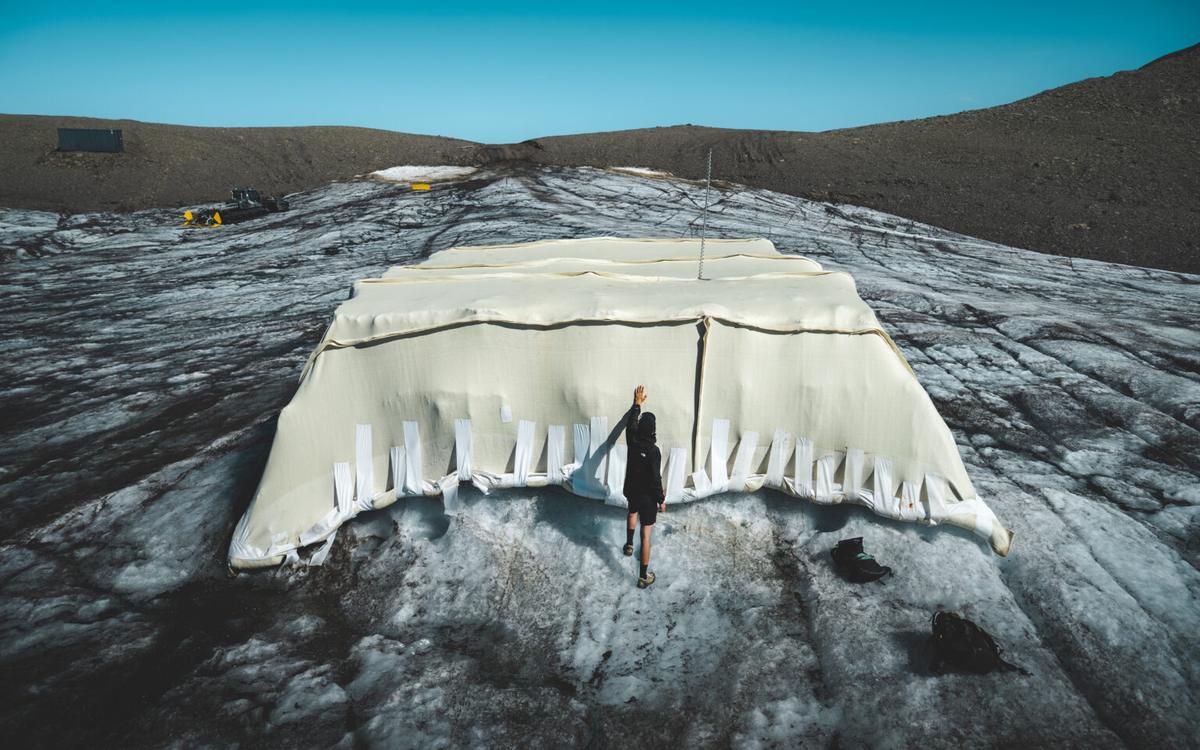
Two prototypes at Glacier 3000
The project, called Keep It Wool, grew out of a partnership between the foundation and the Interdisciplinary Centre for Mountain Research at the University of Lausanne. In 2025 the idea went to four master’s students: Maxime Galley, Elliot Gaffiot, Jose Bastidas and Léonard Duloube.
For months, they hunted for local wool, a manufacturer and a test site. The Swiss firm Fisolan AG made the two prototypes. Each one measured about 33 by 33 feet (10 by 10 meters), according to an official project statement released through CleantechAlps on September 11.
The two blankets came in different weights, so one had about 12 ounces of wool per square yard (400 grams per square meter), and the other about 22 ounces (750 grams). Right next to them lay a geotextile cover of the same size, for comparison.
Geotextiles are the polyester or polypropylene fabrics you can spot on some Swiss glaciers in summer. To compare the three, the team drove stakes into the middle of each patch. Every two weeks, they checked how far the surface had dropped.
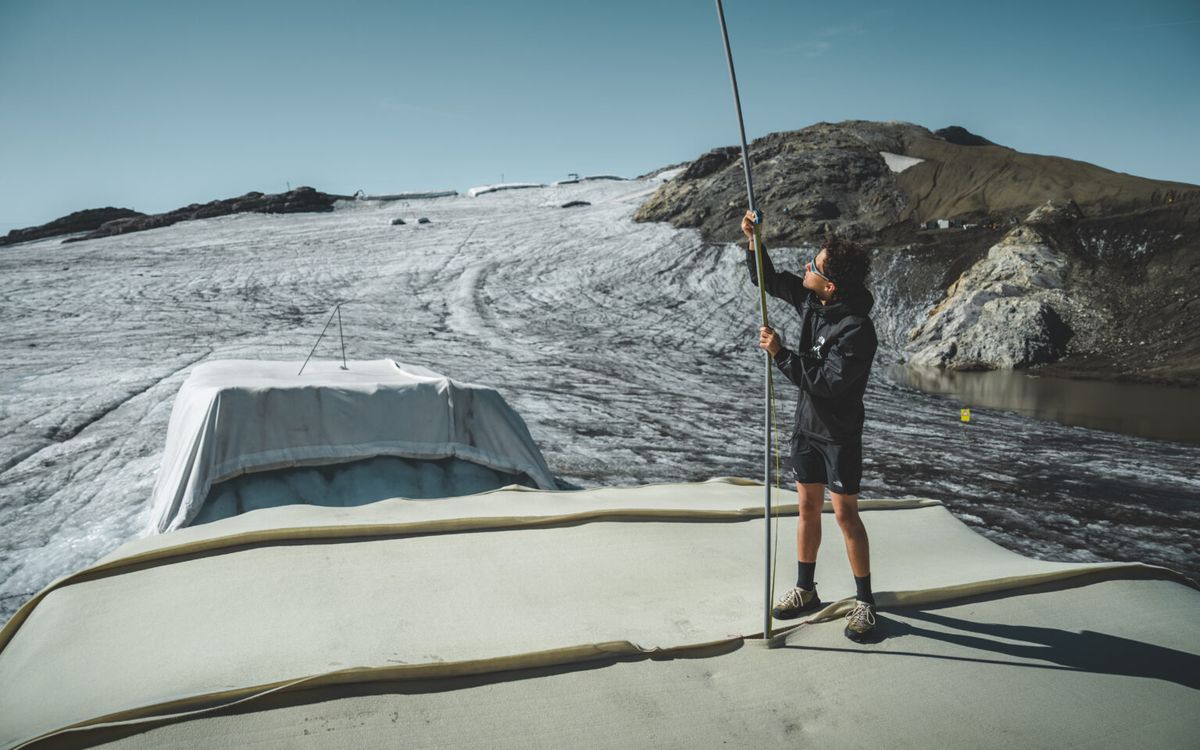
Even the weights holding everything down had a past life. Old malt bags, altered by a tailor in Vevey and filled with gravel, held the covers in place.
Plastic fibers in the meltwater
Ski areas cover glacier patches for a simple reason. The sheets reflect sunlight and limit heat exchange with the ice. The CleantechAlps statement adds that studies of geotextiles have found they can cut melting beneath them by 50 to 70 percent.
China has tested giant blankets on its own glaciers too. Synthetic sheets, however, leave something behind. Wind, rain and wear loosen fibers, and meltwater can carry them downstream into the water cycle and the food chain, the foundation warns.
Birgit Sattler of the University of Innsbruck and her colleagues raised the same alarm at the European Geosciences Union meeting in 2025. In their conference abstract, they reported fiber lengths of up to 3 kilometers (1.9 miles) per square meter of ice. Downstream, they found the fibers stuck to or inside small invertebrates.
The same abstract also offers a hint for natural fibers such as wool. In an alpine test, cellulose-based covers performed comparably to polypropylene at reducing ice melt. They did so without fiber release or chemical leaching, the authors wrote.
Swiss wool with no buyer
Wool was picked for practical reasons as much as green ones. Swiss sheep are raised mostly for meat, milk and landscape upkeep. The foundation cites estimates that up to 70 percent of Swiss wool is destroyed, burned or composted because it has no market.
The fiber also insulates, and farmers already spread it in olive grove soils facing drought. On a glacier, a wool blanket slows the heat moving from sun and warm air into the ice.
“Wool seemed particularly interesting to us: it is a local, natural resource that is currently largely undervalued,” said Laurent Thurnheer, director and founder of the Summit Foundation. Bastidas said the project let the students use their training on “a very concrete mountain challenge.”
About 0.02 percent of the ice
Nobody involved sells the wool as a way to save the Alps. Swiss glaciers have lost nearly 40 percent of their mass in two decades. Close to 1,000 small glaciers have vanished entirely, the foundation notes.
A 2021 study led by glaciologist Matthias Huss measured how much ice the sheets protect. Geotextiles covered about 0.07 square miles (0.18 square kilometers), or 0.02 percent of Swiss glacier area. In the paper in Cold Regions Science and Technology, the authors concluded that saving Alpine glaciers this way is “neither achievable nor affordable.”
By the foundation’s own numbers, the sheets save about 10.6 million cubic feet (300,000 cubic meters) of snow a year. Switzerland loses nearly 35 billion cubic feet (1 billion cubic meters) of ice each year.
Scaling up would cost more than $1.5 billion, the CleantechAlps statement estimates. The real use is local, at places like Glacier 3000, where crews store snow under covers through summer. That practice, called snow farming, helps keep ski seasons alive on shrinking snow.
For the glaciers themselves, the foundation’s conclusion is plain. Cutting greenhouse gas emissions remains the main way to slow their retreat.
Melt figures not yet calculated
With one summer of readings from one glacier, many questions stay open. The project has not said how many inches of ice each cover saved. Nor has it said whether the heavier blanket beat the lighter one.
Nobody knows yet if the blankets will last several seasons. Washing, transport and disposal would also add to their footprint. And no one has measured what wool sheds into meltwater, the same worry that made microplastic pollution a problem for synthetic covers.
GLAMOS glacier researchers Matthias Huss and Mauro Fischer helped design the measurements. Innosuisse, the Swiss innovation agency, funded the work through an innovation cheque. The preliminary results appear on the Summit Foundation’s Keep It Wool page.
Photo: Zimy Da Kid / Summit Foundation