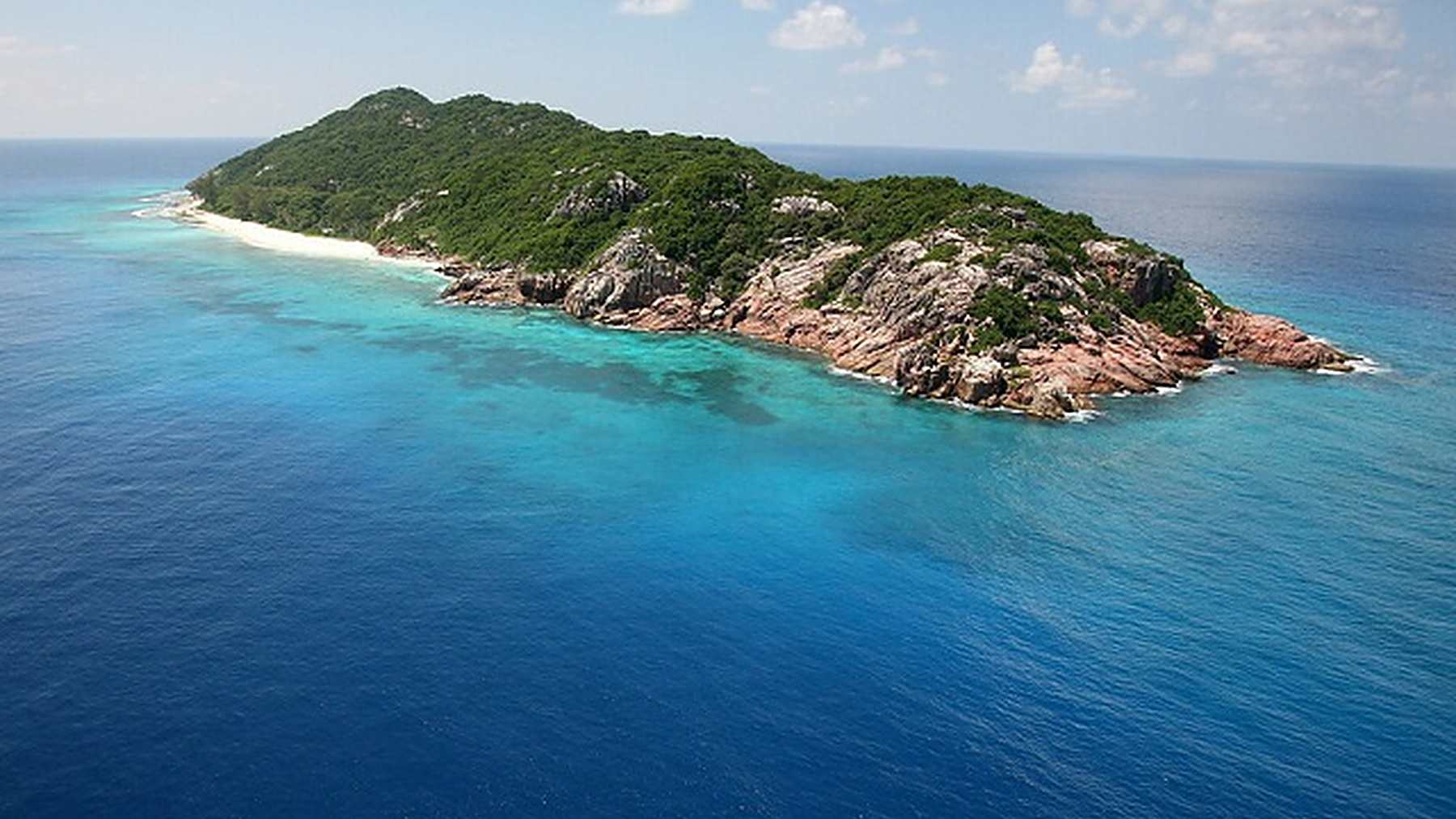
Hunters on Aride Island, a granite speck of 168 acres (68 hectares) in the Seychelles, had shot the last of its feral goats by 1920. No mammal eradication in the western Indian Ocean is recorded earlier, according to a 2016 review.
Aldabra Atoll lies about 730 miles (1,180 kilometers) to the southwest, and there it took 25 years. Its last goat, a collared male known as J8, was shot on August 3, 2012, after the team had left him alive on purpose for months.
A 168-acre island in 1920
Little is written about Aride’s goats. The review, led by James Russell of the University of Auckland, gives 1920 as the eradication date and lists the year the animals arrived as unknown.
A 2019 update on Seychelles restoration by Gérard Rocamora of the University of Seychelles says only that they were shot before 1920. Both papers trace the record to a 1984 survey of the island by Stephen Warman and David Todd.
Neither paper says how long the goats lived on the island or how many were shot, so the length of the hunt on Aride is unknown.
Egg collectors kept working Aride long after the goats were gone. The reserve’s own timeline says up to 150,000 sooty tern eggs a year were taken by 1931. The harvest peaked at 225,000 in 1954.
Christopher Cadbury paid for the island’s purchase as a nature reserve on January 30, 1973. Two years later it became a legal Special Reserve.
Seventy-four attempts on 45 islands
Russell’s team combed the literature and consulted experts to count every mammal eradication in the region. Their open-access paper in Global Ecology and Conservation found 74 attempts on 45 islands. Almost all were in the Seychelles, Mauritius and its dependencies, or the French-run Îles Éparses.
Nine introduced species were targeted, from goats, hares and rabbits to cats, rats and mice. Goat removals were tried on five islands, the largest about 27,500 acres (11,115 hectares). Three in four attempts came after 2000.
Mauritius cleared goats from Round Island between 1976 and 1979 and from Île aux Aigrettes in 1987. Far away in the Pacific, the Galápagos Islands have used snipers and GPS-tagged goats to protect giant tortoises.
Thousands of goats on Aldabra
Goats reached Aldabra before 1878, and within 50 years there were reports of thousands. By 1967 they lived on all four main islands and on the small lagoon islet of Île Esprit.
The Seychelles Islands Foundation (SIF), which manages the UNESCO World Heritage site, began its first control program in 1987. Research then showed goats were changing which plants grew and slowing regrowth. They also cut the shade and forage that Aldabra’s giant tortoises rely on.
In that first season, hunters shot 883 goats, 814 of them on Grande Terre, the largest island. By 1995 only Grande Terre still had goats, an estimated 84.
A 1997 follow-up culled 106 more without finishing the job, and about 250 were shot opportunistically between 2000 and 2005. Island grazers can reshape a place for generations, as Newfoundland found when a few introduced moose multiplied to about 110,000.
By 2006, SIF estimated that 100 to 200 goats were left on eastern Grande Terre.
Collars, hormones and a helicopter
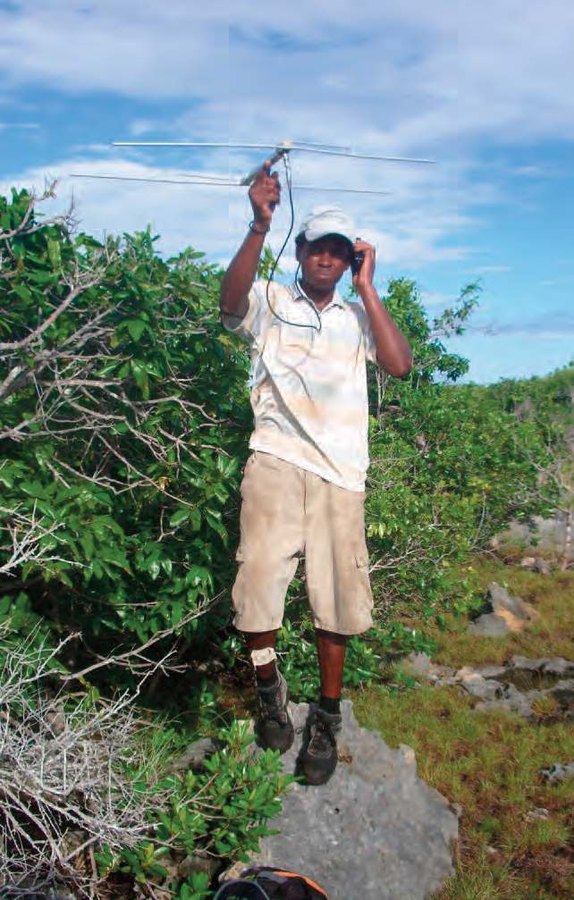
The final push began in August 2007 with a team of four, including two hunters and a veterinarian. It relied on “Judas goats,” animals fitted with radio collars and released to find their own kind, and hunters then followed the signal to the herd.
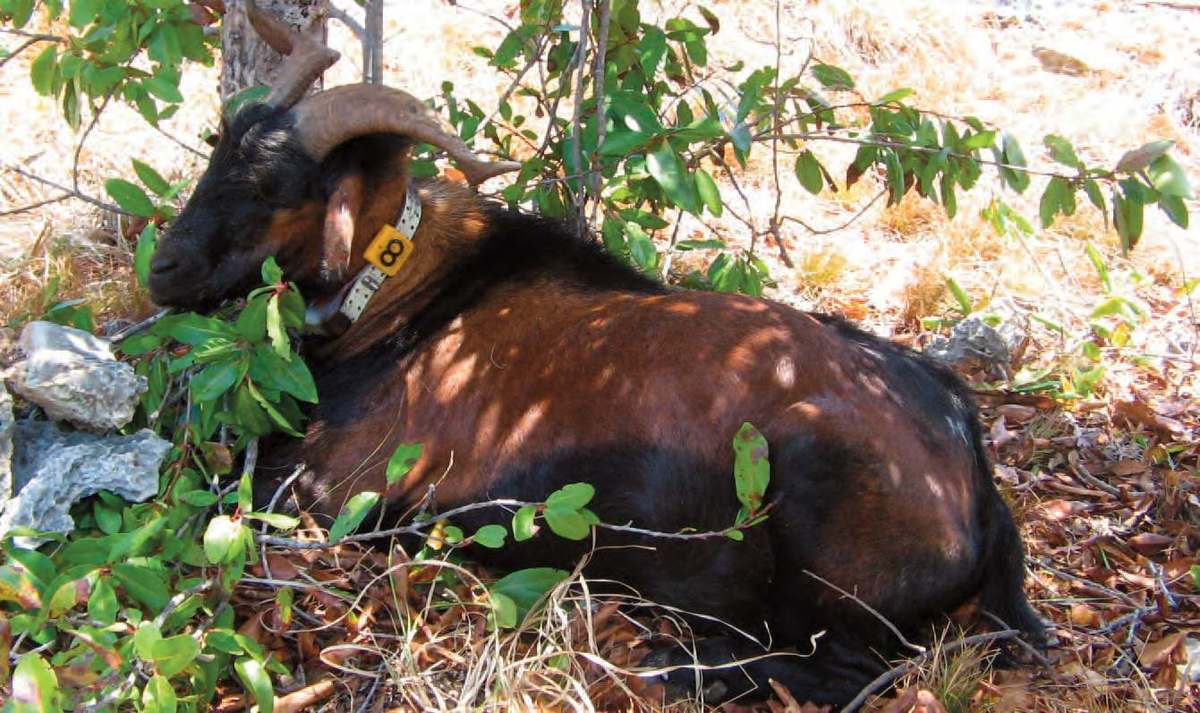
The Judas animals were sterilized, and hormone implants made females come into heat six to 16 times more often. Each collar reached up to about 6 miles (10 kilometers), with batteries meant to last two to three years.
In the first five months the team shot 202 goats. Nearly half were younger than 15 months, a sign that the population had been growing fast.
Monthly tracking trips then went on for more than four years. When the batteries ran down in 2009, four goats had to be darted and re-collared. The last two free-roaming goats were shot in March 2010.
An Indian navy helicopter flew over eastern Grande Terre in December 2011 and photographed four goats, all collared. Early in 2012, two hired consultants walked more than 620 miles (1,000 kilometers) over nine weeks and found no other signs.
J8, the last goat
Three of the remaining Judas goats were shot so their tracks would not confuse the search. The fourth, J8, was spared because he had been the best Judas goat of the lot.
Tracking in June and July 2012 confirmed that he was alone. “On 3rd August 2012, history was made for Aldabra Atoll,” SIF staff wrote in a 2013 account of the campaign, describing the day J8 was shot.
In a 2018 paper, Nancy Bunbury of SIF and her co-authors call feral goats “among the world’s most destructive invasive mammals.” Their study in Biological Invasions counts 2,297 goats culled over 25 years.
Only 227 of them died in the final campaign. That phase cost $185,105, or about $815 per goat, which works out to roughly $12.50 an acre ($31 a hectare).
Proving the plants recovered
Showing whether Aldabra’s plants have bounced back is harder than showing the goats are gone. Among its lessons, the team wrote that “pre-eradication surveys of the vegetation” would have helped in judging the impacts afterward.
Aride’s recovery cannot be credited to the goat hunt alone either, since habitat work and bird transfers came decades later. In 1988, for example, 29 Seychelles warblers were moved there from Cousin Island.
The reserve says it had “no endemic land birds” in 1973 and has five today. Ten seabird species breed there, and Wright’s gardenia, a critically endangered shrub, grows wild only on Aride.
Keeping new invaders out matters as much as removing old ones, as New Zealand has found while searching for safe islands for its kakapo.
The full study was published in Biological Invasions.
Photo: Island Conservation Society