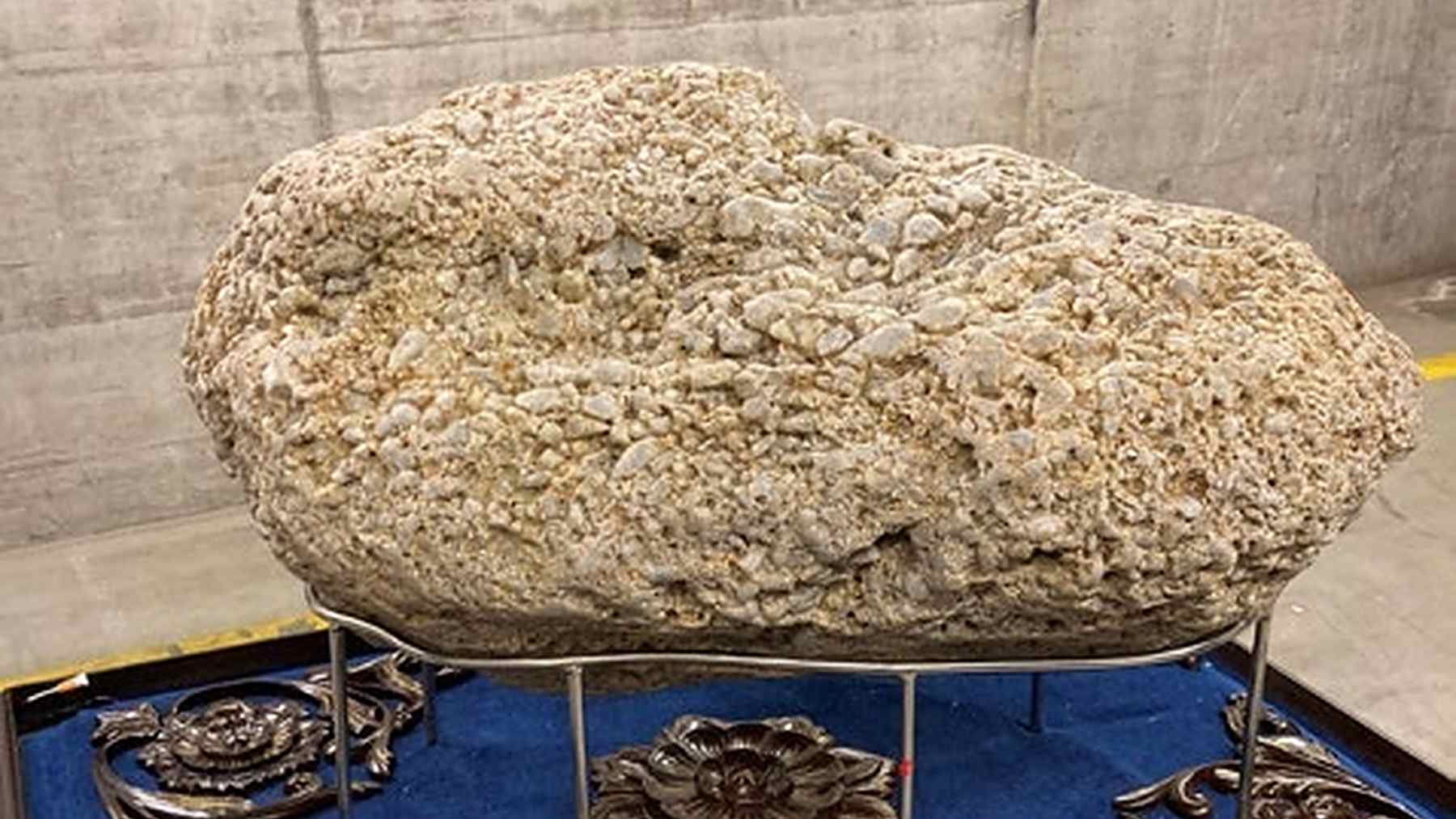
A record sapphire cluster from Sri Lanka weighs 1,109 pounds (503.2 kilograms). It left the country in 2021 with a $10 million value on its paperwork, and its owner exported it again in January 2023 at a declared $10,700.
Sri Lanka’s Committee on Public Enterprises set those two numbers side by side in a report presented to parliament on June 4, 2025. Members heard technical reasons for the gap. They still concluded that “an act of misleading the general public had occurred.”
An owner’s invoice, certified
The National Gem and Jewellery Authority certified the stone on October 27, 2021, according to the committee. A director there worked from an invoice prepared by the owner, which valued the rough cluster at $10 million.
Dulip Jayawardena, a former gemologist and appraiser at the authority, gave the committee his account. The figure served as insurance cover for a temporary export. He matched the exporter’s number because the piece looked rare enough for a Guinness title.
Press reports in 2021 floated a far bigger estimate of $100 million. Neither figure appears as a completed sale in the official documents, and collectors watching a rare gold nugget go to auction know the buyer sets the final price.
443 days in Switzerland
Testing at the Gubelin laboratory kept the cluster abroad for 443 days, far past the 150-day limit for stones sent out of the country. It came home on January 13, 2023, still unsold.
Late returns count as sales under the authority’s rules, with a fine of 1 percent of the value. For this stone that meant $100,000. A board decision in April 2023 waived the charges, on the grounds that fees of about 30 million rupees could sink the business.
Only 13 days after its return, the owner shipped the stone out again at $10,700. That is roughly one-tenth of 1 percent of the first figure. The committee has asked officials to prevent a repeat.
From backyard well to alluvial mine
Early coverage described workers digging a well behind a house and spotting odd stones. Specialists who examined the material later gave a different setting.
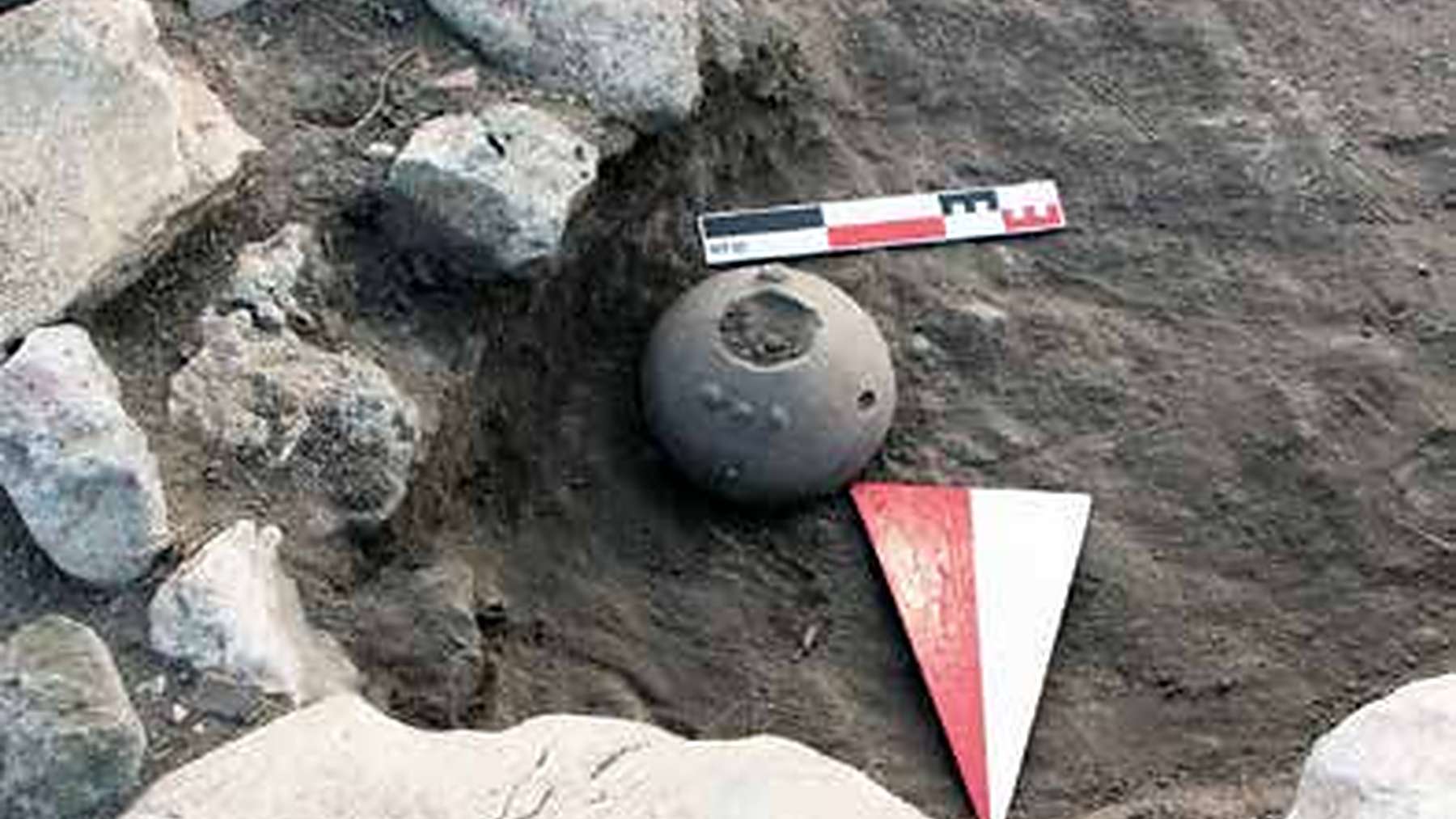
Gamini Zoysa and colleagues from Thailand reported on the boulder at a 2021 gemmology conference. They said it came from 49 to 59 feet (15 to 18 meters) down in an alluvial gem mine. The site lies near Kahawatta, about 17 miles (28 kilometers) southeast of Ratnapura.
Alluvial deposits hold crystals that water has carried away from their source rock. Hard minerals often survive that trip, as zircon crystals drilled from the seafloor around Antarctica also show.
A forklift scale in Zurich
Guinness required an independent surveyor and two witnesses for the title. Gemologist Lore Kiefert took the job in Zurich, with owner Ashan Pavithra Gamage assisting remotely.
Her forklift scale read 1,124 pounds (510 kilograms) for the wrapped piece. The wrapping accounted for 15 pounds (6.8 kilograms) of that. Guinness lists the result as 503.2 kilograms, measured on February 11, 2022.
Writing in The Journal of Gemmology, Kiefert called her number “somewhat different from the 510 kg that is commonly reported.” In gem terms the mass equals about 2.5 million carats. Carats measure weight and say nothing about price.
Meter sticks and a bubble level gave dimensions of about 40 by 31 by 20 inches. The white to bluish-gray crystals reach roughly 4 inches long, and most let little light through.
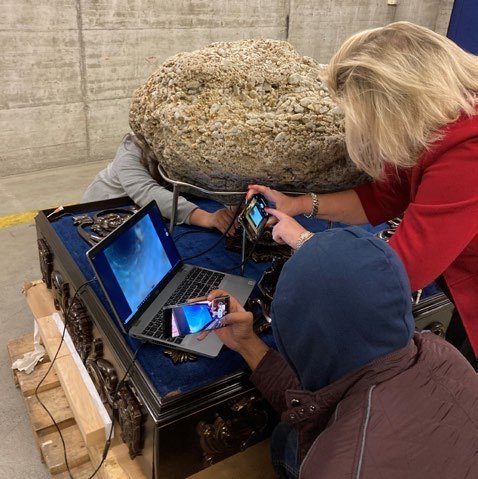
Kiefert also checked whether anyone had assembled the block. Her UV lamp showed no glue along the crystal boundaries. An endoscope sent through a hole drilled in the base found sapphire crystals all the way to the center.
Rutile needles and a 40-carat star
Zoysa’s team analyzed two samples and judged the boulder “of rather poor gem quality.” The untreated sample looked milky and very light grayish blue. A heated piece turned medium blue.
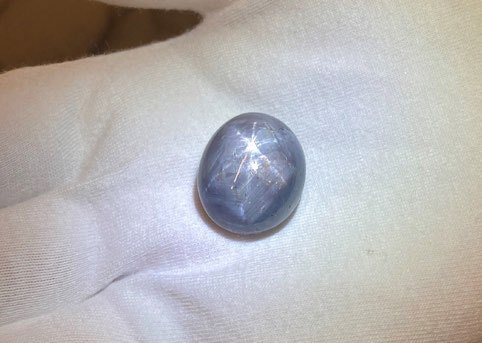
Dense needles of rutile, a titanium mineral, cross inside the crystals at angles near 60 and 120 degrees. Those needles produce asterism, the star of light seen when a crystal is cut into a smooth dome.
Kiefert reports that one crystal from the cluster became an attractive star sapphire of about 40 carats. The Gemological Institute of America says color has the greatest influence on a sapphire’s value, and it lists grayish tones among the less valuable blues.
That debate over size and worth has also followed an 11,000-carat ruby find in Myanmar. Weight draws attention, while color and clarity decide what cutters can sell.
Its origin remains a guess
Kiefert wrote that “only speculations can be made” about how the aggregate formed. One eroded formation could explain its uniform look. Discarded low-grade sapphires may also have cemented together over centuries.
Zoysa’s group found signs of a probable carbonate matrix, and its inclusions could not pin down a geological origin. The two gemological accounts also name different localities, Kahawatta and Neelagama. None of the official documents records a sale or a current market price.
Photo: L. Kiefert / The Journal of Gemmology