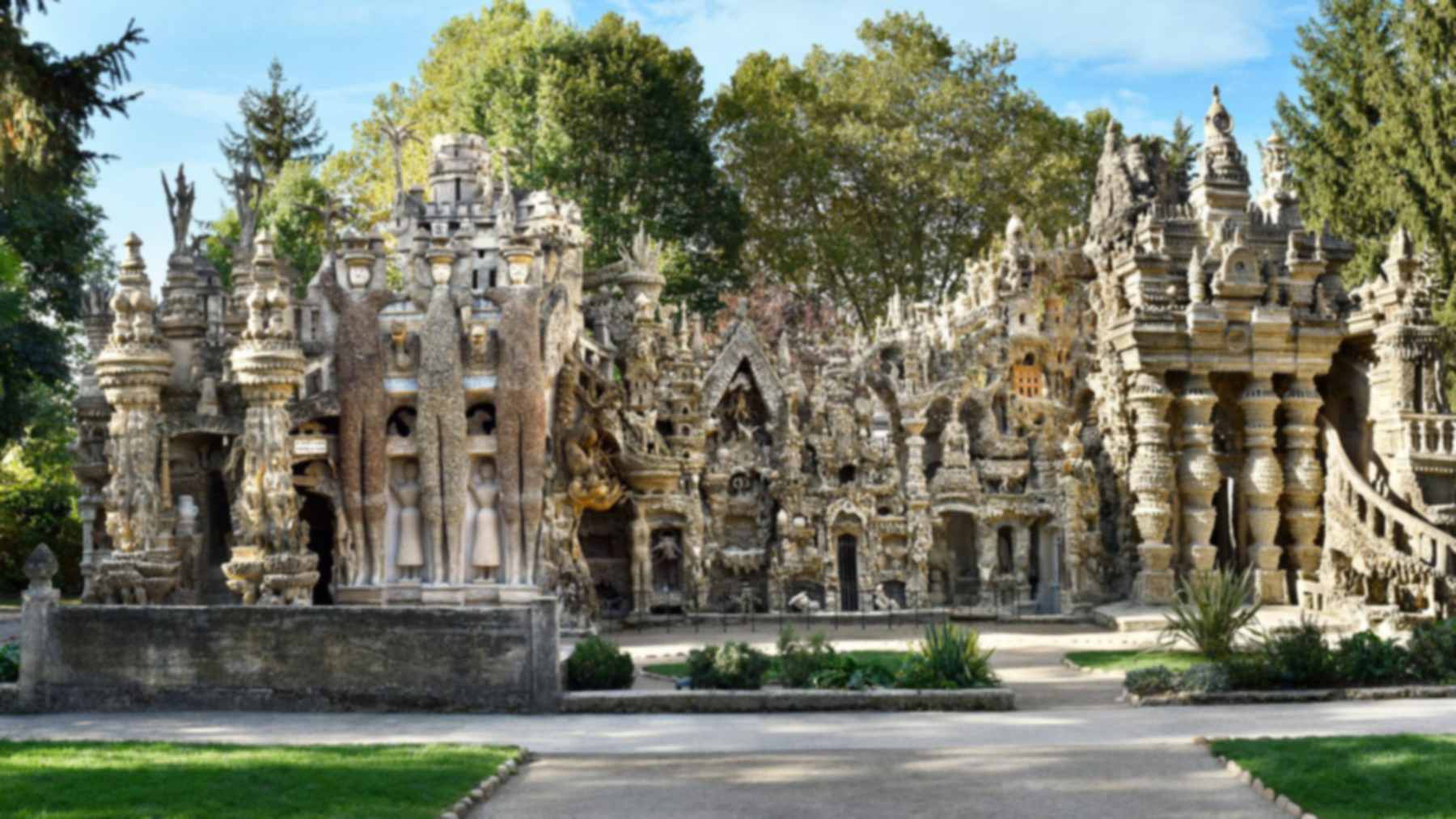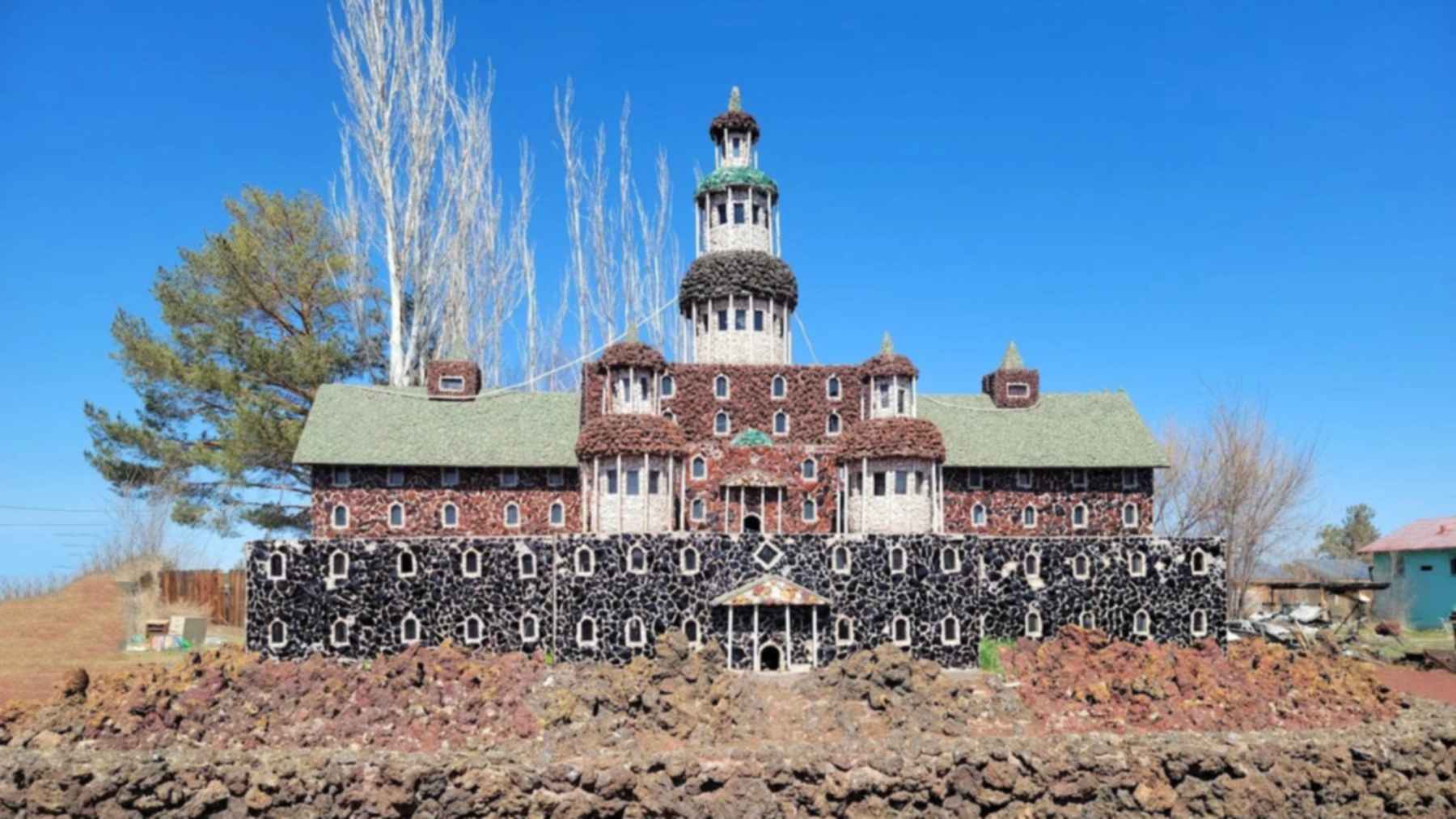
Rasmus Petersen, a 52-year-old Oregon farmer, began building miniature castles from stone in the winter of 1935-36. He kept going until his death on August 3, 1952. The result covers about four acres (1.6 hectares) between Bend and Redmond.
By the early 1950s the Petersen Rock Garden was drawing 120,000 visitors a year, according to the nonprofit that runs it today. Petersen never charged admission and relied on donations. That detail comes from the site’s National Register of Historic Places nomination.
From alfalfa to agate
Born on July 21, 1883, on the Danish island of Funen, Petersen left for the United States in March 1901. He spent four years at a Danish folk school in Nysted, Nebraska. In 1906 he took up an 80-acre (32-hectare) homestead in central Oregon.
Over three decades that claim grew into an irrigated farm of about 256 acres (104 hectares). He raised hay, grain, potatoes and livestock near the Deschutes River, where steelhead still return from the Pacific. A 1915 local survey credited him with 200 tons of alfalfa from 85 acres (34 hectares).
The stonework started as something to do when the fields sat idle. The garden’s official history calls it a winter pastime. It says he worked with “rocks cleared from his farmland.”
Concrete poured into wooden molds
Although the little buildings look carved, their walls were cast. Petersen made wood forms, with molds that kept spaces open for windows and doors. He then pressed cinders, pebbles and obsidian into the concrete, the nomination explains.
His first pieces, from 1935 to 1938, stand closest to the house. One terrace runs about 50 feet (15 meters) and carries castle towers, a schoolhouse, a church and a cabin. The federal file says this early work has held up worst, possibly because he was still learning.
Over the following years his materials grew more ambitious and more colorful. He used jasper, agate, lava rock and petrified wood, the mineralized remains of ancient trees. He also used obsidian, the volcanic glass that Peru’s Paracas people shaped into projectile points.
Islands, stave churches and Liberty
Historian Michael Hall divided the site into five building periods, ending in 1952. From 1940 to 1941 Petersen raised a mountain about 15 feet (4.6 meters) high. A small room sits inside it, and his initials and the year are set into the path.
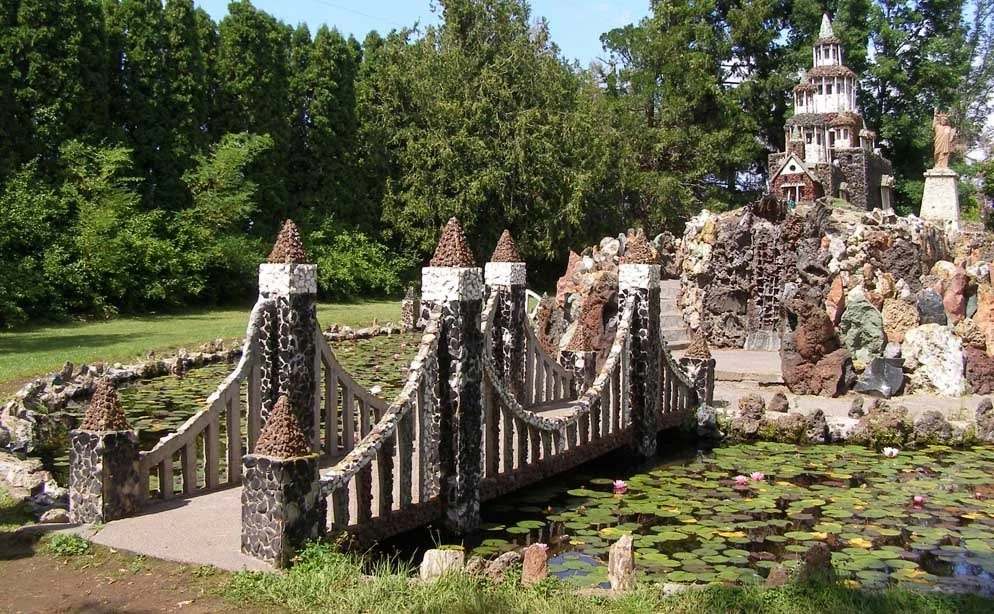
Starting in 1942 he built three islands in a pond on the southwest side of the property. Bridges decorated with stone link them. Hall reads Norse themes on the two larger islands, and one tiered building recalls Scandinavian stave churches.
Patriotic pieces sit beside the European ones, and “God Bless America” is spelled out in small round stones near a building that resembles the White House. A seven-foot (2.1-meter) Statue of Liberty stands over a plaque that reads “Enjoy Yourself. It Is Later Than You Think.”
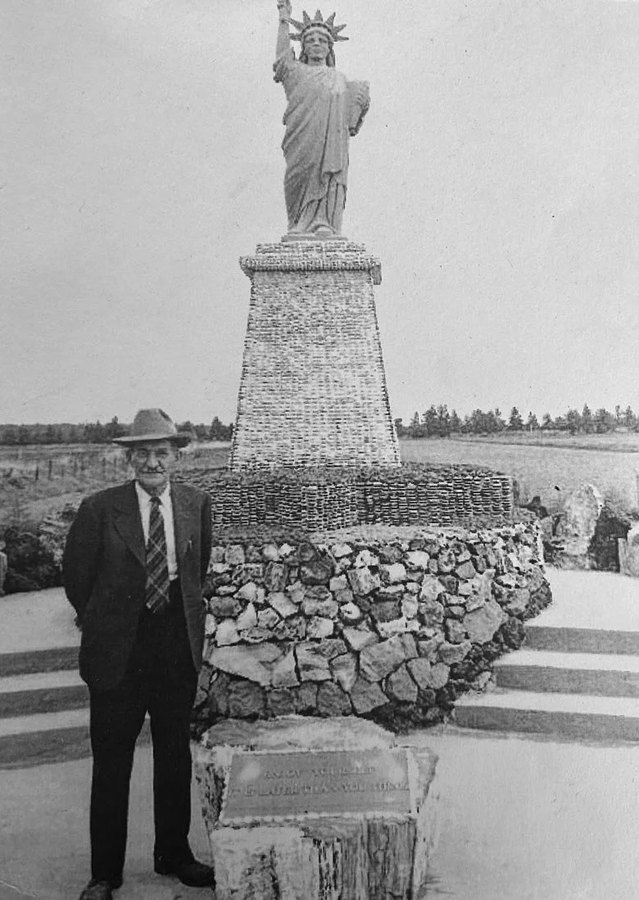
While the garden grew, the farm shrank. Petersen began selling land in the early 1940s until about twelve acres were left, and by 1942 he had retired from farming, according to the nomination.
A roadside stop without a highway
Word traveled early, and as many as 7,000 people had come by 1938. Around 1941 Petersen added a museum for his minerals. Its dark room used black light to make specimens glow green, red, yellow and blue.
The garden sits about a mile and a half (2.4 kilometers) west of Highway 97, yet car touring helped it grow. A 1946 Bend Bulletin headline counted 60,000 visitors in one year, and the nomination says attendance was reported at 120,000 in 1952. After his death that year, his widow, Nyleta, kept promoting the site.
Oregon’s State Historic Preservation Office later nominated it as a folk art environment, a term for sites often built by people with no formal art training. The National Park Service’s weekly list shows it was listed on October 30, 2013. That register also includes the ocean liner SS United States.
Closed by 2016, open four days
Federal recognition did not settle the question of who would pay for upkeep. The garden had closed indefinitely by 2016 after financial setbacks, according to the folk art archive SPACES. Marci Wayman bought the property in 2022.
Since that sale, volunteers have cleared weeds and dead trees from the grounds. The 1927 farmhouse and the museum have new roofs. The operators, now a tax-exempt nonprofit, say the site has reopened from 10 a.m. to 3 p.m., Friday through Monday, with a suggested $10 donation.
For now, staffing is what keeps the gates from opening every day. The garden is asking for museum volunteers to cover the other three. Its old diner still needs a new kitchen, new flooring and an updated septic system.
Petersen never explained his designs
Several parts of this story rest on thin records, starting with the art itself. Petersen “did not discuss the source of inspiration for his imagery and motifs,” the nomination says. The Norse readings are therefore a historian’s interpretation of the stonework.
Visitor totals are loose as well, since the nomination relies on newspaper reports rather than a count. The origin of the stone also needs a caveat. The official history mentions field-cleared rock and a collecting range of 85 miles (137 kilometers).
The main source for this account is the National Register registration form for the Petersen Rock Garden. Oregon’s preservation office certified it, and the National Park Service received it in September 2013.
Photo: Petersen Rock Garden