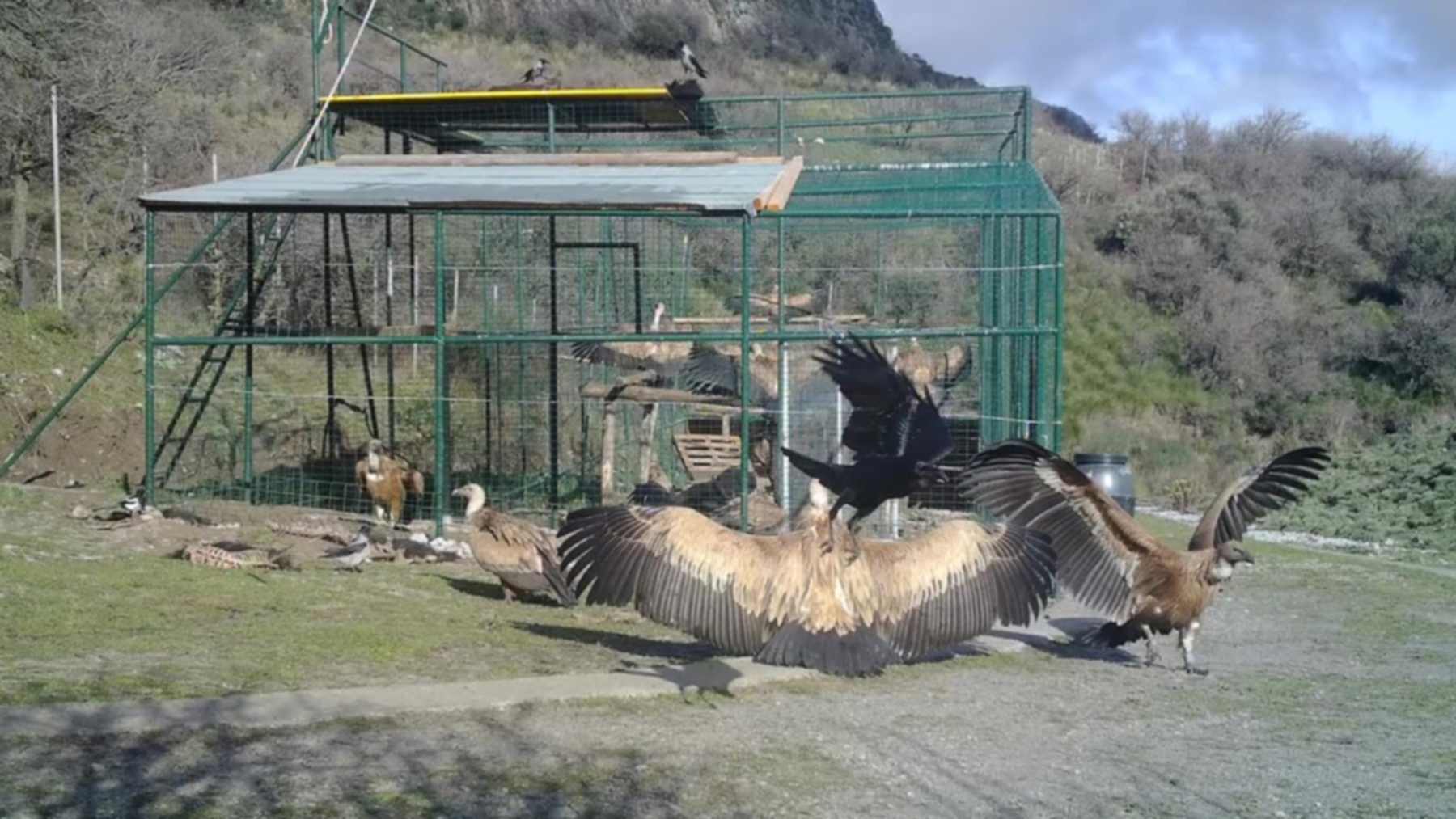
Two young griffon vultures have flown from the Madonie mountains of Sicily, the park authority said on September 8, 2026. They hatched to the first two breeding pairs confirmed since a colony was reintroduced there. The park puts the species’ absence at about 70 years.
Griffon vultures reach a wingspan of nearly 10 feet (3 meters). The park lies about 43 miles (70 kilometers) east of Palermo, on the north coast of the island. Its notice, written in Italian, calls the breeding “an old dream that has come true.”
Fox baits emptied the cliffs
Sicily’s regional government says griffons lived in the Madonie until the 1950s. The public veterinary institute that led the return gives the 1960s on its project page. It blames poisoned baits from a government-authorized campaign aimed mostly at foxes.
Dates for the whole island are looser still. A 2023 report from Rewilding Europe gives both 1965 and 1969 for the extinction of the species in Sicily. The park’s figure of about 70 years fits the 1950s date best.
A program launched in 1998 released birds in both the Madonie and the Nebrodi mountains farther east, then continued only in the Nebrodi. Rewilding Europe says about 80 Spanish birds went free there over seven years. The first two wild-born Sicilian vultures appeared in 2005.
By 2020 the regional government was counting 41 nesting attempts in the Nebrodi. Young birds took to the air from 31 of them.
Rehabilitated birds, then Spanish shipments
The veterinary institute signed the Madonie agreement on May 3, 2021, with regional officials, both parks, a Rotary district and the town of Isnello. Four months later the first five birds entered an acclimation aviary at Isnello.
Rewilding Europe says 30 griffons went free near Pizzo Carbonara between September 2021 and February 2023. All had been found in poor health in the Nebrodi and nursed back to strength.
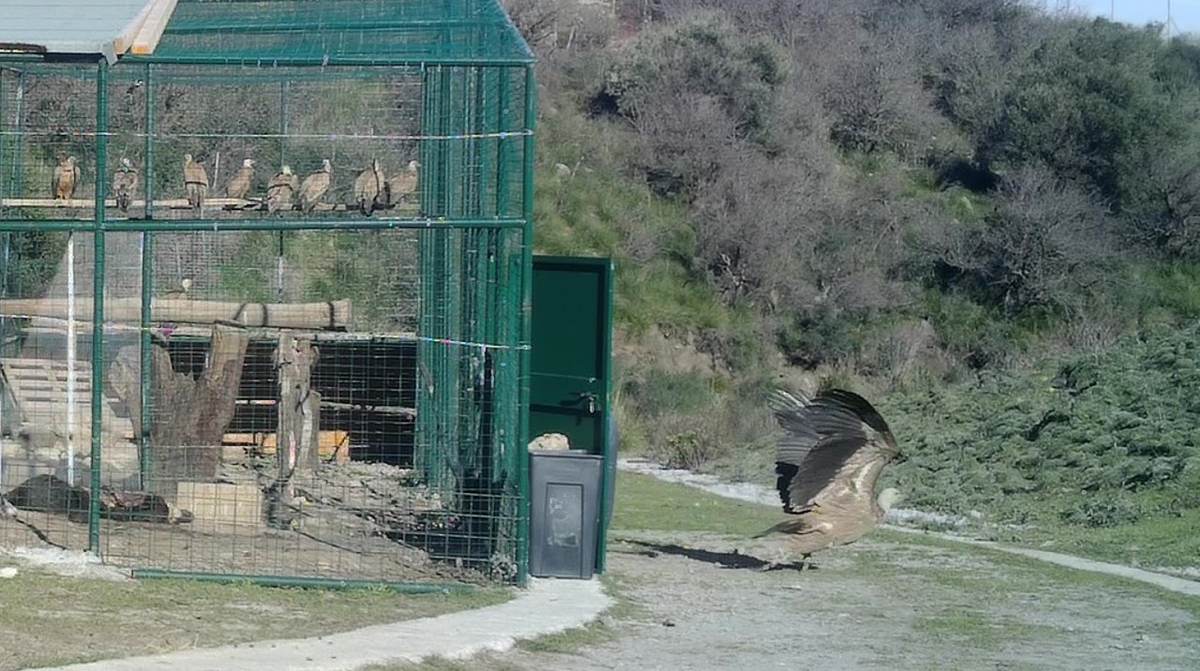
Spanish stock came next, through a wildlife group called GREFA. According to the institute, 16 young griffons shipped in February 2023 went free in early 2024. Another 19 arrived that April and waited in the aviary.
The institute says many other griffons from elsewhere in Italy joined the colony, including one from Friuli in the northeast. The institute counted about 30 birds in June 2024 and more than 60 by late October.
Roadkill and culled deer at Isnello
The project sits at Isnello because free-range herds, fallow deer and wild boar keep carcasses on the land. A feeding station in front of the aviary takes mostly hoofed animals hit by vehicles or shot in culls.
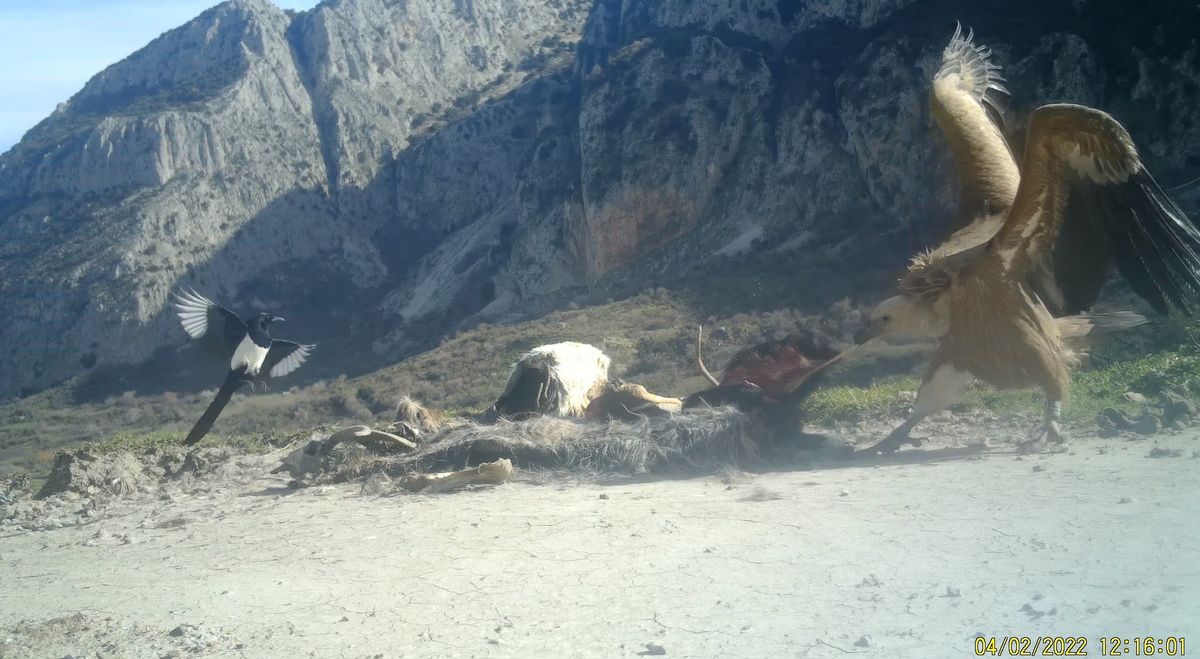
Farmers gain as well, the institute says, because vultures spare them the cost of incinerating dead stock. The park adds that the birds keep pastures clean and help limit epidemics. Elsewhere, scientists have tracked what a single elephant carcass does to soil over the years.
Every griffon in the project wears a colored plastic ring with a code readable from a distance. Some also carry satellite transmitters. Institute staff take swabs and blood samples, partly to test for heavy metals.
An Easter migrant called Pasqualino
Feeding stations built for the griffons also drew a much rarer scavenger, the Egyptian vulture. Park records show one bird in 2023 and five in 2024.
According to the park, a pair bred successfully in 2025 and again in 2026, after a gap of about 50 years. This year’s youngster flew in August. By early September the family had left the nest site, ahead of the trip to Africa.
In Sicilian dialect the bird is “Pasqualino,” because it comes back around Easter. Rewilding Europe put the population of southern Italy and Sicily at about 10 pairs in 2023.
Next on the list, a bone-eater
Park officials now want to work out how to bring back the bearded vulture, which feeds on bones. The naturalist Francesco Minà Palumbo documented it nesting in the Madonie until the mid-1800s. Its return, the park says, would complete the natural clearing of carcasses from pastures.
That idea carries no date in the notice, unlike the next griffon phase. A park announcement from October 13, 2026, lists about 50 to 60 more birds from Spain by 2027. Isnello and a Mediterranean biodiversity foundation signed the protocol with the park.
Under that deal the park supplies carcasses from its wildlife management plans, and the foundation monitors the birds with camera traps. Follow-up like that has paid off for wild asses released in the Negev. Studies of Iberian lynx spreading seeds show how a recovering animal can change its surroundings too.
Survival of both fledglings goes unreported
Two young birds make a small sample, and the September notice leaves out plenty. It gives no nest locations and no ages or origins for the parents. It also says nothing about how the fledglings have fared since.
Veterinary diclofenac remains a separate risk for the colony. Rewilding Europe says the drug can cause kidney failure in vultures and was still sold in Spain and Italy in 2023.
Shipment numbers have shifted as well. The institute once expected 75 birds from Spain in 2024 and 2025. The park now speaks of 50 to 60 by 2027, without saying how many came in between.
The latest head count on the institute’s page dates from October 2024. The park published its notice on the fledglings on September 8, 2026.
Photo: IZS Sicilia