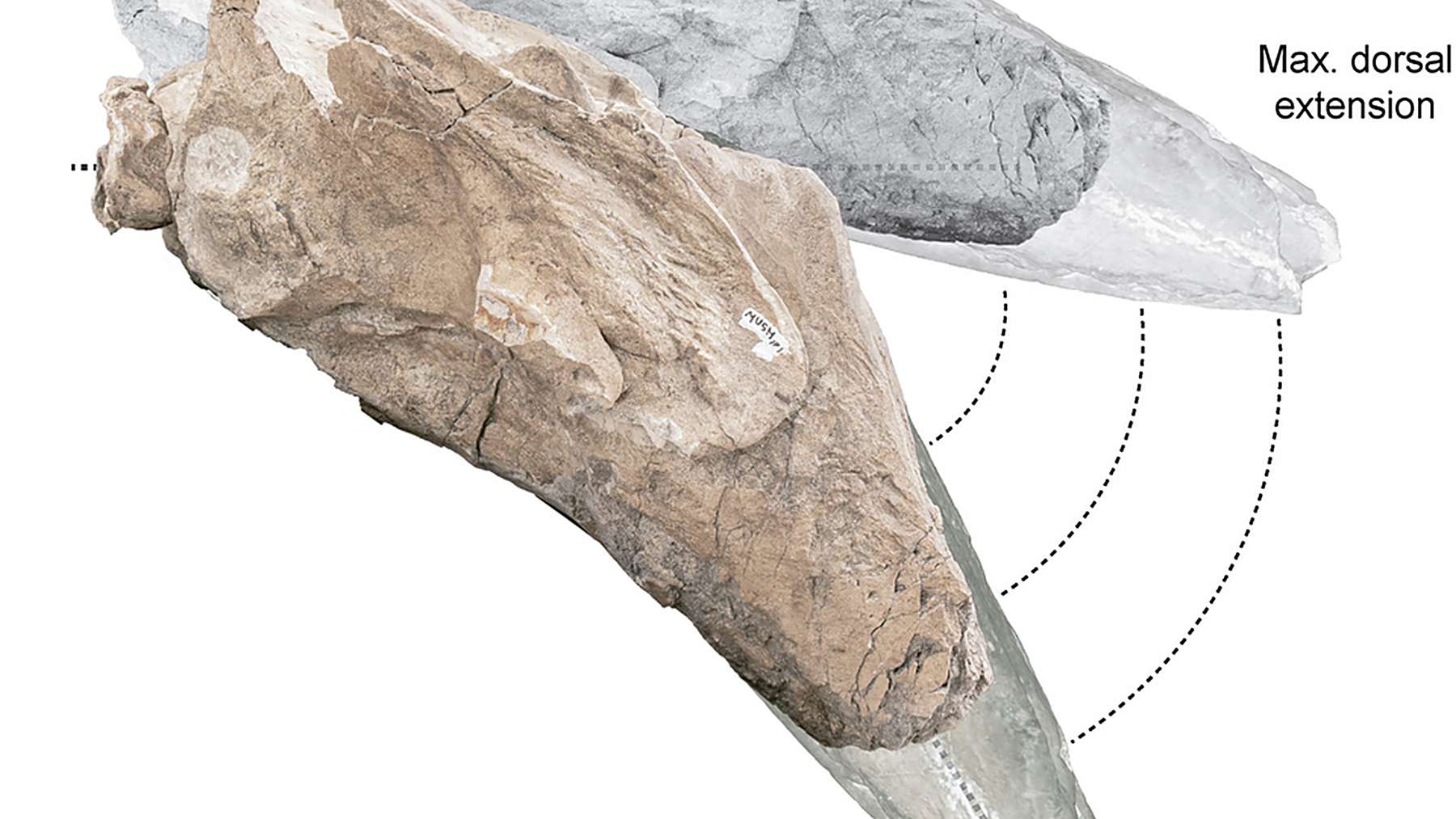
A pygmy sperm whale that swam off the coast of Peru about 6 million years ago had a skull so twisted that researchers first assumed the rock had deformed it. It had not, according to a study published in Communications Biology. The authors say its genus, Scaphokogia, may show the most extreme facial asymmetry known in any mammal.
The species is new to science and has been named Scaphokogia huachafo. The team, led by paleontologist Aldo Benites-Palomino, estimates it was about 2.7 meters long, or roughly 9 feet. It lived in the Late Miocene, between 6.3 and 5.6 million years ago.
Both nostrils on one side
Toothed whales, from dolphins to sperm whales, already have lopsided skulls. The asymmetry is linked to the fatty structures in the forehead that produce the sounds they use to echolocate, Benites-Palomino explained in the University of Zurich’s press release.
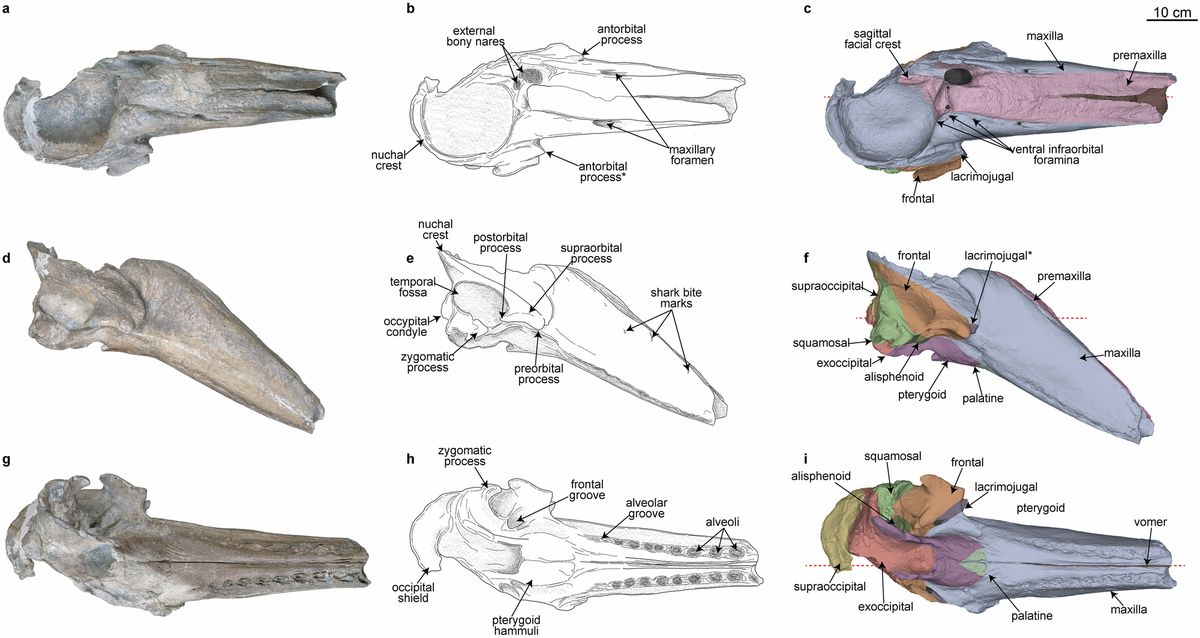
In Scaphokogia huachafo, that lopsidedness goes much further. Both bony nostrils sit entirely on the left side of the skull. The bones around them also differ sharply in size and position from one side to the other.
“The skull looks completely crooked,” Benites-Palomino said. In the release, the researcher added that the whale “broke every rule of symmetry and elegance seen in living cetaceans.”
The team compared the skull’s shape with those of many other toothed whales. Its analyses put the genus at the extreme end of facial asymmetry among all cetaceans, and potentially among all mammals, the authors write.
Crushed rock or real anatomy?
The skull was collected in the mid-1990s, according to the release, at Aguada de Lomas, in the Sacaco basin of southern Peru. The site belongs to the Pisco Formation, a desert area known for well-preserved marine fossils.
The obvious suspect was taphonomy, the changes that bones go through after death and burial. Millions of years under sediment can flatten or twist a fossil. Old bones are easy to misread, as with a crocodile fossil from Egypt that spent nearly 100 years under the wrong name.
“But the sutures are fully closed, and there are no fractures, pathologies or deformations elsewhere on the skull,” Benites-Palomino said. “This was genuine biology, not a result of poor preservation.”
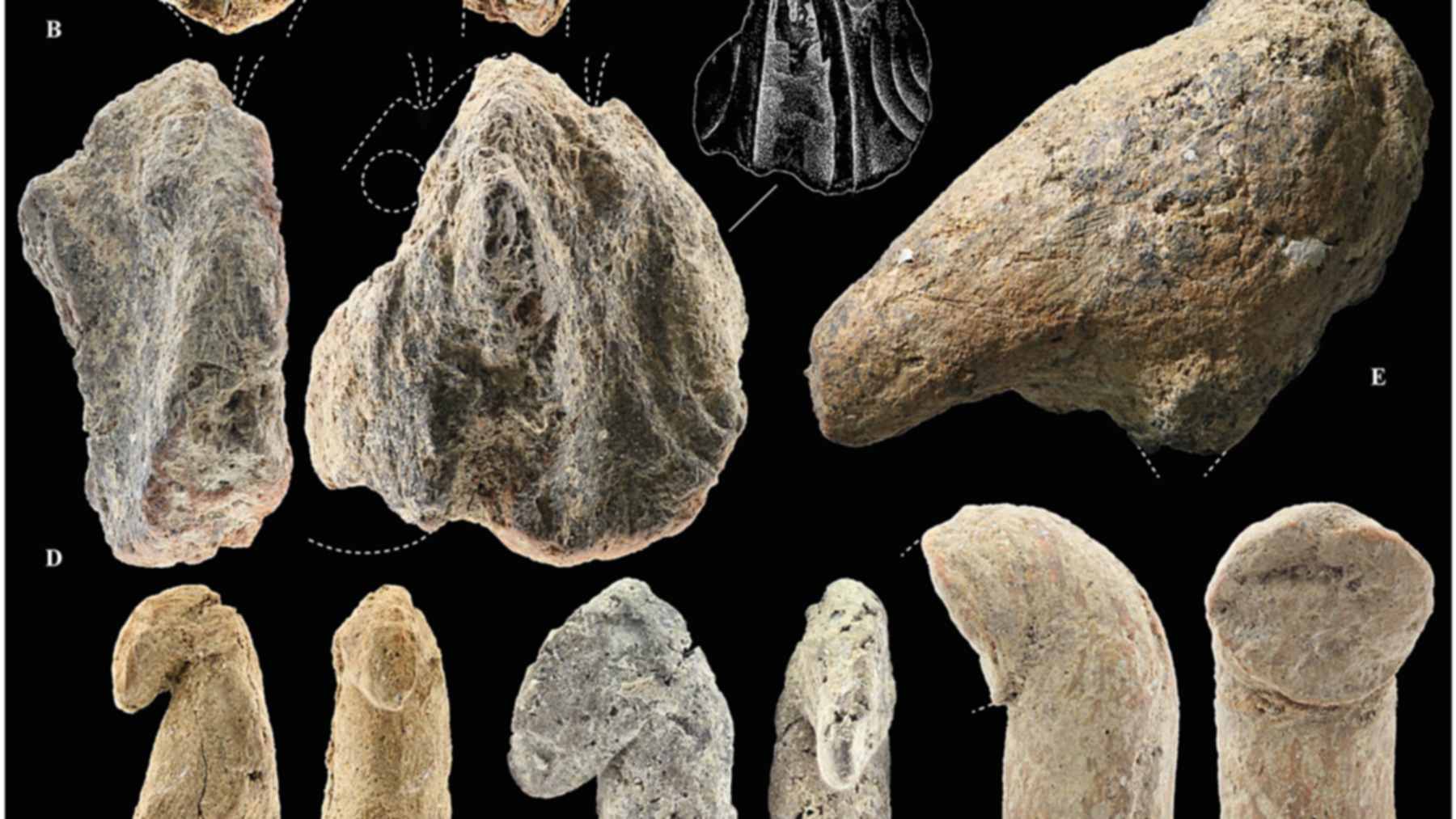
The closed sutures also show the animal was a fully grown adult, the study says. The skull is kept at the Museum of Natural History of the National University of San Marcos in Lima. A drawing in the study also marks what the authors label as shark bite marks on the snout.
A snout aimed at the seafloor
Unlike modern sperm whales, giants big enough to raise the question of swallowing a person, which hunt squid in deep water, Scaphokogia huachafo seems to have fed along the bottom of shallow coastal waters, the researchers say.
Its long, tube-shaped snout was made of dense bone reinforced with ossified cartilage. That extra weight probably worked as ballast, according to the release, pulling the center of gravity forward and down. In marine mammals, added bone mass usually goes with active bottom feeding, because it gives better control in the water, the study notes.
The snout is angled 31 degrees down from the rest of the skull. A related Scaphokogia specimen preserves the first neck vertebra, so the team could reconstruct the joint. By their estimate, the whale could tip its head down by as much as 55 degrees.
“The entire cranio-cervical complex is modified to point the snout directly toward the bottom,” said co-author Gabriel Aguirre-Fernández of the University of Zurich. That would have let the whale feed close to the sediment, according to the release.
A way of life that vanished
Most bottom-feeding marine mammals find food with sight, whiskers or special structures around the mouth. Scaphokogia shows no sign of any of them. Instead, the authors suggest, it probably relied on echolocation to pick out prey in the soft mud and sand of the coast.
Another strange whale from the same Peruvian rocks, the walrus-like dolphin Odobenocetops, also had a downward-pointing skull and snout. Today, the only living members of the family are the pygmy and dwarf sperm whales of the genus Kogia. Living whales can now be studied without touching them, as when scientists flew a drone through humpback whale breath to read whole genomes.
No living toothed whale is known to feed like this, the study says. The niche disappeared toward the end of the Miocene, as ocean conditions changed.
The species name has a story of its own as well. In Peru, huachafo is an everyday word for something bizarre, odd or extravagant, the authors write. Benites-Palomino, who did the doctoral work at the University of Zurich, is now an assistant professor at Friedrich-Alexander-Universität Erlangen-Nürnberg in Germany.
Image: Benites-Palomino et al., Communications Biology (2026), CC BY 4.0