Why do countries launch so many rockets into space? It’s not just for exploration or for taking pictures of the moon and stars. You rely on satellites that orbit the Earth for almost every aspect of your daily life. You get directions from GPS signals that ping from satellites, and your cellphone sends and receives messages that way too. By launching a rocket with an engine fueled by methane and oxygen, China will be able to send rockets into Earth’s orbit at 18,000 miles per hour without refueling.
A new type of rocket fuel could launch China farther into space, beating its competition by a million miles
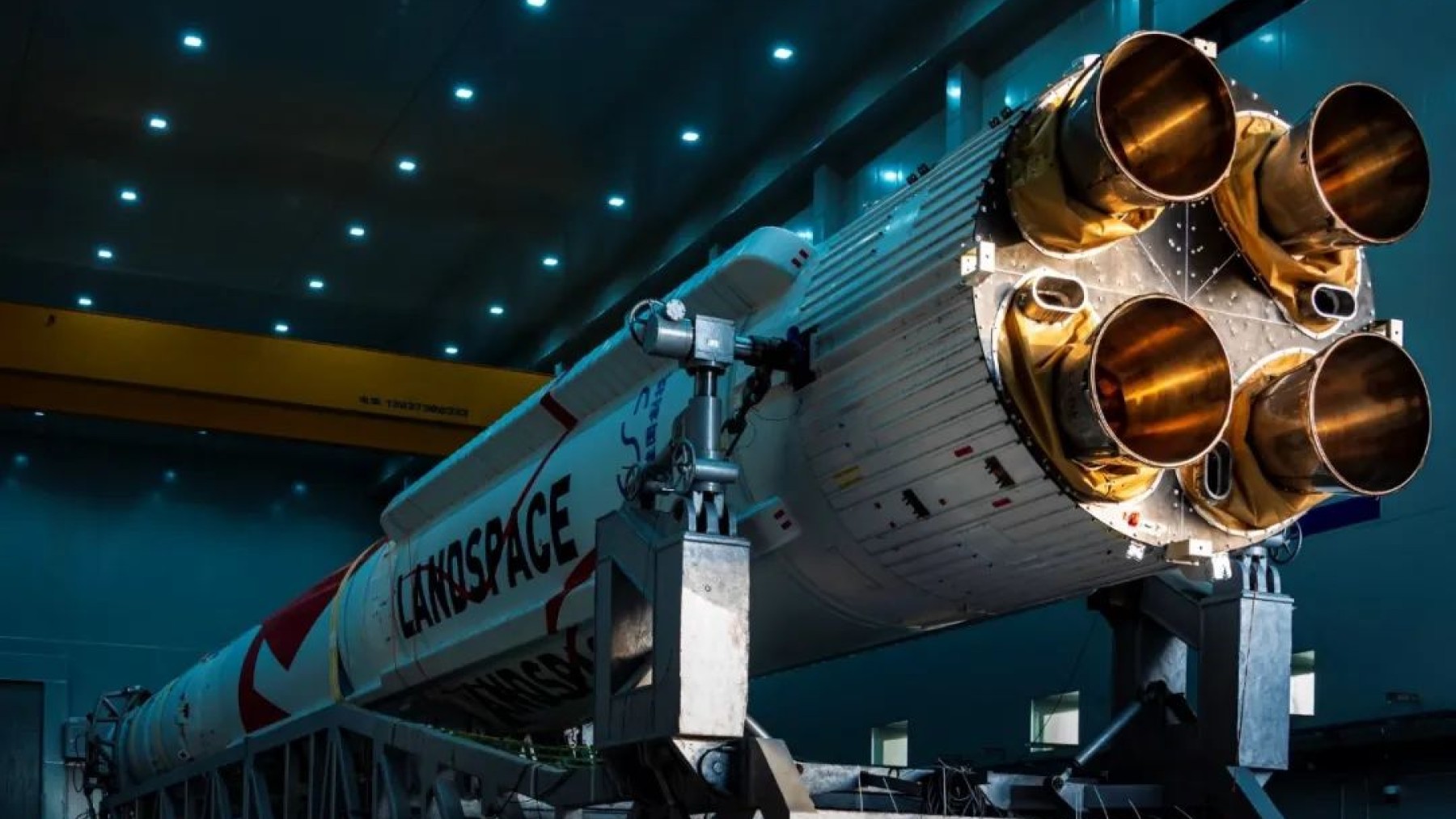
China has announced the successful launch of ZQ-2 Y2, the nickname of the country’s first liquid methane and liquid oxygen-fueled spacecraft. American scientists are worried about catching up to this breakthrough in aerospace engineering. Chinese companies and government organizations work hard to be at the forefront of technological innovation, and this event proves that their efforts pay off. Using this new fuel, China could save millions of dollars and reduce some of the emissions created when launching rockets.
Liquid methane and liquid oxygen are not easy to create. To turn these gases into liquids, scientists have to force them through metal tubes submerged in super-cold liquid nitrogen. The freezing temperature slows down the gas particles, turning the substance into a liquid. Liquid methane and liquid oxygen burn much cleaner than traditional rocket fuel, which is made from petroleum.
Einstein talked of an air engine, but this liquid oxygen and methane-fueled launch changes everything
Albert Einstein was one of the most brilliant minds of his generation, and he passed down many innovative ideas for inventions. He even talked about using an air engine to create bigger and faster vehicles. However, the ZQ-2 Y2 doesn’t need an air engine to reach a top speed of 18,000 miles per hour. The engine in this rocket uses liquid fuel but with a twist. Instead of using kerosene or a form of purified gasoline, this Chinese rocket uses liquid oxygen and liquid methane.
Liquid oxygen has been used in aerospace engineering for some time. It has generally been added to fuel to increase the combustion capabilities of the engine. Since fire needs oxygen to burn, combining liquid oxygen with another liquid fuel creates massive explosions, and it takes a huge explosion to launch a rocket. However, China’s use of liquid methane as the main fuel could change the future of aerospace ventures. Methane is considered a greener, cheaper, and more effective fuel source than kerosene.
The use of better fuel is going to impact the space and aviation industries for the next 100 years
Now that China has shown the world that it’s possible to launch a rocket with liquid methane, every other country will race to develop the same technology. Using liquid methane to launch rockets has many potential benefits, including:
- Safe storage
- Low-cost production
- Non-toxic substance
- Highly versatile
Methane takes time to produce, but if more countries invest heavily in research and development of this fuel source, it could become a fixture in the space and aviation industries. China will continue to launch test rockets with liquid methane as the main fuel source and conduct safety and efficacy trials.
As with most technological breakthroughs, more testing needs to be done to explore the use of liquid methane as rocket fuel. Most methane is harvested from the Earth, which impacts the environment. Researchers want to find greener ways of creating methane, mostly from decaying organic matter. For now, China has been the most avid pursuer of this alternate fuel source and has made impressive strides for the future of the industry.