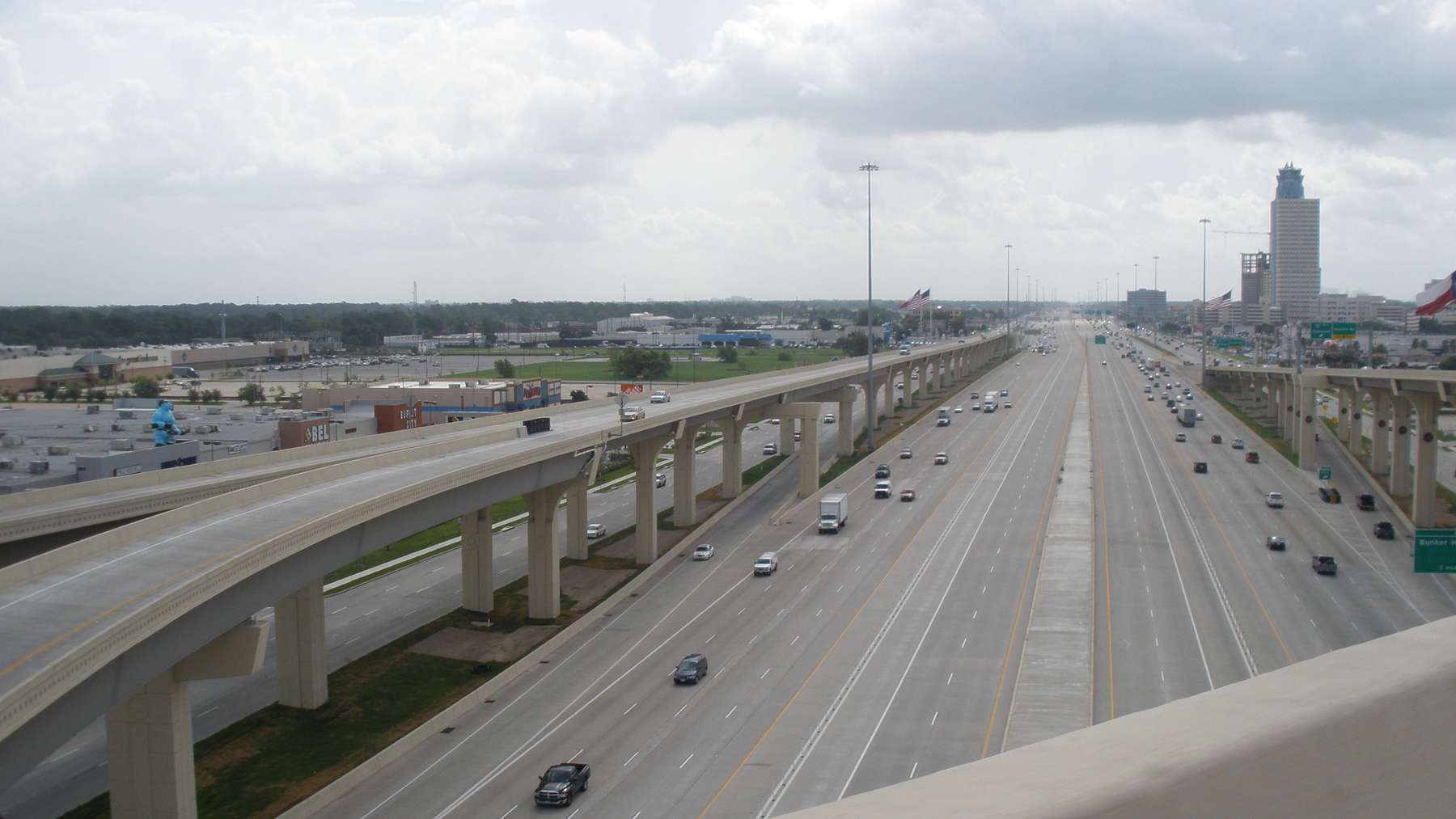
In Houston they believed that the solution to eliminate the transport congestion was building the widest roadway in the world, but things did not end as expected. Although at the beginning the trips were shorter, in a few years the cars went back to fill the 26 lanes.
They spent nearly $3 billion to stop traffic and in the end they gave more space to drive and more people went out with their cars generating the “induced demand” phenomenon.
Texas built its way out of a traffic crisis
Around 1960, the Federal Highway Administration designed the Interstate 10 so that around 80,000 vehicles a day could pass. But that highway that connected Houston’s center with Katy, 40 years later had 3 times more traffic and people spent up to 11 hours daily in traffic jams.
Definitely, Texas did not have many choices and had to take action. And it was between 2003 and 2008 that they spent $2.79 billion to add six new lanes on each side, and others in the middle for tolls.
So if numbers are correct, this means that it ended up having 26 lanes, though if you follow PolitiFact information, it is the world’s widest highway only if the feeder roads were counted.
The early traffic relief quickly faded
At the beginning, once the design was completed, it really looked like a miracle. People arrived extremely fast to their homes, the times were reduced, and Houston authorities even celebrated publicly that they beat the historical traffic problem.
But the miracle was quite short… A group called Houston Tomorrow came up with the truth and said that one trip from the center that in 2011 was done in 46 minutes, by 2014 it was done in around 70 minutes (this is 51 percent more, according to Streetsblog USA).
Another research from City Observatory showed that drivers were losing 25 minutes extra in the morning and 23 minutes more in the afternoon in comparison to when they had just opened the highway.
Why more lanes can produce more driving
The reason why more lanes can take us to this traffic point is what is known as induced demand. Driving takes time, and if all of a sudden you open a new gigantic highway and the trip is faster, people automatically will change their habits. The ones that maybe ended up using other ways of transport then preferred to travel back with their cars or even move farther away thinking that “the road is more fluid”.
Also, developers took advantage of the opportunity, building around the corridor and adding more and more homes and businesses. So in a very short time, the lanes ended up carrying more vehicles, and the same old story appeared… only that now with more drivers breathing exhaust.
There is even a study done in 2011 by economists Gilles Duranton and Matthew Turner that shows actually the “fundamental law of road congestion,” that is the confirmation of reality: the more miles of lanes you add to the city, the more the traffic increases exactly in the same proportion.
The effect now shapes transportation policy
“Induced demand” is no longer just a theory. Nowadays, it is used by transport agencies as an official rule. For example, in the California University in Davis, an induced travel calculator was created and it basically showed that if you increase the capacity of a highway by 10 percent, the traffic will increase by that same 10 percent in a period of 3 to 10 years.
Even Caltrans, California’s Transport Department, has been integrating this tool in their official analysis since 2020. Then an RMI analysis estimated that a proposal of widening only 1.7 miles of the Interstate 5 in Portland, would generate between 35 and 53 millions additional vehicle miles driven each year.
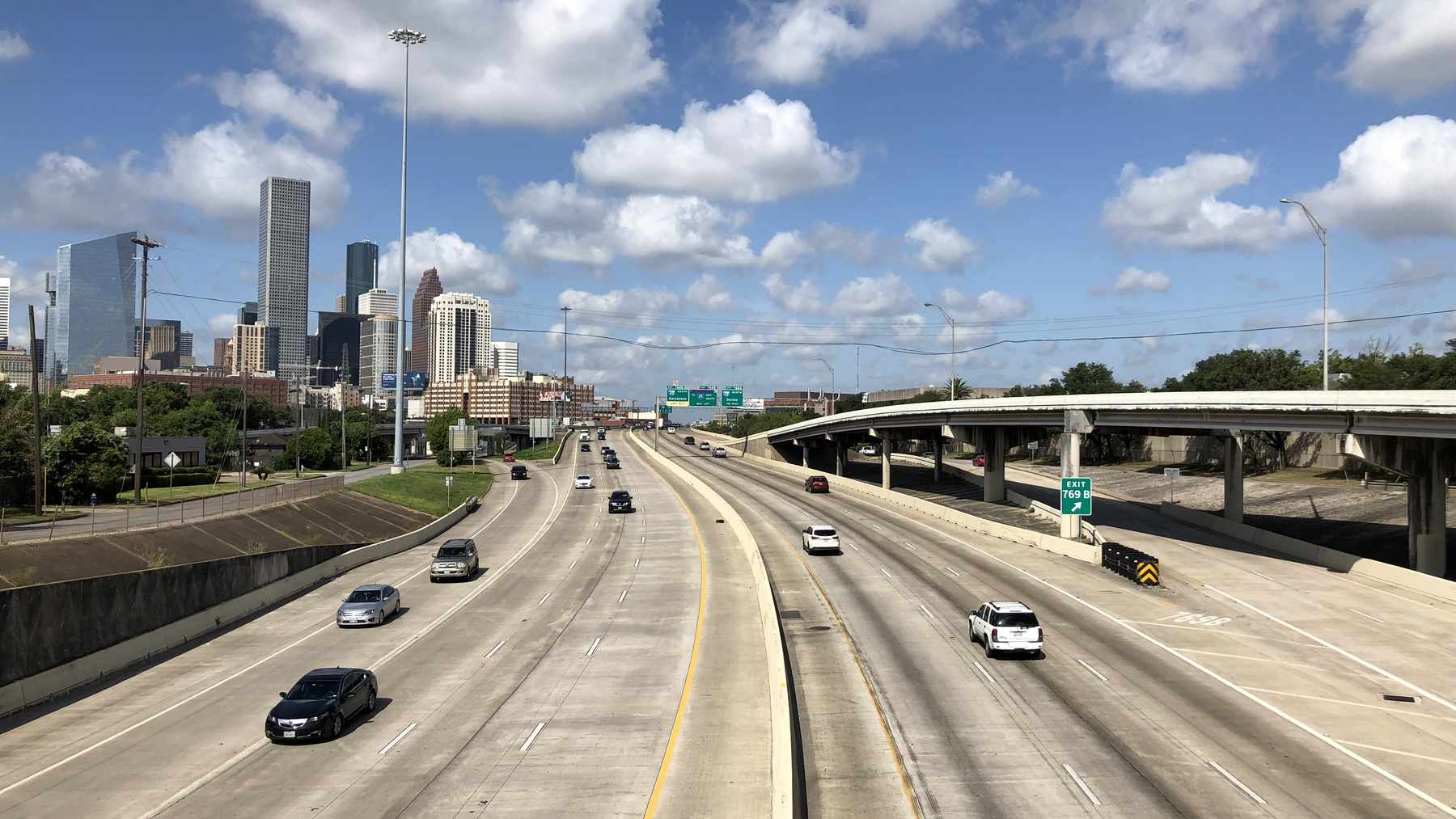
That does not mean that now the solution is to stop building or repairing new roads. A wider road, in the end, allows more people to move and the lanes of the Katy Freeway’s road offer the possibility to go faster if people are willing to pay. Still, this is completely different from permanently eliminating traffic congestion.
Houston’s case still has important limits
But as with everything in life, there is always a context. During all those years, Houston’s population expanded a lot, gasoline prices changed, and the economy was really moving, so every single minute of delay cannot be blamed only to the addition of these lanes.
There is also evidence about how the traffic responds when you take space away from cars. A great example is what happened in Seoul, South Korea, where after removing an elevated highway (where 170.000 of cars passed in a day) to recover a river and build a park, people started to use 15.1 percent more buses and 3.3 percent more subway between 2003 and 2008.
Houston is preparing an even bigger highway bet
Even after the whole Katy Freeway experience, in October 2024, the Texas Department of Transportation started with the North Houston Highway Improvement Project along Interstate 45. It is an enormous project of $13 billion to expand capacity and reduce congestion.
The work is so massive that the project may only be finished between 2038 and 2040, bringing up again the same question: if creating new lanes will really bring freedom from traffic or if it is, once again, creating more space for more cars.
The official construction announcement was published on TxDOT.