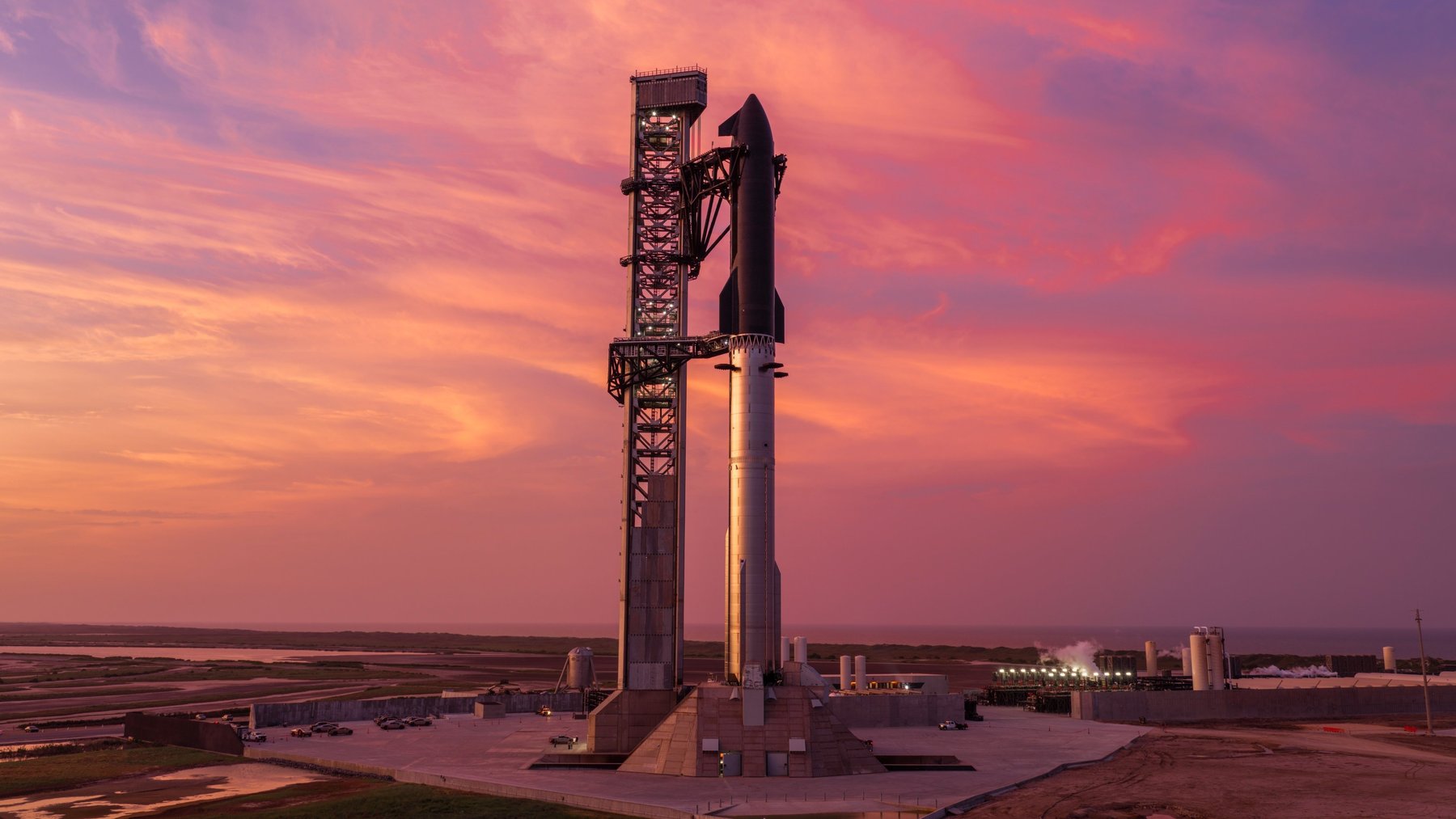
On July 24, 2026, the company SpaceX tested its 13th integrated Starship, and as a result of this, they obtained several headlines on the news. The vehicle placed 20 next-generation Starlink satellites, and at the same time, it also restarted a Raptor engine in space, and achieved a smooth splashdown in the ocean.
But, the most important test for Mars did not take place. No legitimate trial which proved two Starships could rendezvous, dock, and transfer super-cold propellant while in orbit was made by Flight 13. This left an obvious gap between its record-setting launch power and the potential for an operational interplanetary transport system.
Only half of the story is told by the huge thrust of the Starship
Each sea-level Raptor 3 engine produces 551,000 pounds-force, according to SpaceX, and 33 of them can be carried by the Super Heavy booster. Collectively, that translates as a liftoff force of roughly 18.2 million pounds, around 2.4 times the Saturn V’s 7.6 million pounds-force.
Although this is completely remarkable, thrust can not explain if the rocket can make it through reiterated reentries, leave Earth’s orbit with enough combustible to reach another planet, or if it can support long missions. It can basically tell engineers whether a rocket can make its huge mass lift off from the pad. Designed for full reuse, Starship carries heat shielding, tanks, flaps, and landing hardware, while Saturn V’s discarded stages never had to deliver these back home.
Progress was proved by Flight 13, but not orbital refueling
Several tasks could be performed in a single mission by the V3 design, according to Flight 13. Deployment and communication with the totality of the 20 satellites, the relight of an engine in-space and a soft splashdown that left the ship intact were all reported as successful by SpaceX.
But, one Starship was involved in the undertaking. In-orbit refueling is considered essential for plans involving the Moon and Mars, but they have not yet been attempted, as said by SpaceX’s June 2026 prospectus, while official accounts for Flight 13 shows no tanker rendezvous, docking, or transfer. Vehicle-to-vehicle cryogenic transfer is said to be “one of the most significant technical challenges” to be confronted for the lunar lander effort by NASA’s inspector general.
Inside one ship, oxygen was moved by Flight 3
An important first milestone was reached. In March 2024, during flight 3, they managed to move liquid oxygen between tanks inside the same Starship spacecraft. NASA reported that this transfer included approximately three metric tons, but according to SpaceX, the amount was around five metric tons. The demonstration is listed as complete by NASA’s TechPort database.
This part of the experiment helped engineers study the behaviour of cryogenic fluid without gravity, when it does not settle at the bottom of a tank. The liquid needs to be pushed by thrusters, and then moved by pumps. At the same time, temperature and pressure must be controlled to make sure that vapor does not interrupt the flow. However, this was just an internal transfer, it did not include a second vehicle, connection or orbital approach.
Two ships create a much longer chain of risk
The first step of the test involves launching two spacecraft into orbits that move them close to each other. Once they are in space, they have to find each other and avoid collision. Then, the team must lower the temperature in the fuel lines, manage the pressure, stabilize the propellant, and move the liquid methane and oxygen, without consuming too much fuel to heat.
After this, SpaceX will have to repeat the same process several times. A fuel transfer may be perfectly achieved, but if the following tanker is delayed and the stored propellant continues to absorb heat, the result will not be successful. In a March 2026 oversight report by NASA, researchers also stated that SpaceX still has to show that it could prepare the launch pad for another flight within the required 12 to 24 days.
Mars needs a filling station
Starship uses a big part of its fuel just to reach low Earth orbit. To continue travelling, it would need to refuel before leaving. SpaceX intends to use tanker versions of Starship to deliver fuel to the mission, either directly to the ship or to an orbital storage depot. This means that the area around Earth might start having fuel stops for longer trips.
Refueling is vital if Starship is travelling beyond Earth orbit. Without this, the rocket will not be able to become the interplanetary spacecraft promised by SpaceX. The amount of tanker flights will depend on the mission, and each additional launch will make the schedule more difficult to carry out.
Saturn V’s matching flight count can mislead
From 1967 to 1973, Saturn V also completed 13 flights. On its third mission, it took Apollo 8 around the Moon. After this, there were six other missions that were part of lunar landings, and its final launch sent Skylab into orbit.
These two rockets completed 13 flights, and although this is an interesting comparison, it is not really accurate. Saturn V was a result of a huge government program and each vehicle just flew one time, they were later discarded. Starship is a bigger project. SpaceX is simultaneously working on and solving many different challenges, such as engines, safe return to the Earth, catching towers, as well as their reuse.
The next giant leap will occur quietly in orbit
They are not really comparable. Starship is way more powerful than Saturn V, and Flight 13 was another important achievement. But now, the next huge milestone and real test, will happen in orbit, not at launch. Two reusable spacecraft will have to meet and safely transfer very cold fuel, and it is not a one-time operation, these results will need to be checked and then repeated.
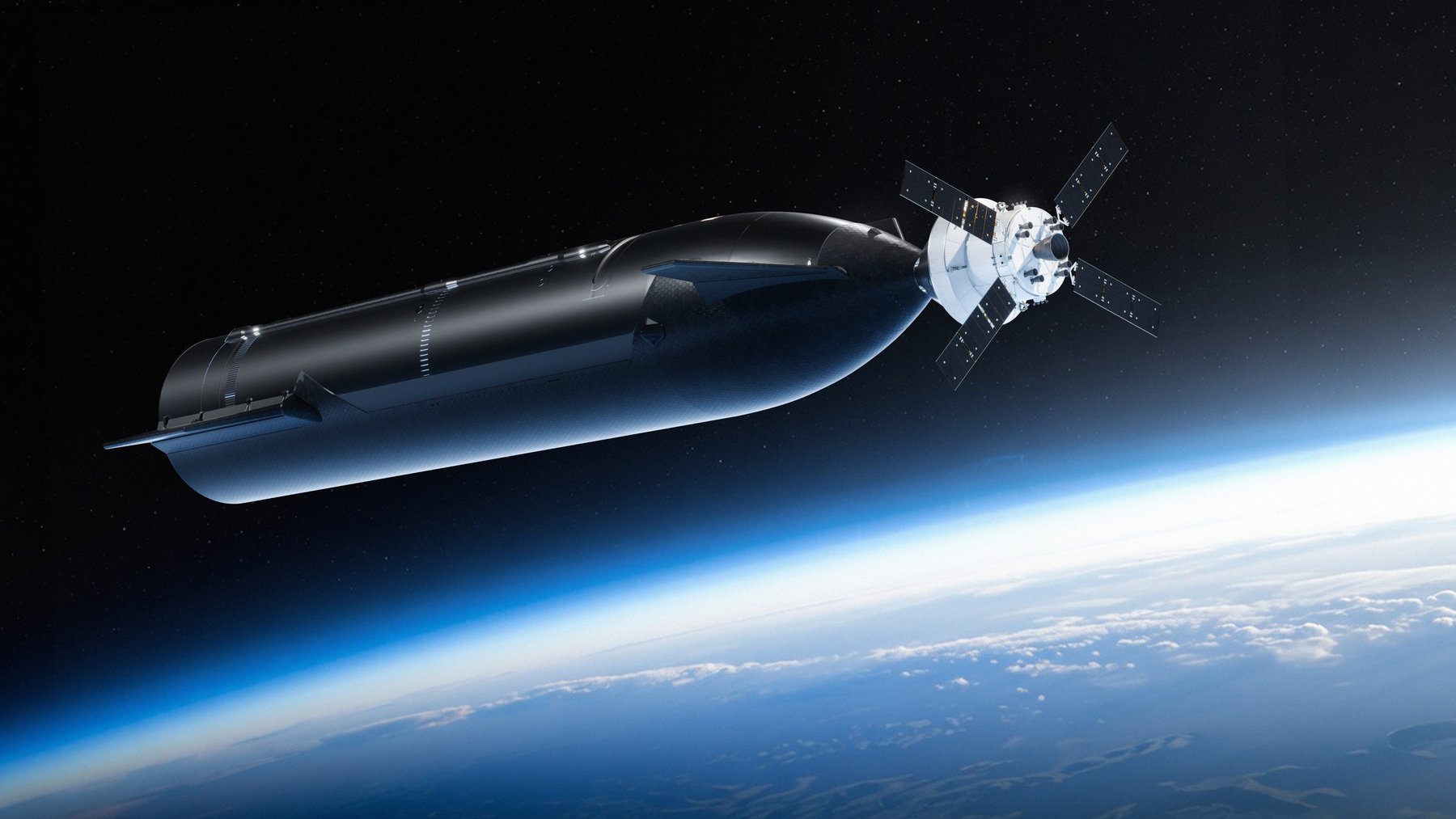
Only after this is completed, Starship will begin to become part of a functioning transportation system.
The official Flight 13 update was published on “SpaceX”.