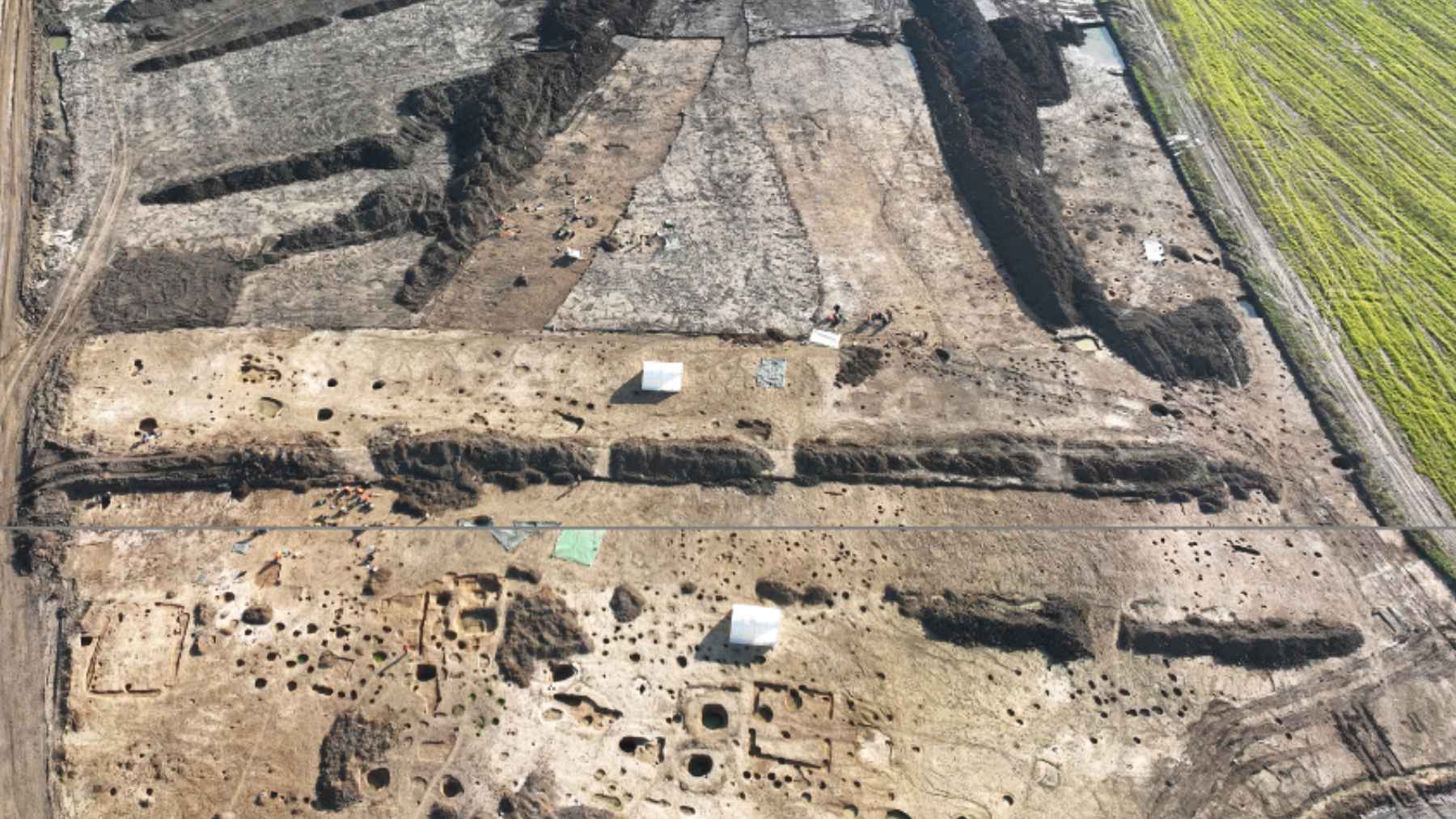
A routine survey before construction on the future D35 highway near Hradec Králové in the Czech Republic has turned into a remarkable archaeological discovery. Instead of empty land ready for asphalt, archaeologists uncovered a large La Tène settlement packed with gold and silver coins, amber, jewelry, pottery remains, production areas, and possible sanctuaries.
Why does this matter today? Because the site shows that long-distance trade in Europe was already moving wealth, raw materials, and skilled craftwork centuries before Roman power reshaped the continent. The planned road was meant to connect modern places, but beneath it lay proof of an older network doing something surprisingly similar.
A road project hits the past
The discovery began with rescue archaeology ahead of D35 construction, involving the Museum of Eastern Bohemia, the University of Hradec Králové, and Archaia Praha. As teams removed the soil, they searched through repeated layers about 4 inches thick, which helped them recover far more material than a faster survey would have found.
That careful work paid off. The Museum of Eastern Bohemia reported about 22,000 bags of finds, calling the collection one of the largest sets of artifacts ever found in Bohemia. In practical terms, this was not just a quick look before bulldozers moved in.
Gold, amber, and handmade value
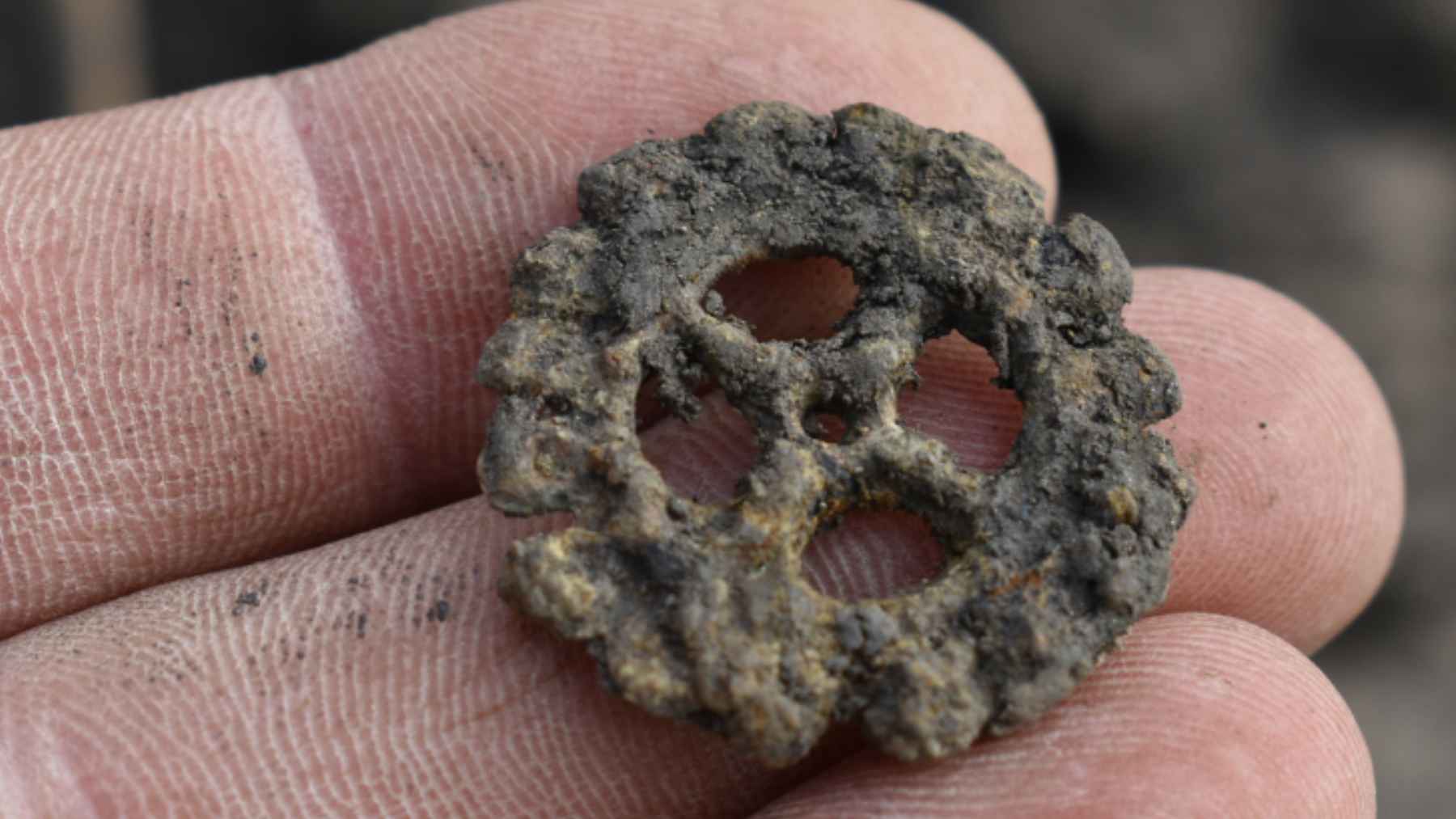
Among the most striking discoveries are hundreds of Celtic coins made of gold and silver, along with coin blanks, small scales, and a die punch used in coin production. Archaeologists cannot yet say which individual coins were minted at the site, but several objects strongly suggest that coinmaking happened there.
The treasure story does not stop there. Researchers also found jewelry, glass beads, belt components, luxury ceramics, and thousands of amber fragments. Tomáš Mangel of the University of Hradec Králové said the amber was “undeniable proof of long-distance contacts.”
For a modern reader, amber may sound like a pretty stone in a necklace. In ancient Europe, though, it was a prized material moving from northern regions into Central Europe and beyond. No highways, no cargo apps, no overnight shipping, yet goods still traveled.
A Celtic hub before Rome
The settlement belongs to the La Tène period, a Late Iron Age culture often linked with the Celts. Mangel has cautioned that the word “Celts” can be a simplification, since it does not describe one single nation in the modern sense.
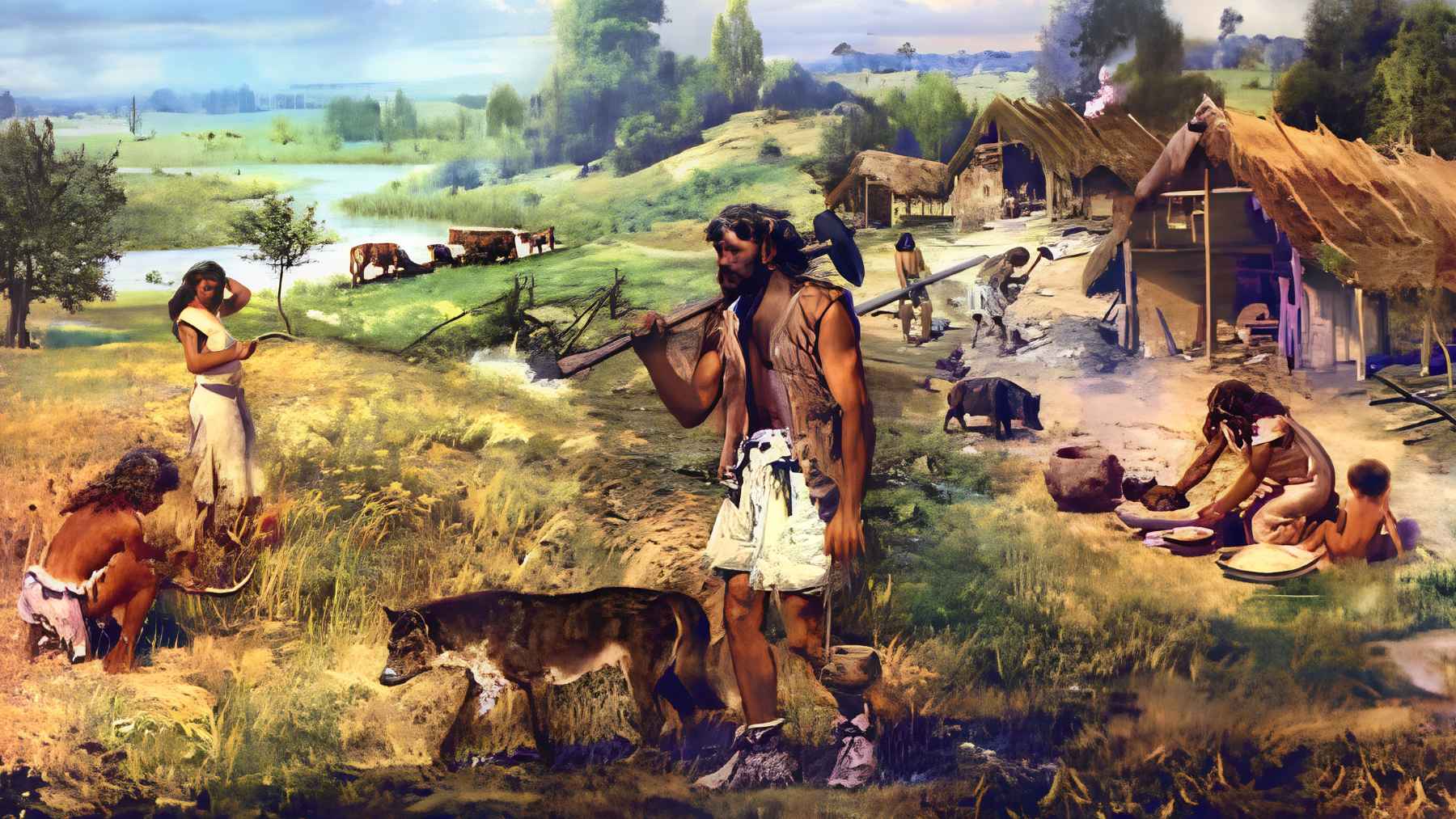
The site was not fortified, which makes the discovery even more interesting. Instead of a walled military stronghold, the evidence points to an open center where homes, workshops, trade, and perhaps religious activity existed side by side.
That changes the picture a bit. Ancient Europe was not just scattered villages waiting for Rome to arrive. In places like this, communities were already building complex systems of exchange, craft production, and status.
Why archaeologists are excited
Reports describe the core site as roughly 62 acres, while the University of Hradec Králové later described the wider agglomeration as about 86 acres. Either way, it was far larger than many ordinary settlements from the same period, which were often small farmsteads focused on crops, animals, and local craftwork.
The production evidence is just as important as the shiny finds. At the Hradec site, archaeologists identified ten well-preserved pottery kilns, which Mangel described as a record find in Bohemia. These kilns helped craftspeople make higher-quality ceramics more efficiently.
There is also possible evidence of glassmaking and bronze work, but Mangel has been careful not to overstate it. That caution matters. A discovery this big does not need exaggeration to be impressive.
An unusually preserved archive
Another reason the site stands out is its condition. According to the Museum of Eastern Bohemia, the settlement had not been heavily disturbed by intensive farming or illegal treasure hunting, which is rare for a European site with valuable metal objects near the surface.
That preservation turns scattered objects into a much richer story. A gold coin in a display case is exciting, but its exact location, neighboring finds, and soil context can reveal how people lived, worked, traded, and moved through the settlement.
There is a practical side, too. UHK notes that rescue archaeology is planned into construction projects, and archaeologists cannot simply halt a highway because they found something unexpected. The trouble is, the past does not always keep to modern schedules.
What happens next
The finds are now being conserved and studied in laboratories using tools such as microscopes, X-rays, CT scanning, and scanners. The coins are also being examined by numismatics specialist Jiří Militký from the National Museum, which should help researchers better understand their origin, value, and role in trade.
What caused the settlement to fade remains unclear. Mangel said there is no direct evidence of a major war or catastrophe, and he leans toward a slower transformation driven by economic and social change.
For now, the discovery offers a rare look at a busy Iron Age crossroads hiding under a modern transport route. Somewhere beneath today’s traffic plans, earlier traders were already moving coins, amber, ceramics, and knowledge across distances that still feel long on a weekend drive.
The official research story was published on the University of Hradec Králové.