Four minutes is barely enough time to make coffee, yet a new sodium-metal battery design has operated at a laboratory rate equivalent to a full charge in that window. At a slower 20-minute rate, the full cell kept 90% of its capacity after 2,000 cycles.
That does not mean an electric car can plug in today and leave four minutes later. The result came from small experimental cells, but it targets a major obstacle in sodium batteries – the sharp metal growths that can pierce internal layers and cause a short circuit.
A four-minute lab rate
Researchers tested the cell at what battery scientists call a 15C rate. That is shorthand for a four-minute full charge or discharge, and the cell still delivered about 77% of the capacity measured at the study’s slowest setting.
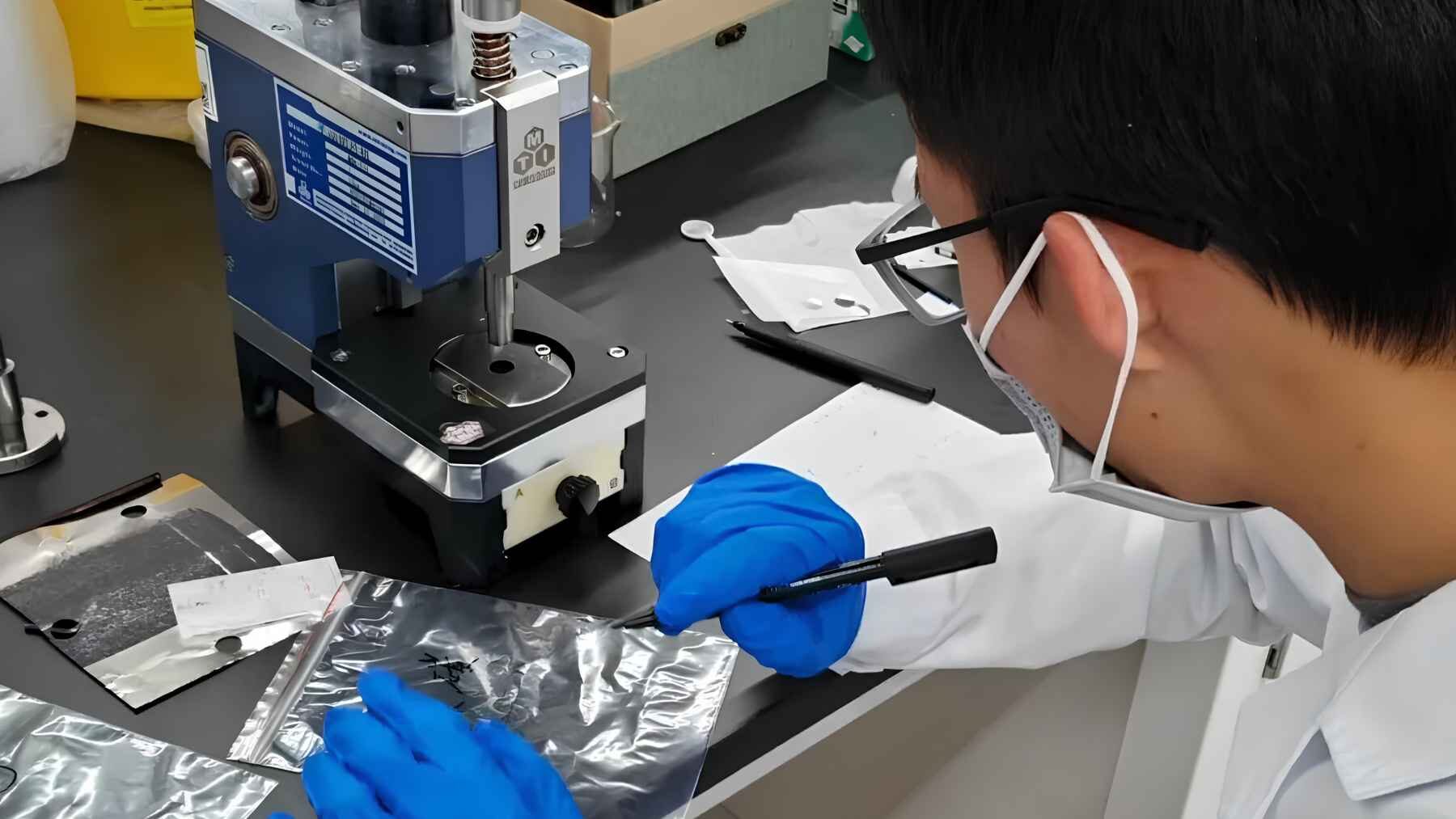
Yuan Zhang led the investigation, while Long Pan, Yang Zhou, and Zhengming Sun supervised the work. The team was based at Southeast University and worked with HiNa Battery Technology and Yangzhou University.
The stronger endurance result came at a 20-minute equivalent rate. After 2,000 cycles, the cell retained 90% of its starting capacity, which could represent more than five years of daily charging on paper, though real-world use is far messier.
Why sodium metal fails
Sodium-metal batteries are not the same as sodium-ion batteries moving toward wider commercial use. A sodium-metal design uses pure sodium at the negative electrode, or anode, instead of the hard carbon commonly used in sodium-ion cells.
Pure sodium can store charge efficiently, but it is highly reactive. During charging, sodium may pile up into needle-like dendrites, similar to tiny mineral spikes, until they bridge the battery’s two sides and create a dangerous electrical path.
A thin protective film normally forms where the metal meets the electrolyte. When that film cracks, fresh sodium collects around the damage, making the surface rougher and giving dendrites a place to grow.
How the gel works
So, what changed inside this battery? The team built a nearly solid gel electrolyte, the material that carries sodium ions, or charged atoms, between the two electrodes.
The researchers called their approach “dual interlocked mediator engineering,” meaning two chemical helpers work together. A tin-based salt forms a uniform polymer network and later creates a sodium-friendly protective layer at the anode.
A second salt slows the gel-making reaction and helps build a thin shield at the positive electrode, guiding sodium more evenly. The gel also directed nearly all the moving electrical charge through sodium ions, creating a better path for fast charging without unstable deposits.
What the tests showed
In a separate test using two sodium electrodes, the system deposited and removed sodium for more than 6,000 hours without the dendrite-driven failure seen in comparison cells. That is about 250 days of continuous laboratory operation, but it was not a complete consumer battery running for eight months.
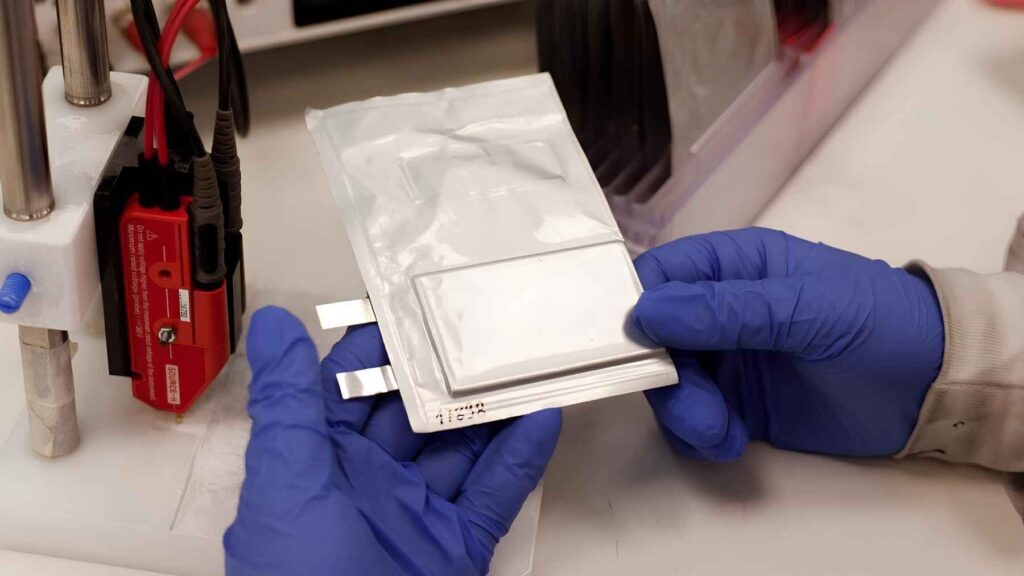
The researchers also made a pouch cell about 1.6 by 2 in. It powered a phone while being folded, yet the pressure-free version was tested for only 19 cycles and retained 84% of its capacity.
A full cell containing more cathode material completed 500 cycles while keeping 75% of its capacity. That step matters because tiny laboratory cells often look promising long before a design can be manufactured consistently for a car, bus, or smartphone.
The electric car reality check
Fast charging matters because nobody enjoys stretching a road trip around a charging stop. Tesla says a Model 3 can add up to 175 miles in 15 minutes at a Supercharger, while the U.S. Department of Energy notes that some direct-current fast sessions can take under 20 minutes.
The new sodium cell was not installed in a car or tested as a large battery pack. The four-minute figure shows that its chemistry can move sodium quickly inside a small cell, not that tomorrow’s drivers will get a full refill before their coffee cools.
Why sodium still matters
Sodium is widely available, and battery versions can avoid cobalt and reduce pressure on some lithium supply chains. The U.S. Department of Energy describes sodium-ion chemistry as potentially lower-cost, while the new paper presents sodium metal as a cost-effective alternative worth pursuing.
Other teams are attacking different weak points. A 2025 Nature Sustainability study kept a hybrid solid-state sodium system running for 50,000 cycles, while a 2024 Nature Energy paper showed an anode-free design that cycled for several hundred rounds.
Those results are not directly comparable because the cells, materials, and test conditions differ. Still, they show a wide race to find the right balance of price, safety, speed, and stored energy.
What must happen next
The design needs independent replication, much larger cells, and testing across temperature extremes, vibration, and manufacturing variation. It also needs pack-level figures for energy, charging efficiency, cost, and safety, because a clever electrolyte is only one part of a commercial battery.
The pouch-cell demonstration lasted only a small fraction of the 2,000-cycle test. Researchers have not yet shown that the same durability carries cleanly into a flexible, practical format.
Still, the result tackles speed and longevity in the same chemistry. The four-minute headline catches the eye, but the more important number may be 2,000 cycles without a major capacity collapse.
The official study was published in Nano-Micro Letters.