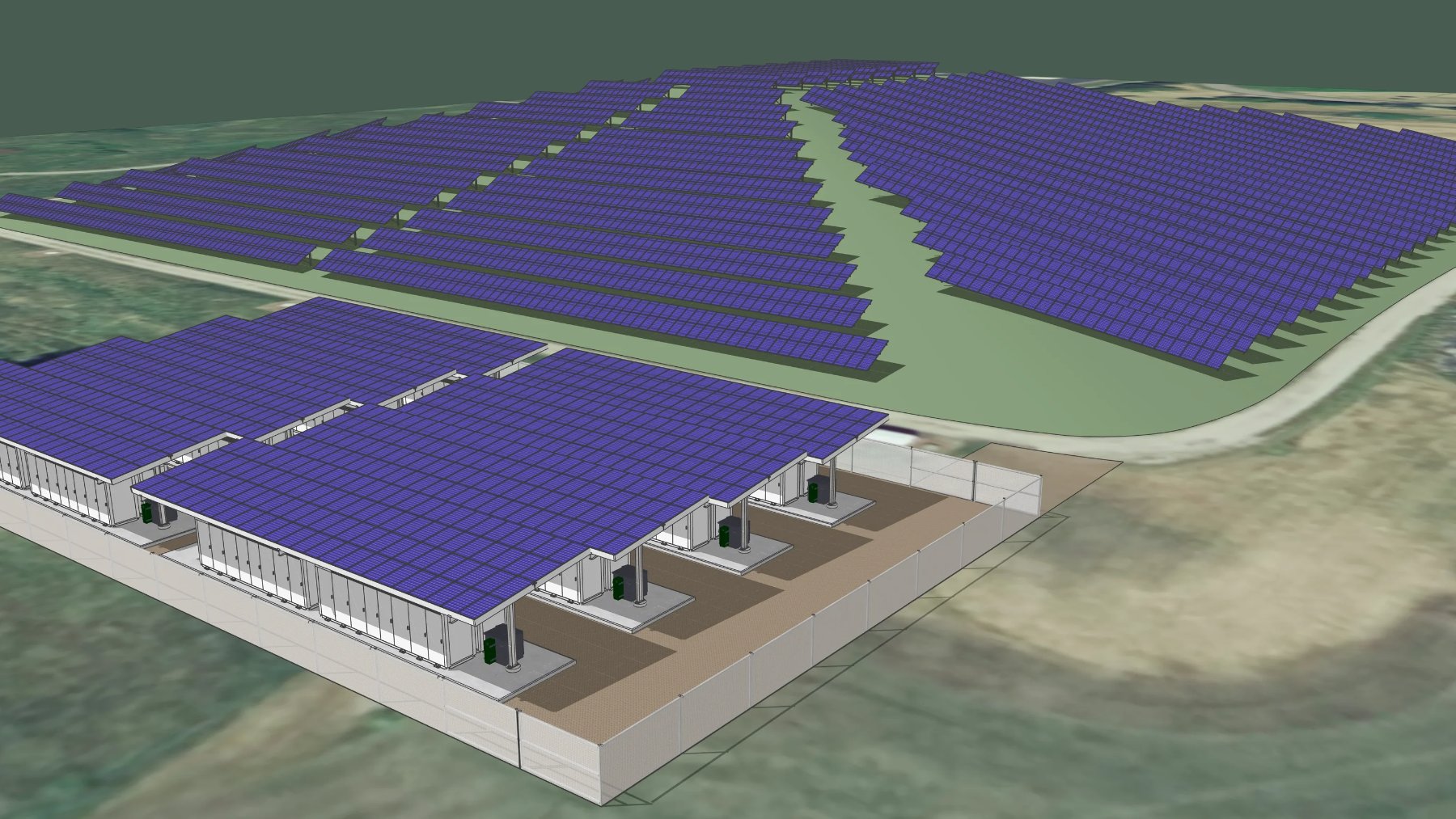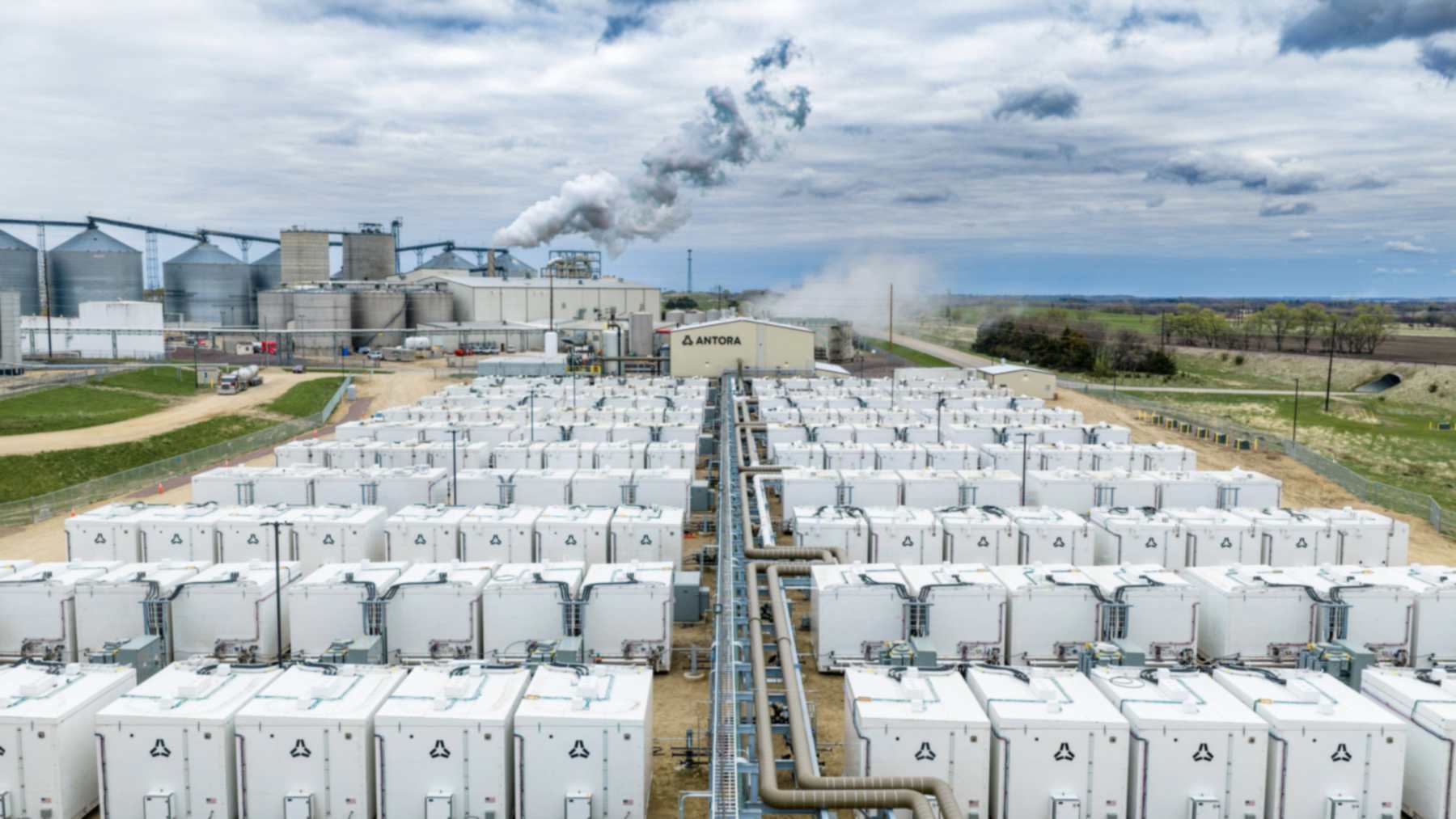
Antora Energy will build a 5.8 gigawatt-hour, multi-day thermal battery at Pratt Energy’s biorefinery in Pratt, Kansas, the California company announced on October 1, 2026. Once it is complete, Antora says, the project will be one of the largest battery storage systems in the world.
Pratt Energy has turned regionally grown corn and sorghum into ethanol since 2013, and it also produces co-products used for biodiesel and animal feed. Under a long-term heat offtake agreement, Antora will start supplying the plant with competitively priced, around-the-clock energy next year.
“Antora came to Pratt early, listened, and followed through on their commitments: local hiring, internships, and scholarships for our students,” said Kyle Farmer, Mayor of Pratt and a teacher at Pratt High School. “This project brings affordable energy to one of our key employers and ensures steady demand for the grain our farmers produce. We’re proud to welcome Antora to our community.”
Carbon blocks that store heat
Antora’s thermal batteries store low-cost electricity as heat in insulated blocks of solid carbon and deliver it as heat or power. On its technology page, the company writes that “electricity is used to resistively heat the carbon blocks,” and that “carbon’s high thermal conductivity enables ultra-fast charging that rapidly soaks up the cheapest hours of electricity generation.”
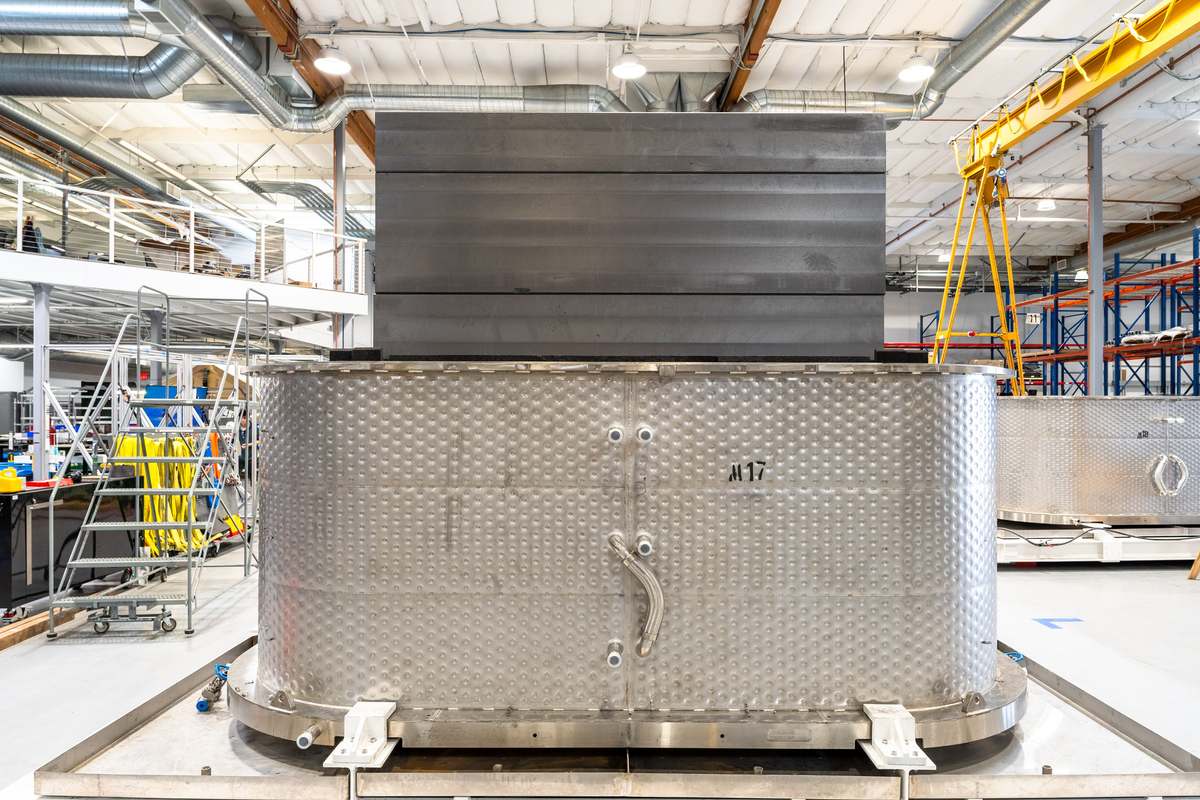
The blocks hold energy at temperatures of up to 4,352°F (2,400°C). “At these glowing-hot temperatures, the carbon blocks transfer energy as light,” Antora writes. The heat is delivered to industrial processes or paired with off-the-shelf steam turbine equipment to produce electricity.
A second big project after South Dakota
In May, Antora and POET, the world’s largest producer of biofuels, commissioned a 5 gigawatt-hour system at POET’s bioprocessing facility in Big Stone City, South Dakota. That project “advanced from initial construction to delivering energy in under 12 months,” the companies said at the time, and its batteries were all made at Antora’s San Jose, California, gigafactory.
“POET is dedicated to supplying the world with affordable, American-made biofuels and bioproducts,” POET founder and CEO Jeff Broin said then. “Our nation’s energy future will be defined by innovation, and that’s exactly what we’re focused on.”
ESS News lists the South Dakota system at 50 megawatts. For Pratt, Interesting Engineering pointed out, “the Pratt announcement does not specify an equivalent power rating.” Storage projects such as a proposed 972-megawatt water battery in Wyoming are usually described by that figure.
Investors from three countries
Copenhagen Infrastructure Partners led the Pratt project’s third-party equity financing as part of its credit platform investments. Australian investment firm Grok Ventures and University Pension Plan Ontario also participated. ESS News reported that the deal follows Antora’s $550 million Series C round.
“Antora has demonstrated something rare: sound technology, compelling economic fundamentals, and a clear path to repeatable deployment at scale. That gave us the conviction to partner with Antora on this project,” said Reiner Boehning, Partner at Copenhagen Infrastructure Partners. “Investments like this one provide the energy infrastructure American industry depends on, while delivering real and lasting benefits to the rural communities where these projects are built.”
“American industry runs on affordable, reliable energy,” said David Bierman, co-founder and Chief Commercial Officer of Antora. “Our partnership with Pratt Energy delivers it, helping meet Kansas’s rising energy demand without increasing power bills for homes or businesses. This biorefinery project is creating jobs and spurring local investment without straining the resources the community depends on.”
Toward zero-carbon-intensity ethanol
The project will also help Pratt Energy work toward producing 100% zero-carbon-intensity ethanol, which Antora says would open new markets for Kansas agricultural products. Carbon intensity measures a fuel’s greenhouse gas emissions over its life cycle.
The Department of Energy’s Alternative Fuels Data Center explains that “life cycle analysis is used to assess the environmental impacts of all stages of a product’s life, including raw material extraction, processing, manufacturing, distribution, use, and disposal or recycling.” It also cites an Argonne National Laboratory analysis that found “using corn-based ethanol in place of gasoline reduces life cycle GHG emissions on average by 40%.”
“Reliable energy is the foundation of everything we do, and this project lays that foundation for decades to come,” said Travis Lane, CEO of Pratt Energy. “It means more jobs across the Pratt community, new opportunities for our students, and strengthened demand for the corn and sorghum our neighbors grow.”
Lane added that the project is not just an investment in Pratt Energy but “an investment in Pratt, Kansas, and everyone who calls it home.”
Interns, scholarships and a community fund
Antora expects the project to create and support more than 100 construction and operations jobs, and it will prioritize local candidates when it hires for the plant’s permanent operations roles.
The company has partnered with Pratt Community College on a paid internship program. Two students from the college’s Electrical Powerline Technology program spent this summer working on the Big Stone project in South Dakota.
Kaleb Reagle, a recent Pratt Community College graduate who interned at Big Stone, is now a full-time technician at Antora. “Seeing what Antora has done for the community in Big Stone and bringing that back to Kansas is really exciting,” he said. “This feels like giving back to the community that raised me. There are students at Pratt right now who were in my spot just a few months ago, and I can’t wait to see what this project opens up for them.”
Through the South Central Community Foundation, Antora is funding an energy scholarship program for up to 12 Pratt students over three years in energy, engineering and the skilled trades. It is also setting up the Pratt Community Impact Fund, which will begin awarding grants in 2027, with Pratt County community members making the decisions.
Farther east in the Flint Hills, one Kansas rancher has let cattle graze beneath 50 wind turbines for two decades.
Open questions about water, noise and cost
On water and noise, Antora’s wording is careful. The project “is expected to use little additional water beyond the biorefinery’s existing operations and operate without increasing noise levels for neighboring properties,” the company said, with no figures attached.
There is no price tag in the announcement either, and no heat price, emissions estimate or rate study to back up the line about power bills. Household bills are a live issue at a time when data centers are pushing up demand on the U.S. grid.
The full announcement was published by Antora Energy on October 1, 2026.
Kaleb Reagle interned at Antora’s Big Stone project in South Dakota this summer, and the Kansas system is planned for Pratt, the town where he went to college.
Photo: Antora Energy