Hydrogen from rocks: a research project, not a finished energy source
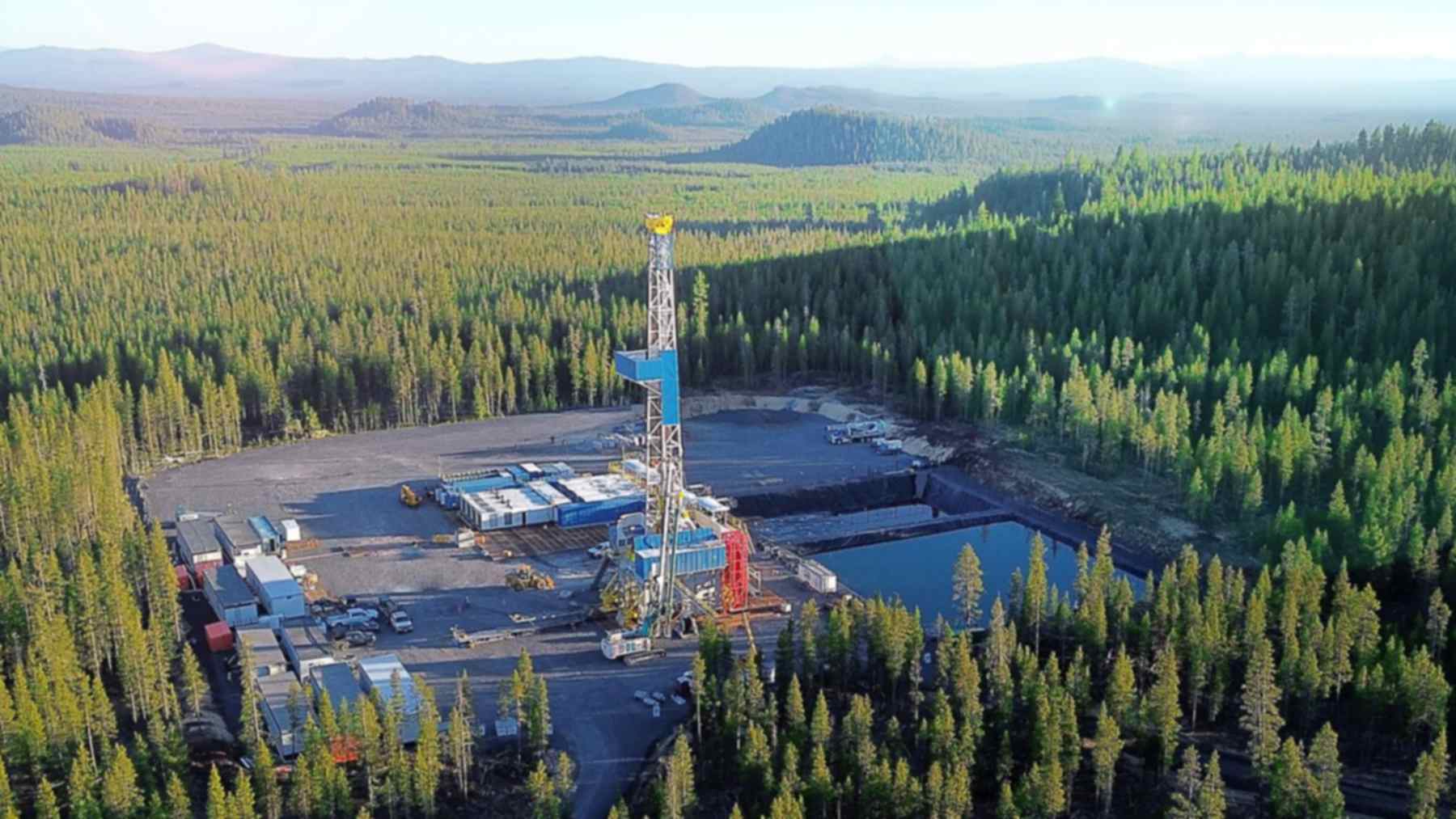
The search for cheap, clean forms of energy has been an ongoing effort, and one of the projects now under way is at the Massachusetts Institute of Technology (MIT). Assistant Professor Iwnetim Abate leads a group that is working on a way to produce hydrogen from rocks, which, if it works, could open a new source of carbon-free energy. Natural hydrogen, particularly white hydrogen, is generated from the reaction of water with iron bearing rocks; the iron corrodes to release hydrogen. This happens in the Earth’s crust and can leave underground pockets of pure hydrogen. Geologists have known about such deposits for some time: a water well drilled in Mali in 1987 struck one and set off an explosion. A study by researchers at the U.S. Geological Survey, published in Science Advances in December 2024, put the most probable amount of geologic hydrogen in place in the Earth’s crust at about 5.6 trillion metric tons, within a very wide range of uncertainty, and noted that most of it is likely to be impractical to recover. That potential, coupled with the prospect of hydrogen being a clean energy vector, has attracted interest from researchers as well as governments across the globe.What the MIT team is testing, and why it is still early
Producing hydrogen from rocks is still in the development stage. Abate’s research group at the Massachusetts Institute of Technology (MIT) is working in the lab. Its next milestones are a catalyst recipe and a lab-scale reactor, which would then inform the design of a larger reactor for use in the field. To work out the ideal conditions for producing hydrogen underground, the group is using a $1.3 million grant from ARPA-E, the research agency of the U.S. Department of Energy, awarded in 2024. The aim is to find the catalysts, temperature, pressure and pH that make the process more efficient, so that hydrogen can be produced at a competitive cost.- Catalyst Development: The team is working to create a fluid with water as the main ingredient; the team is testing simple, low-cost catalysts that could speed up the hydrogen-generating reaction.
- High-Throughput System: Scientists are planning to create an intelligent system with robots that will allow comparing different compositions of catalysts and modeling their impact on rocks originating from various areas.
- Parameter Optimization: The team plans to measure how much hydrogen each combination produces, with the goal of defining the best conditions for hydrogen production, such as temperature, pressure and pH.
Gray, green, white: the colors used to classify hydrogen
In regard to the various methods of hydrogen production, each one falls under a particular color category based on the level of environmental impact and how the hydrogen is produced. Nonetheless, geologic hydrogen is sometimes described as ‘white’ or ‘gold’ hydrogen based on its origin and its prospects to be a green fuel source. While ‘gray’ hydrogen is derived from natural gas or coal and ‘green’ via water electrolysis with electrical energy from renewable sources, ‘white’ hydrogen needs little processing, and may be less carbon-intense. That is why it is seen as a possible low-carbon energy source, although it is still unclear how much can be extracted and how useful it will be. The existence of white hydrogen in rocks in America is not new: geologists have long known that iron-rich rocks produce hydrogen when they react with water, and deposits have been found in several countries, including the United States. But the work is at an early stage. Experts quoted by MIT in 2024 said that the list of unknowns was long, including how to speed up the reaction and how to extract the gas safely, and that the road to the first commercial projects was long too.This article was corrected on 28 October 2026 to remove inaccurate statements and a misleading headline.