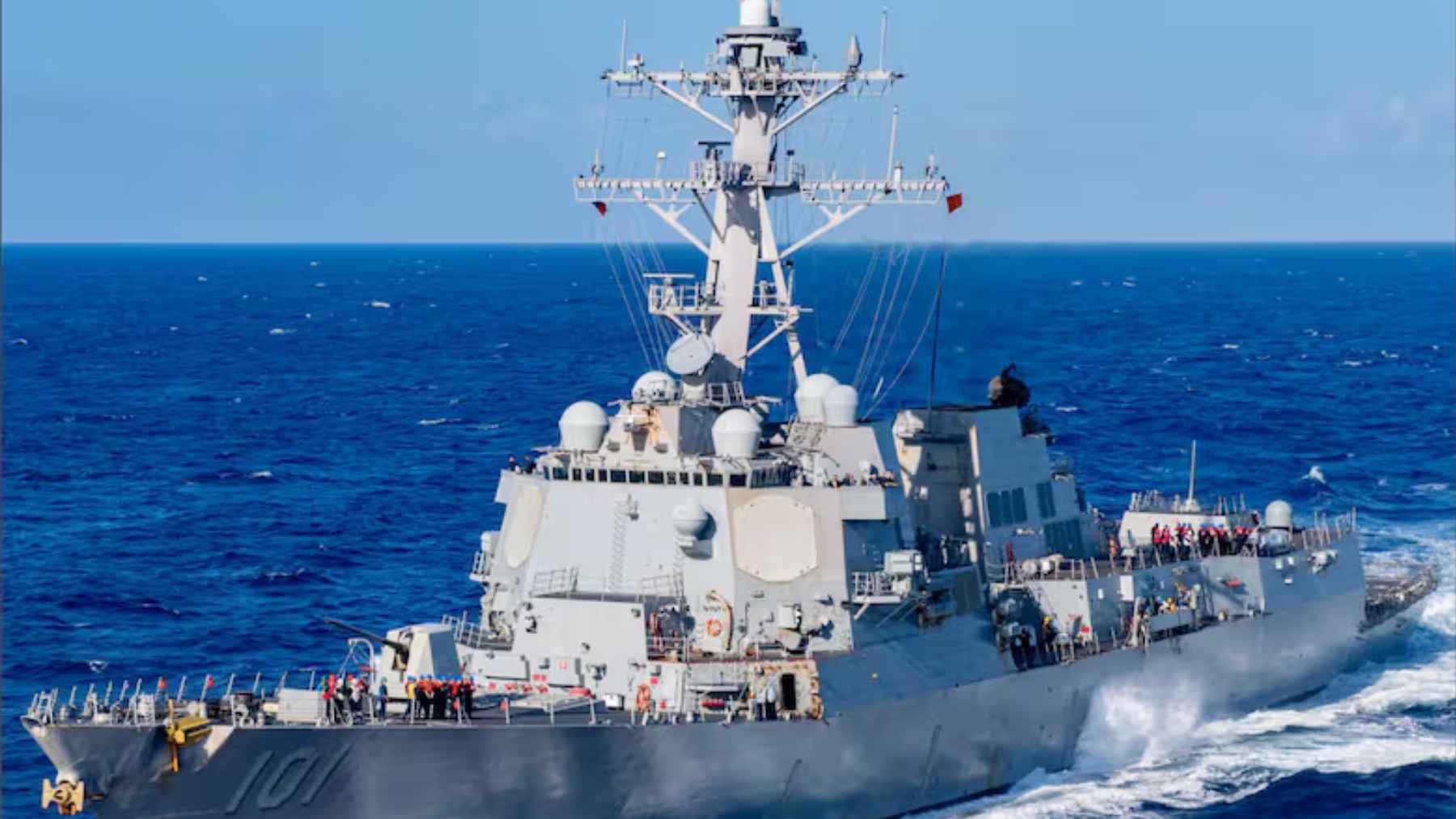
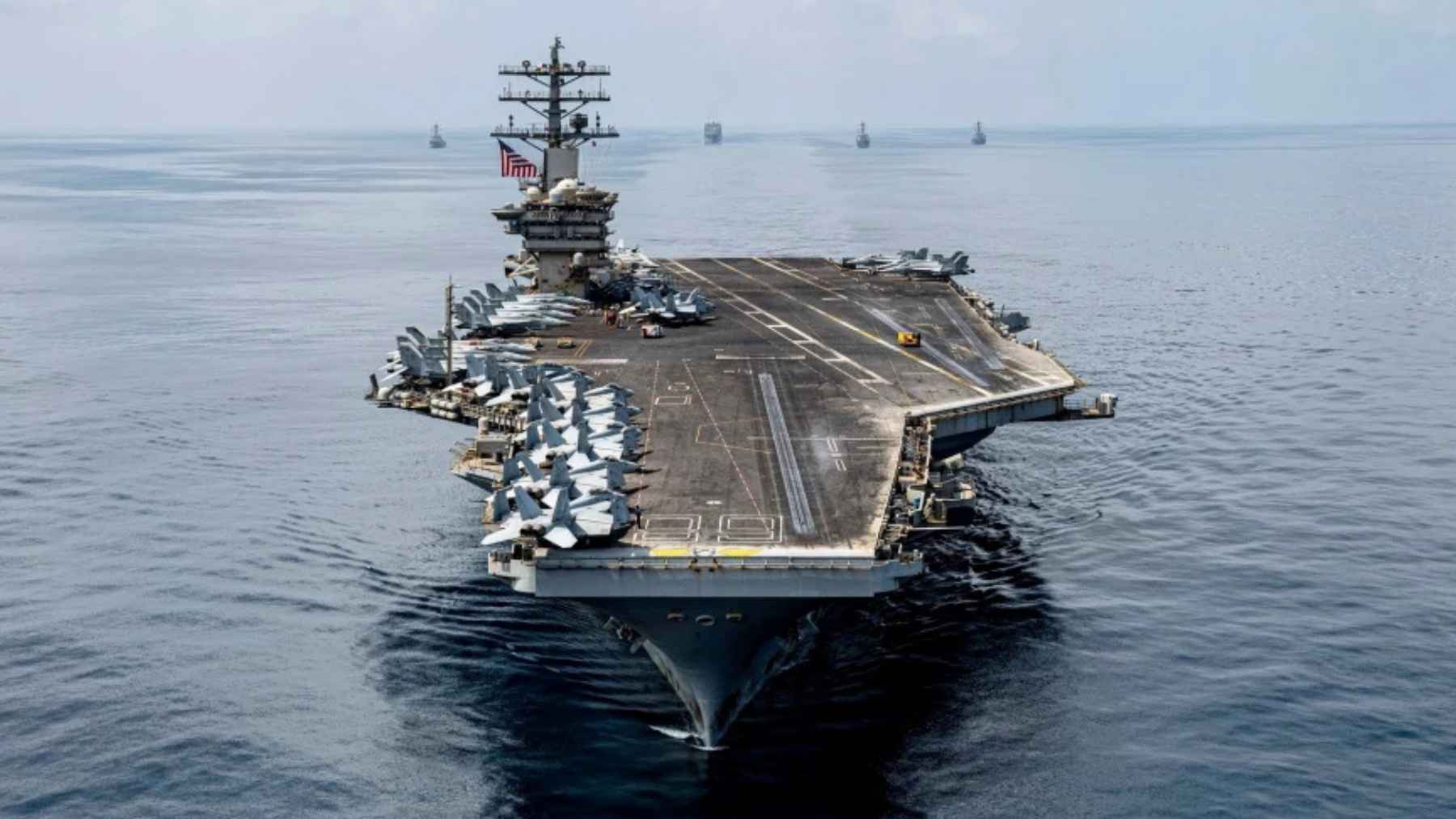
One of the U.S. Navy’s biggest symbols of power spent a few days off Panama, and the timing was hard to ignore. The nuclear-powered USS Nimitz and the guided-missile destroyer USS Gridley arrived in Panamanian waters on March 29 for Southern Seas 2026, a regional tour built around training, port visits, and diplomacy.
On paper, this was a cooperation exercise. In practical terms, it placed a U.S. carrier beside the Panama Canal at a moment when Washington, Beijing, and Panama are arguing over influence near one of the world’s most important trade shortcuts. The ships did not cross the canal, but the message still traveled far.
A visit beside the canal
Panama’s National Aeronaval Service said the ships would remain in national waters from March 29 to April 2. Local reporting based on the agency’s statement said the Nimitz would stay anchored in open water, while the Gridley would dock at the Amador Cruise Port in Panama City.
That detail matters. The visit was not a canal transit, and the carrier’s size explains why. This was more like parking a giant floating airfield beside a narrow road that everyone is watching.
Why the canal still matters
The Panama Canal is not just local infrastructure. It handles about 5% of global maritime trade, so fights over docks, port contracts, and nearby security echo far beyond Panama City. For the United States, the waterway also carries more than 40% of its container traffic, worth roughly $270 billion a year.
That is why the March visit carried a political shadow. In 2025, U.S. Defense Secretary Pete Hegseth said Washington wanted to counter Chinese influence near the canal, while Panama rejected claims that China controlled the waterway and stressed its own sovereignty. The trouble is, the argument did not stay in the past.
The China question
Panama’s president, José Raúl Mulino, later said his country was being swept along by a dispute between two major powers. He was speaking after Panama took over port contracts previously held by Hong Kong-linked CK Hutchison and after unusual inspections of Panama-flagged ships in China. That is the kind of pressure small countries feel when big powers collide.
Some analysts have folded this wider U.S. posture into the phrase “Donroe Doctrine,” a play on the older Monroe Doctrine. In plain English, it means a harder Trump-era push to limit rivals such as China, Russia, and Iran in the Western Hemisphere while asserting American primacy. That label is political shorthand, not the official mission statement for Southern Seas 2026.
What Southern Seas means
The official purpose of Southern Seas 2026 is cooperation at sea. U.S. releases said the Nimitz and Gridley were scheduled to conduct exercises with partner maritime forces while circling South America, with port visits planned in Brazil, Chile, Panama, and Jamaica.
That kind of work is often called “interoperability.” It simply means making sure different navies can communicate, move, and respond together without confusion. It sounds dry, but in real life it can mean faster help during a disaster, cleaner coordination in crowded waters, or a safer response to illegal trafficking.
How big are the ships
The USS Nimitz is about 1,093 feet long, nearly the length of three and a half football fields. It can carry up to 90 aircraft, displace about 110,000 U.S. tons, and move at roughly 35 miles per hour. Until you picture that much steel sitting off a coastline, the scale is hard to grasp.
The Gridley has a different job. A guided-missile destroyer is built to protect a larger force, track threats, and add radar and missile defense. Together, the two vessels can carry about 6,000 crew members, a floating town with a military purpose.
A route around South America
The tour began on March 12 from the U.S. West Coast, according to Panamanian reporting based on the official statement. The planned route included the Strait of Magellan in Chile before the ships eventually moved toward a new base on the U.S. East Coast on June 20.
Choosing the Strait of Magellan instead of the Panama Canal changes how the stop reads. Panama was not the shortcut this time. It was the stage.
What Panama gains
For Panama, the official benefit is practical cooperation. Maritime knowledge can mean better skills at sea, emergency response, surveillance, and coordination when authorities need to track ships or respond to trouble. It is not flashy, but it matters.
Still, there is a delicate line. Panama wants security cooperation without giving the impression that its canal is up for grabs. Anyone who has watched traffic clog a city street knows the value of controlling your own route, and for Panama, that route is global.
The bigger signal
U.S. Southern Command later said the Panama stop was the first time in more than 50 years that a U.S. aircraft carrier had visited Panamanian waters. That alone explains why the deployment drew attention. It was rare, visible, and close to the canal.
At the end of the day, this was both a military exercise and a geopolitical signal. The Nimitz did not need to pass through the canal to remind the region that Washington is watching the water, the ports, and the politics around them. And Beijing is watching too.
The announcement was published by U.S. Naval Forces Southern Command and U.S. 4th Fleet.