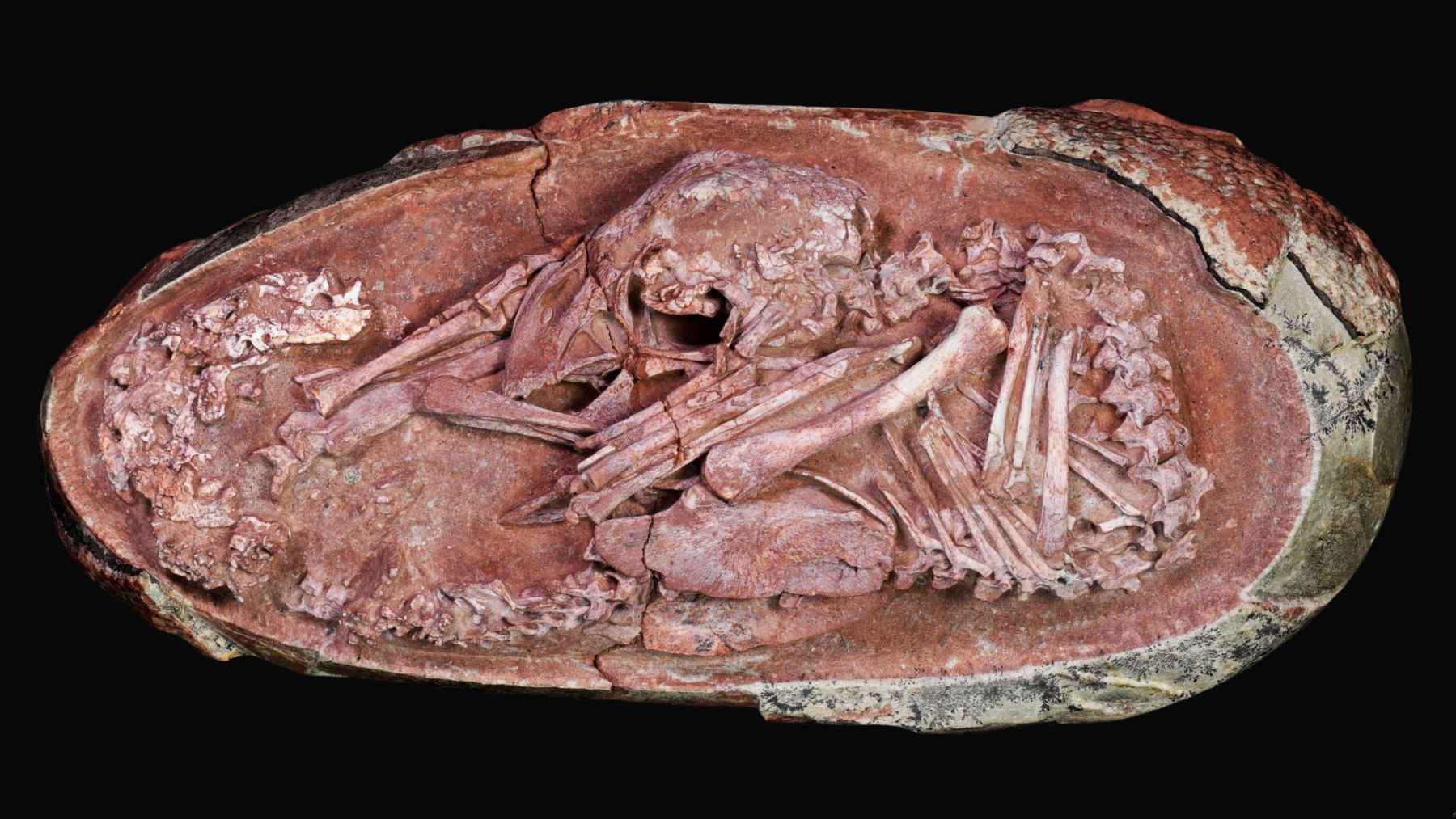
A fossilized egg from southern China has opened a rare window into a dinosaur’s final moments before hatching. Inside it, scientists found an exceptionally complete embryo, nicknamed Baby Yingliang, curled in a position that looks strikingly similar to a chick preparing to break out of its shell.
The discovery matters because it suggests that some behaviors seen in birds today may have much older roots than many people realize. Not feathers. Not beaks. This time, the clue is posture, the quiet way a tiny animal folded itself inside an egg roughly 70 million years ago.
Why this egg matters
Baby Yingliang comes from Late Cretaceous rocks in Ganzhou, Jiangxi Province, an area in southern China known for dinosaur eggs and related fossils. The embryo belongs to an oviraptorosaur, a feathered theropod dinosaur group closely related to the lineage that eventually gave rise to modern birds.
The egg is about 6.6 inches long, while the curled skeleton inside measures about 9.3 inches from head to tail. That may sound like a tight fit, and it was. The little dinosaur filled much of the space inside the shell, which is one reason the fossil is so useful to scientists.
Dinosaur embryos are usually difficult to study because their delicate bones often shift, break, or scatter after burial. Here, the skeleton stayed articulated, meaning the bones remained connected in a natural arrangement rather than being reduced to a fossil jigsaw puzzle.
A dinosaur curled like a chick
What did researchers see inside the egg? The head lies beneath the body, the feet sit to either side, and the back curves along the rounded end of the shell. It is a compact pose, almost like the animal had tucked itself in.
In living birds, similar late-stage movements are part of “tucking,” a behavior linked to successful hatching. A chick that gets into the right position is better placed to break the shell and emerge. A chick that does not may have a much harder time surviving that last step.
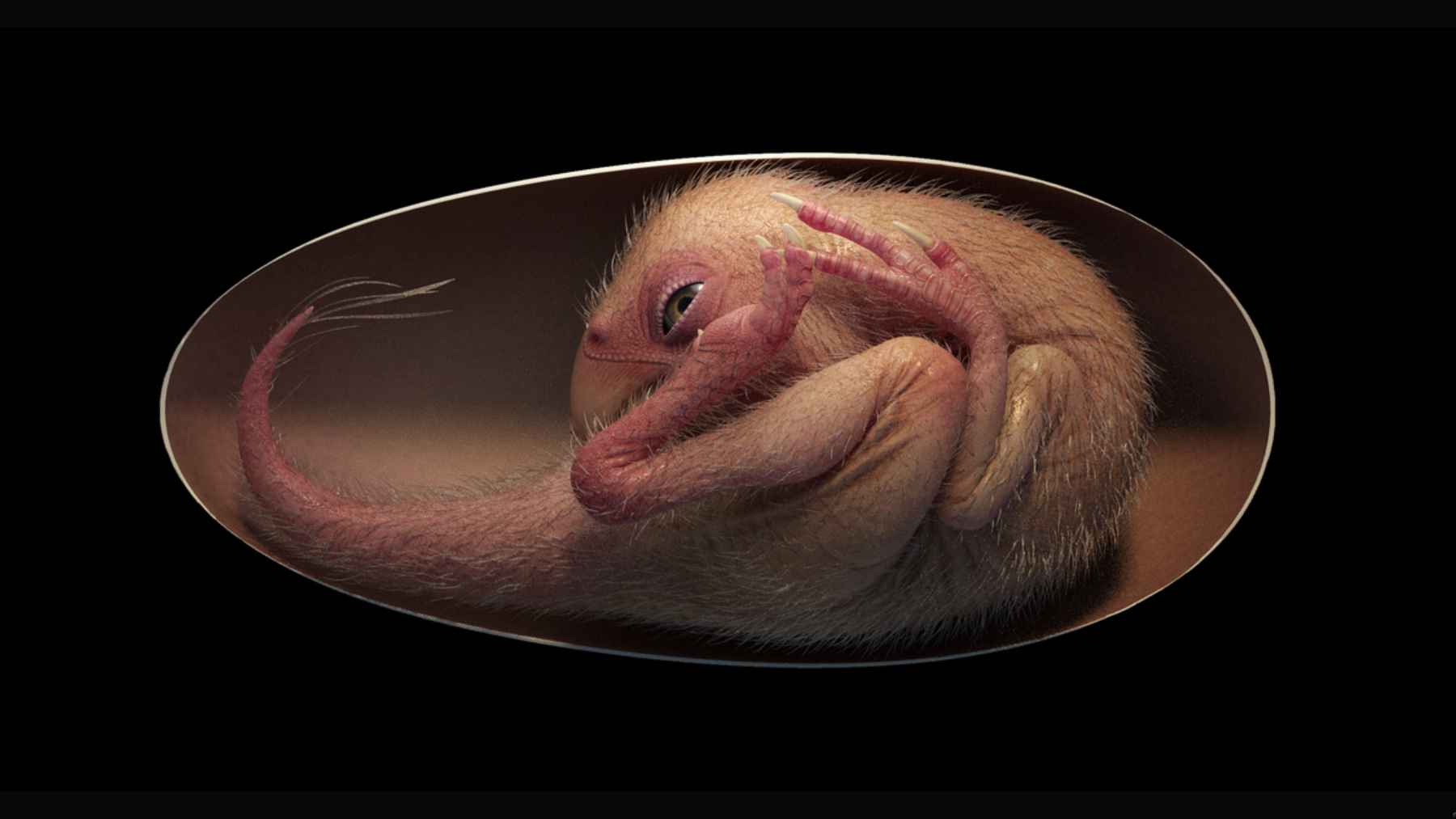
That is where this fossil becomes more than a beautiful specimen. It suggests that this pre-hatching pattern may not have started with modern birds at all. It may have begun earlier, among non-avian theropod dinosaurs.
The bird connection
The finding adds another small but important thread to the long story connecting birds and dinosaurs. We often hear about feathers, hollow bones, and beaks, but development inside the egg is part of that story too.
Waisum Ma, from the University of Birmingham, said researchers were surprised to see the embryo “beautifully preserved inside a dinosaur egg.” The posture, she noted, had not been recognized in non-avian dinosaurs before.
Steve Brusatte, a paleontologist at the University of Edinburgh, put it in simpler terms, saying the prenatal dinosaur looked “just like a baby bird curled in its egg.” That visual match does not prove every detail of bird hatching began in dinosaurs, but it does make the connection harder to ignore.
From storage shelf to science
There is also a very human twist to this story. The egg was not immediately recognized as a major scientific treasure. It had been acquired around 2000 as a suspected egg fossil, then placed in storage for years.
Later, during work connected to the Yingliang Stone Natural History Museum, staff noticed bones visible through a broken section of the shell. That small observation changed everything. The fossil was prepared carefully, and the hidden embryo finally came into view.
It is a reminder that discovery does not always happen in the field with a dramatic shout across the rocks. Sometimes, it begins on a storage shelf, with someone looking closely enough to notice what others missed.
What scientists still need to know
One fossil, even one this remarkable, cannot answer every question about dinosaur reproduction. Researchers will need more well-preserved embryos to see whether this posture was common among oviraptorosaurs or part of a broader pattern across related dinosaurs.
Future imaging work may also reveal details still locked inside the rock matrix. Fossils like this are delicate, and separating bone from surrounding minerals is not as easy as peeling away an eggshell at breakfast. Slow work matters here.
Scientists are also interested in how egg shape, nest structure, and embryo movement worked together. In practical terms, that means studying not just what these animals looked like, but how they grew, shifted, and prepared for the dangerous moment of hatching.
Baby Yingliang’s bigger lesson
Baby Yingliang is not just a fossil of a dinosaur inside an egg. It is a snapshot of behavior, preserved at a stage of life that almost never survives in the fossil record.
That makes the tiny animal unusually powerful evidence. It helps scientists compare ancient development with the living birds we see today, from backyard sparrows to chickens on a farm.
At the end of the day, the egg shows that evolution often works through small details. A curve of the spine. A tucked head. A body preparing for birth.
The study was published in iScience.