Can we find evidence of one of the biggest changes in human history in an abandoned pantry? Archaeologists working in northeastern Spain, at Coves del Fem, found eight storage pits, two hearths, pottery, animal bones, flint, and charred plant remains from the Early Neolithic. Digging even deeper, the team discovered two Mesolithic layers left behind by hunter-gatherers who inhabited that area, which were remarkably well-preserved.
Instead of connecting the transition from different sites, this new excavation grants researchers a unique opportunity to study two different ways of life in one same geographical refuge. Before archaeologists can determine how the change was forged by migration, contact or local adoption, all this new material must be properly analyzed. Nevertheless, this grants the opportunity to bridge the gap between the last hunter-gatherers and the first communities to produce their own food.
A household archive from a prehistoric pantry
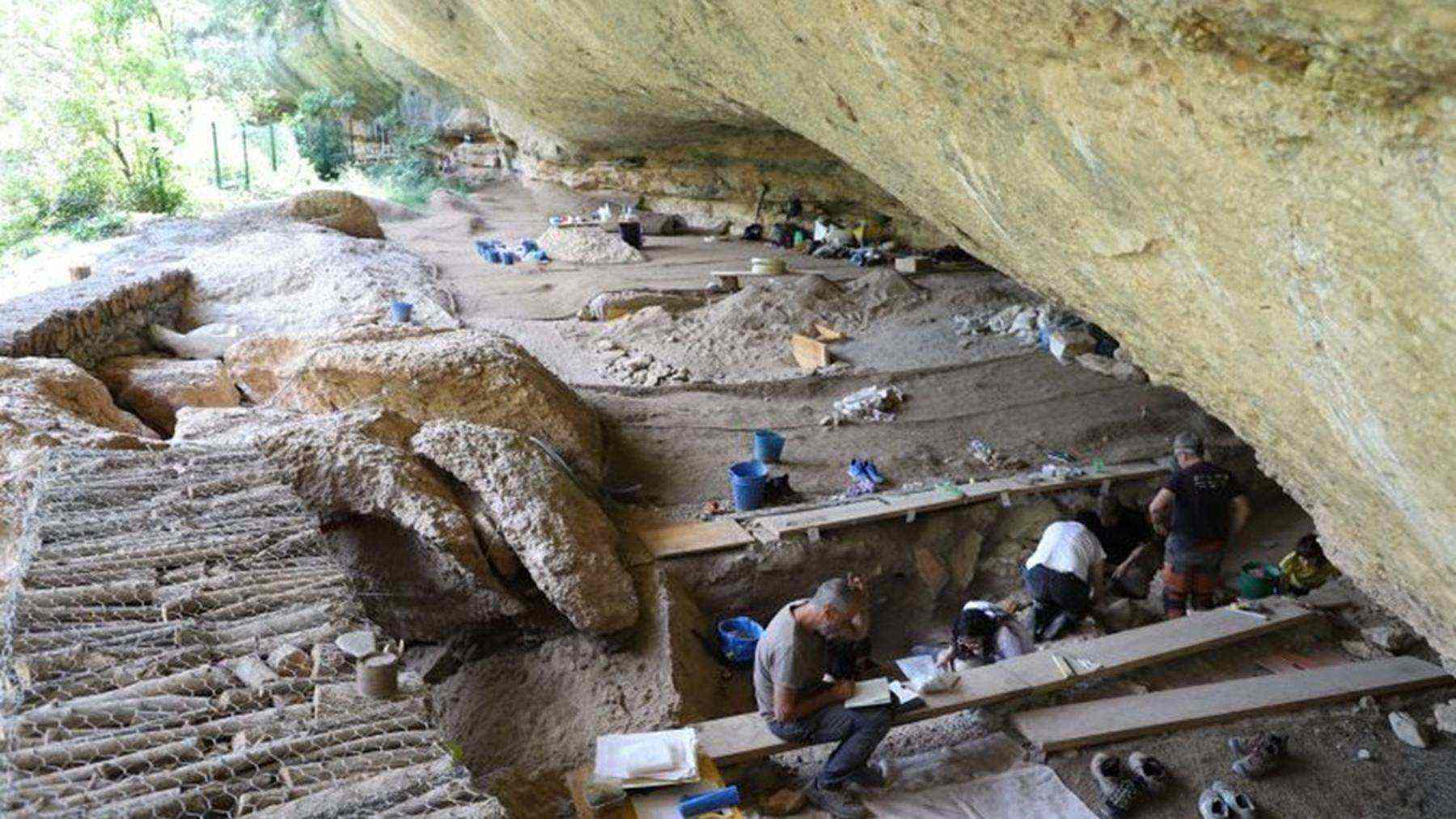
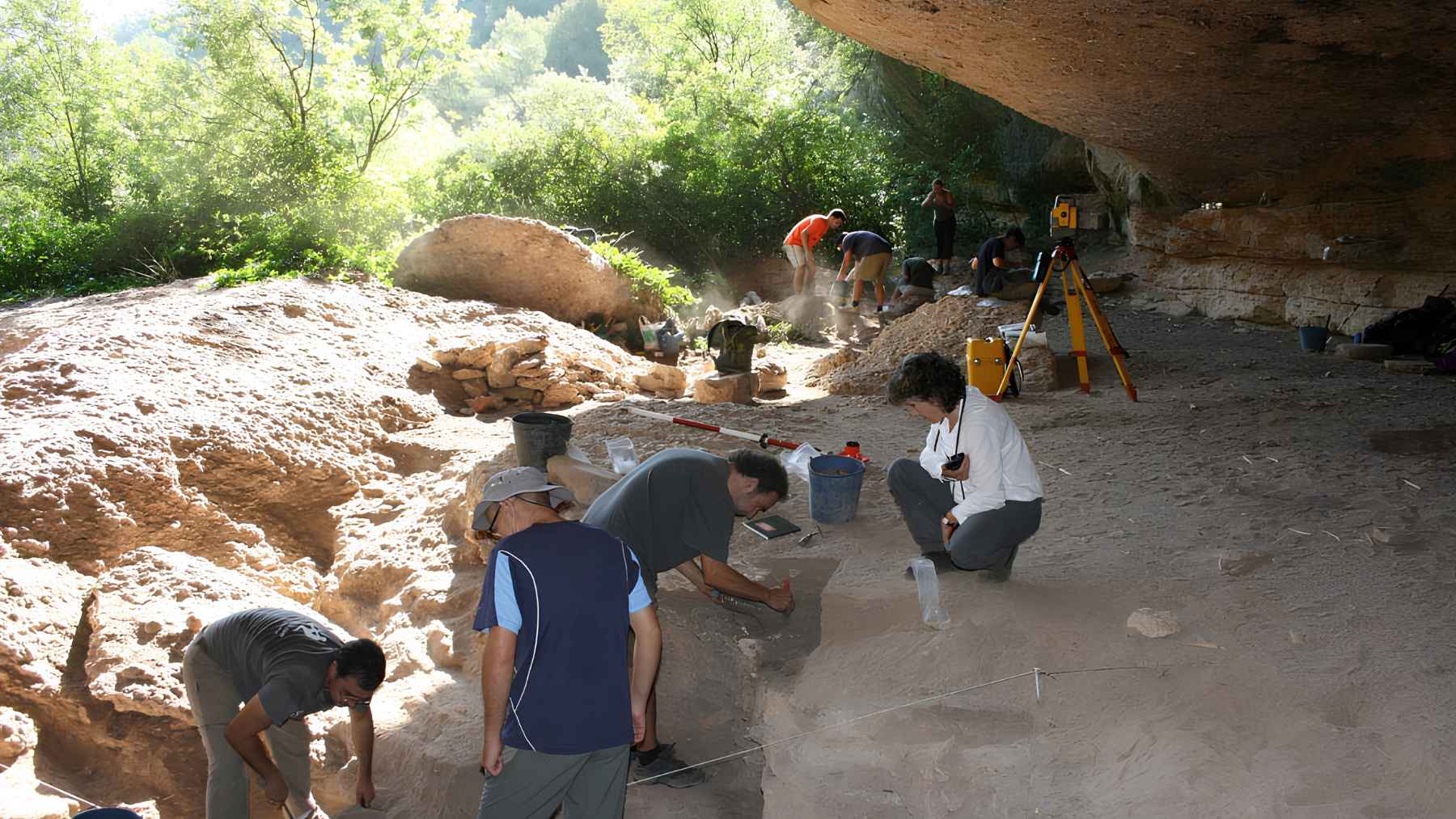
The team consisted on 25 people, including instructors, researchers and archaeology students from the Universitat Autònoma de Barcelona, working alongside the Spanish National Research Council’s Milà i Fontanals Institution. The onsite investigation worked from May 30 to June 28. They studied and recorded two fireplaces and eight pits dug into the substratum during the Early Neolithic’s Cardial phase. Scientists conclude that the pits were originally built as silos and, after this storage role ended, they were reused as domestic wastes deposits.
That latter use is precisely what makes them so valuable nowadays. Animal remains, ornate pottery, charred seeds and fruit, flint tools and chips left from producing these very tools were discovered in these remains. These are the kinds of evidence which reveals details about the food which was consumed, how they stored it, how they produced their tools and which were their daily activities. Containers decorated by making impressions on the using the edges of different shells, known as “Cardial” pottery are evidence of an Early Neolithic tradition.
Hunter-gatherer layers which remained below
What lay below may have been the most important discovery. Two unusually well-preserved Mesolithic layers were uncovered by the scientists. These included three fireplaces, flint tools, animal remains, and a considerable assortment of plant evidence. These periods were harder to comparably document in earlier research, so the unearthing of these new layers granted researchers the opportunity to directly compare how people lived before and after farming appeared.
A hearth is much more than ancient soot. Researchers can restore the diet, the materials used, and how often people returned to the shelter by combining the evidence given by the ashes, animal and plant remains, and stone flakes uncovered. Radiocarbon and stratigraphic research suggests the site at Coves del Fem was repeatedly inhabited, probably in a seasonal fashion, even though this theory still needs more testing.
The importance of dates
“Neolithization” was not an overnight occurrence, people didn’t replace hunting spears for plowing tools from one day to the next. It was a slow transformation which included new tools, pottery, domestication of different animals, cultivating plants, and an evolving relationship with the landscape. This process has been difficult to study in northeastern Iberia, because few sites maintain evidence of both sides of this process in an uninterrupted sequence.
Radiocarbon dating indicates that Mesolithic groups occupied the area between about 6065 and 5718 BC. On the other hand, the Cardial Neolithic layers date from around 5667 to 5041 BC. With so little time between these two periods—and no evident signs showing that erosion affected the main sequence—Coves del Fem offers a very unusual uninterrupted view of how life at the site changed over time.
Changes in farming
Another important aspect here is ecology. According to Archaeobotanical research including Coves del Fem, Neolithic groups obtained timber, firewood, raw materials, food, fibers and other daily needs from surrounding forests and vegetation found on rivers. The challenge is determining which effects were caused by humans and which resulted from climate changes that occurred in that time.
Seeds, fruits, charcoal, and animal bones discovered recently can help archeologists separate those impacts. Were people collecting the same wild plants as those who came before them, growing cereals, keeping livestock from the area, or using different fuel options depending on the landscape? Not every question may be answered in the laboratory, but it can show how these daily decisions shaped environmental change.
A rock shelter showing a 1,500-year timeline
Coves del Fem is a rock shelter of around 300 square meters (approximately 3,200 square feet) 10 meters, or 33 feet above the Montsant River in Serra de Montsant Natural Park. Excavations have been carried out since 2013, which found that people have been living there almost continuously from around 6000 to 4500 BC. They also found traces left from earlier Upper Paleolithic groups and identified later prehistoric use. This continuity is uncommon in Catalan sites of this age.
The 2026 excavation is part of a four-year project that will continue until 2029. Researchers are studying the use of land use and resources in the Upper Montsant Basin, from the year 8000 to 2000 BC. The next step involves slow work, focusing on laboratory analysis of pottery, tools, bones, and plant remains. In this part, burnt seeds or even old household trash could reveal how life changed in a mountain valley during one of the most important transitions in history.
What the discovery has reveled
For now, the most important conclusion is not just that archaeologists have found how farming began. What makes this so important is that Coves del Fem preserves the changes with remarkable detail, hiding traces of hunter-gatherers in the lower layer and early farming structures above them. This site may provide an insight to how migration, exchange between communities and adaptation to local conditions interacted as farming moved inland.
In other words, the most ordinary aspects of life, such as cooking fires, broken pots, animal bones, and discarded seeds, could reveal a clearer picture of Neolithic life in inland northeastern Iberia.
The press release was published on Universitat Autònoma de Barcelona.