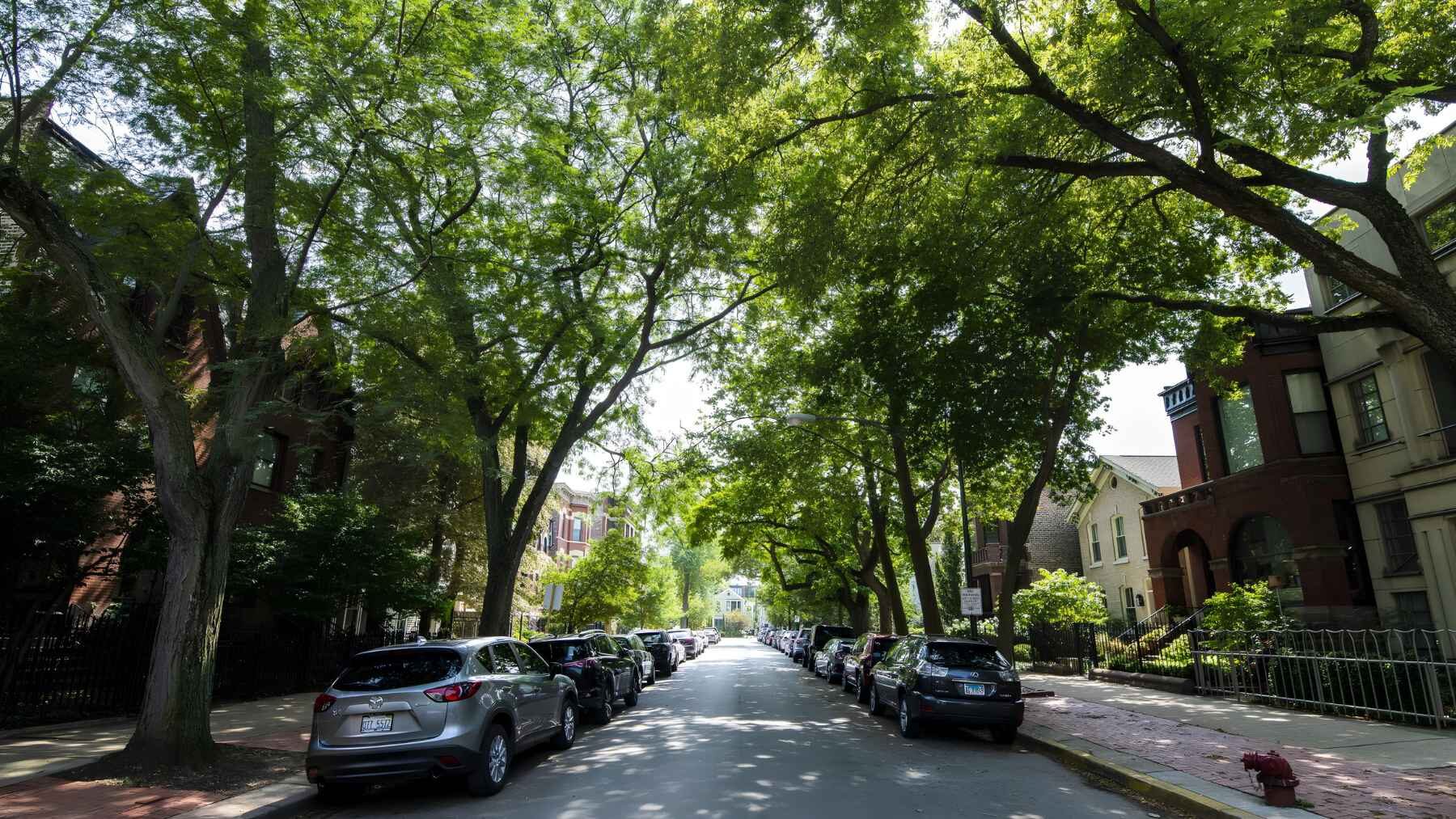
Walk down a Chicago street on a hot summer day and one thing becomes obvious pretty quickly. Trees matter.
One mature tree can shade the sidewalk, parked cars, and nearby homes. A bare block? It can hold onto heat like a dark baking sheet. Now, a new Chicago study suggests that losing this everyday protection may come with a measurable health cost.
Researchers at Northwestern University tracked tree canopy and mortality across the city from 2011 through 2021. Neighborhoods with greater year-to-year canopy losses also recorded higher death rates, especially in hotter areas on the South and West sides.
How big could the effect be? The researchers modeled an increase equal to planting about 14,000 trees a year. It was associated with roughly 105 fewer deaths annually.
That does not mean trees directly prevented those deaths. The study found an association, not proof of cause and effect.
What tree canopy actually measures
So, what exactly is tree canopy?
Tree canopy is the share of land covered by the leafy crowns of trees when viewed from above. It is not simply a count of trunks. One large oak, for example, can cast far more shade than several newly planted saplings.
That difference matters. A city can plant thousands of young trees while still losing overall shade if large, mature trees disappear.
Trees cool streets in two basic ways. Their leaves block sunlight, and they release water vapor through a process called evapotranspiration. Think of it a little like sweat cooling your skin.
The Environmental Protection Agency identifies trees and other vegetation as a practical way to reduce urban heat islands, the hotter pockets created by pavement, roofs, and buildings.
An 11-year look at Chicago
The researchers wanted more than a snapshot.
Lead author Harrison Garcia and senior author Daniel Horton worked with a wider research team to analyze annual satellite estimates for 801 census tracts, which are neighborhood-sized statistical areas. They then paired those measurements with more than 220,000 death records.
The public dataset also includes summer temperatures, vegetation greenness, nitrogen dioxide pollution, and other environmental measures.
But neighborhoods are complicated. Income differs. So does pollution, population, heat exposure, and residential segregation.
To account for that, the researchers built a statistical model that considered those neighborhood-level factors. The goal was to better separate changing tree cover from other differences that could also affect health.
Not perfect. But much more useful than simply putting a tree map next to a mortality map.
The change mattered more than the snapshot
Here is where things get interesting.
The amount of tree canopy in a neighborhood during any single year was not significantly associated with mortality. What mattered more was whether that canopy was growing or shrinking over time.
“We found that as tree canopy decreases, mortality increases,” Horton said.
Growing canopy was consistently associated with fewer deaths from cardiovascular and respiratory disease, several musculoskeletal conditions, and mental health-related illnesses.
Why?
The study cannot point to one single explanation. Shade is likely only part of the story. Trees may also affect health through cooler temperatures, cleaner air, more opportunities to spend time outdoors, lower stress, or some combination of these effects.
Chicago’s shade gap
The pattern was not spread evenly across Chicago.
Neighborhoods on the South and West sides tended to experience hotter summers, greater absolute canopy losses, and higher mortality. Areas along Lake Michigan were generally cooler and had lower mortality, while neighborhoods near the Forest Preserves had more tree canopy and relatively lower mortality.
In the hottest groups of neighborhoods, mortality increased as canopy declined even where tree cover had originally been relatively high.
That is an important detail.
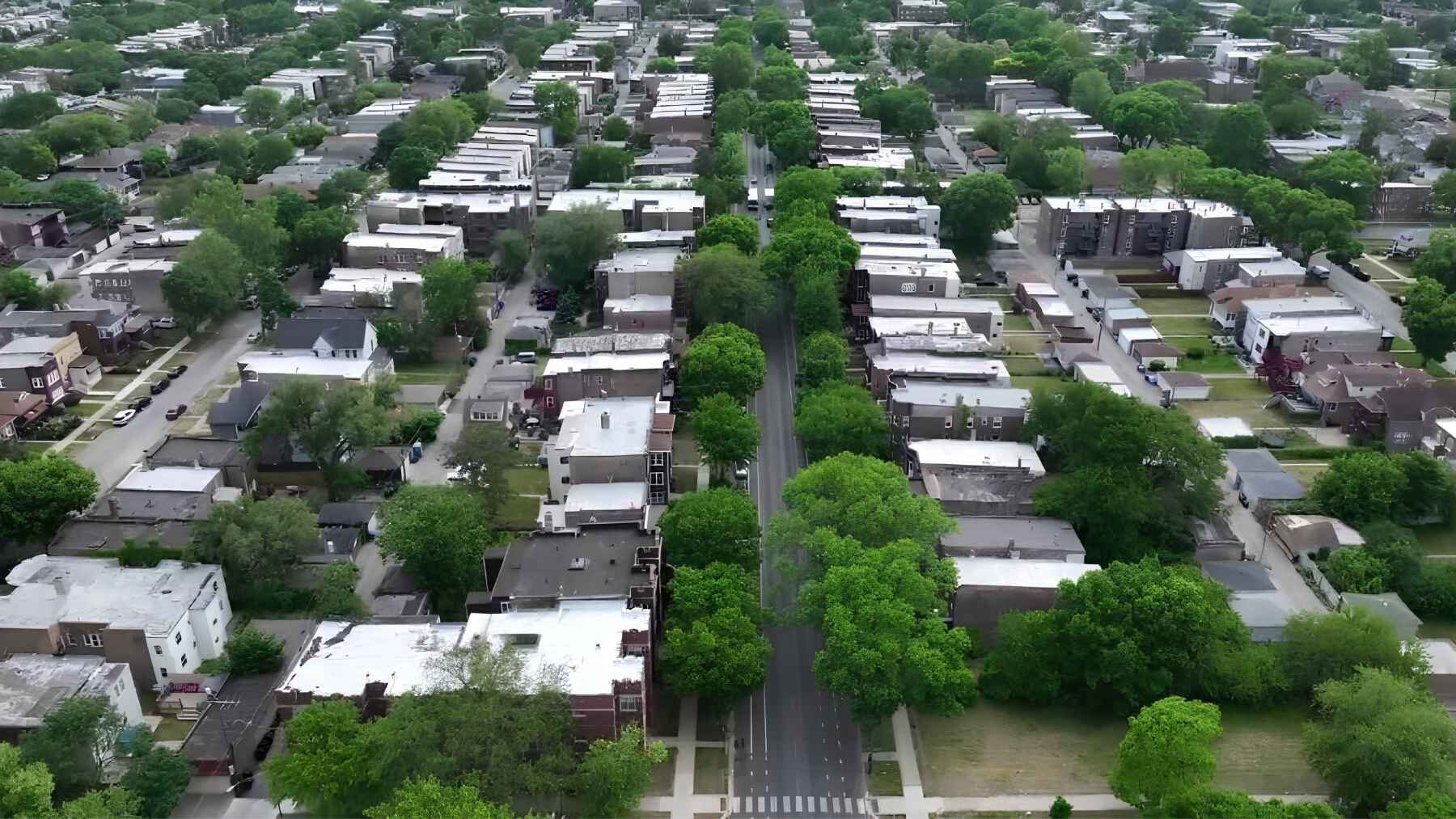
A neighborhood can look green today and still be heading in the wrong direction. Storms, disease, development, and tree removal can slowly chip away at that protection.
So simply asking which neighborhood has the most trees may miss part of the picture. Another question matters too. Which neighborhoods are losing them?
Why mature trees are difficult to replace
Planting a tree sounds simple. Replacing a mature one is not.
A sapling is really a promise of future shade. Young trees need years to grow broad crowns, while the loss of one mature tree can wipe out decades of canopy growth almost overnight.
That is why the researchers argue that protecting existing trees should go hand in hand with planting new ones.
Earlier federal research also shows why survival matters. A U.S. Forest Service review found that newly planted urban trees tend to face their highest mortality during their first five years.
Planting day gets the photo. The years afterward determine whether that tree actually becomes part of the canopy.
What the 14,000-tree estimate means
The team also asked a practical question. What might happen if Chicago steadily increased its tree canopy?
Researchers modeled a yearly canopy increase of about 0.03%, roughly equivalent to planting 14,000 trees annually. That scenario was associated with about 105 fewer deaths per year.
It is an eye-catching number. But it needs context.
This was a statistical projection, not a promise that planting exactly 14,000 trees would automatically prevent 105 deaths every year.
And planting 14,000 saplings is not the same thing as instantly gaining the shade of 14,000 mature trees.
Canopy depends on crown size, survival, location, and time. Lots of time.
That means two cities could plant the same number of trees and end up with very different amounts of actual shade.
Trees belong in the public health toolbox
Urban trees are not a cure-all for extreme heat or chronic disease.
The researchers themselves describe trees as one part of a much larger equation. Many factors shape a neighborhood’s vulnerability to heat and poor health.
Still, the findings strengthen the argument for treating urban trees as something more than decoration.
Think infrastructure.
Trees provide shade and can help reduce urban heat. They can also improve air quality, encourage outdoor activity, reduce stress, and contribute to healthier neighborhoods.
For residents, the takeaway is pretty straightforward. The health value of an urban forest depends not only on how many trees are planted, but where they grow, how large they become, and whether they survive.
And there is one more piece. Existing mature trees matter.
In Chicago, protecting the canopy already standing may be just as important as expanding it.
The official study was published in GeoHealth on Aug. 5, 2026.