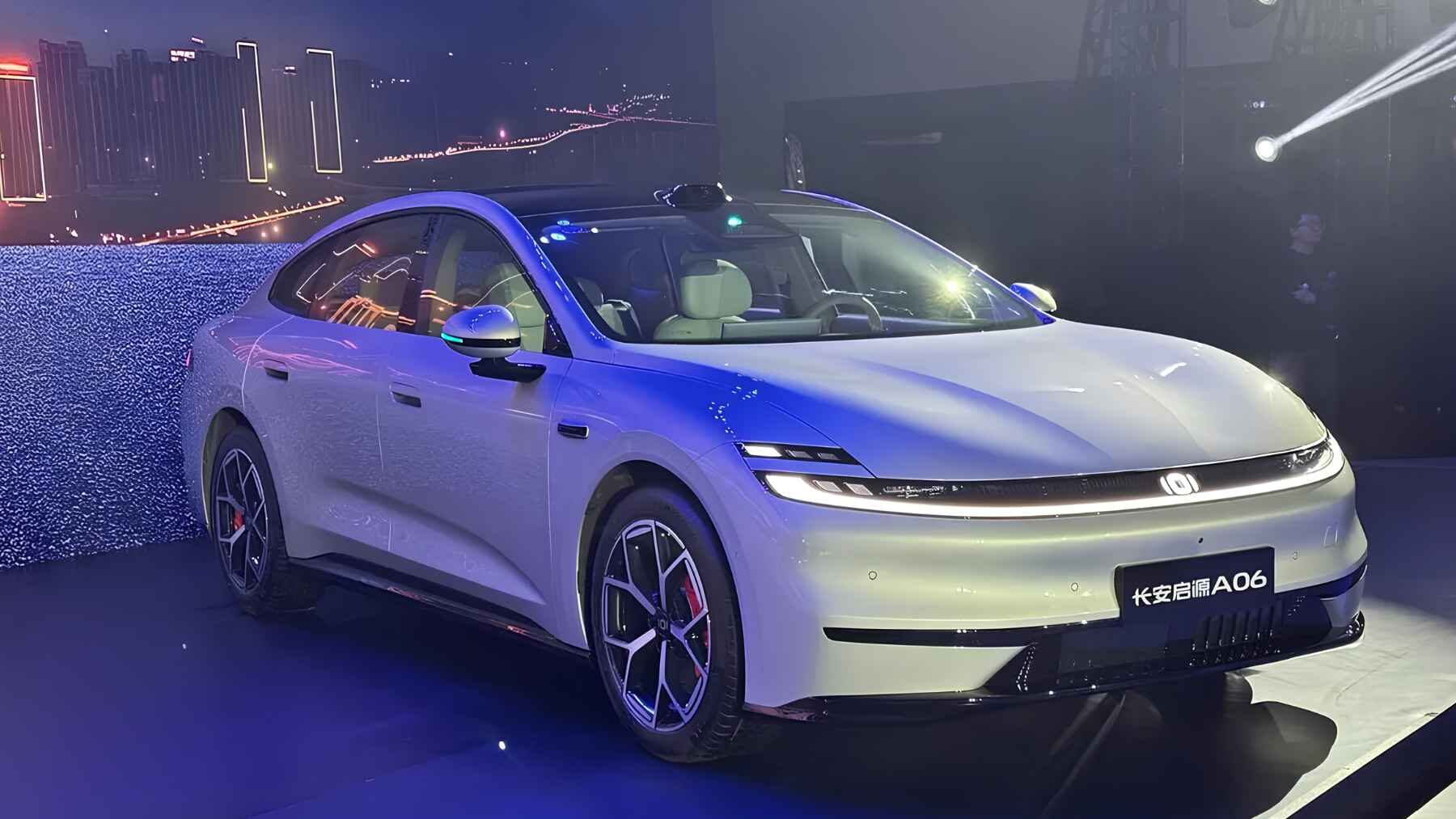
China has moved sodium-ion batteries from laboratory prototypes into a passenger car intended for mass production. Changan Automobile and CATL unveiled the Nevo A06, known as the Qiyuan A06 in China, as the first mass-produced passenger EV built around sodium-ion cells. The companies presented it on February 5, 2026, and set a mid-2026 market target.
The headline number is a claimed range of more than 248 miles from a 45 kWh battery. However, the more interesting story sits below the range figure. CATL says the pack can retain more than 90% of its capacity at -40°F, a potential answer to the winter drop that frustrates EV drivers on freezing mornings.
Sodium takes the wheel
Modern electric cars overwhelmingly use lithium-ion batteries, including lithium iron phosphate and nickel-rich chemistries. Sodium-ion cells follow a similar basic process, but sodium ions move between the electrodes instead of lithium ions. Sodium is widely available, so the chemistry could ease some pressure on lithium supply chains without pretending one material can solve every problem.
CATL launched its Naxtra sodium-ion line in April 2025 after years of development. The latest cells are rated at about 79 Wh/lb,, which puts them close to mainstream LFP territory. That is a big step for sodium, although the highest-energy lithium packs still offer more range for the same weight.
The cold is the real test
At -22°F, CATL says the Naxtra pack can deliver nearly three times the discharge power of a comparable LFP battery. It reportedly keeps more than 90% of its capacity at -40°F and can still provide stable power at -58°F. Those are company test results, but they address one of the most stubborn weaknesses in electric driving.
Why does that matter? Cold conditions slow the reactions inside a battery, reducing available power and making charging less convenient just when the cabin heater is working hardest. A car that holds onto more of its performance could make EV ownership easier in northern China, Canada, Scandinavia, and cold parts of the United States.
Charging in 15 minutes
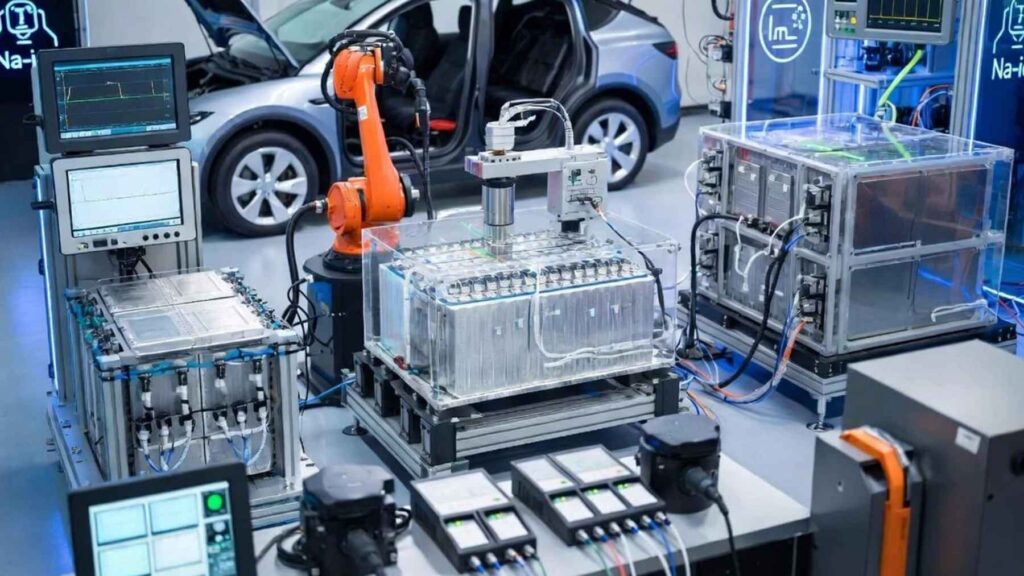
Changan representatives have said the sodium-ion A06 can reach 80% charge in about 15 minutes. That would make a coffee stop feel closer to a gasoline stop, especially during a long drive. Still, charging time depends on temperature, charger output, battery level, and how long the pack can sustain its peak rate.
The official February release did not include a complete charging curve for this car. Independent road tests will need to show how the battery behaves when it is nearly empty, repeatedly fast-charged, or plugged in after a freezing night. That is where a promising laboratory number meets the charging lot.
Safety claims need perspective
CATL and Changan subjected the battery to crushing, drilling, and sawing during company tests. They reported no smoke, fire, or explosion, and said the damaged system continued to provide power. CATL argues that sodium-ion chemistry offers stronger inherent thermal stability than conventional lithium-ion designs.
Encouraging? Certainly. However, the demonstrations do not prove that every sodium-ion battery is fireproof, because pack construction, cooling, manufacturing quality, crash protection, and battery management software still matter. Independent safety testing and years of road use will show how well the advantage holds outside controlled trials.
The range comes with an asterisk
The 248-mile figure comes from China’s CLTC test cycle. CLTC ratings tend to be more generous than U.S. EPA estimates, so American drivers should not read the number as a direct EPA equivalent. Changan has also not announced an American launch for the sodium-ion A06.
The 45 KWh capacity is modest for a midsize EV, and that may be part of the point. A smaller pack can use fewer materials and potentially reduce weight and cost, but it leaves less reserve for highway speeds, cabin heating, detours, and that familiar search for a working charger. Sodium may first make the most sense in affordable commuter cars rather than premium long-range SUVs.
What world first really means
Changan and CATL describe the A06 as the world’s first mass-produced sodium-ion passenger vehicle. Earlier sodium-ion cars did exist, including a small Yiwei model introduced in China in 2024, yet those projects were limited in scale. The new claim rests on moving the chemistry toward regular high-volume production, not on inventing the first sodium-powered car.
“The arrival of sodium-ion technology marks the beginning of a dual-chemistry era,” said Gao Huan, CATL’s China EV business chief technology officer. In practical terms, CATL expects sodium and lithium batteries to coexist, with sodium serving cost-sensitive and cold-climate vehicles while lithium remains strong where maximum energy density matters.
A greener battery is not automatic
A 2024 peer-reviewed life-cycle study found that sodium-ion cells made from abundant elements could have substantially lower mineral scarcity impacts than nickel-manganese-cobalt lithium cells. Their climate impact was roughly comparable, however, and the researchers found that cleaner factory electricity and lower-impact anode materials were important. Chemistry is only one part of the environmental story.
That is why the A06 matters as more than a showroom novelty. It will reveal whether sodium-ion batteries can be produced reliably, charged quickly, recycled effectively, and sold at a price that changes what ordinary drivers can afford. The real breakthrough will not be the word “sodium” on a specification sheet, but a practical car that cuts pollution without shifting the burden somewhere else.
The official press release was published on CATL’s website.