China is very clear about the future of energy, and its mega-projects are not enough. First it was its “Great Wall” of solar panels, and then the Three Gorges Dam, so massive that it extends the length of days. However, now they are going for hydrogen, which has led them to make a false step: they were going so fast that they have made a very big mistake by “hacking” it, and the experts did not expect the results, which were so shocking, that the entire industry is in danger of collapse, and the rest of Asia could follow.
China wanted to hoard hydrogen, but got it wrong: Now, they have the biggest problem ever
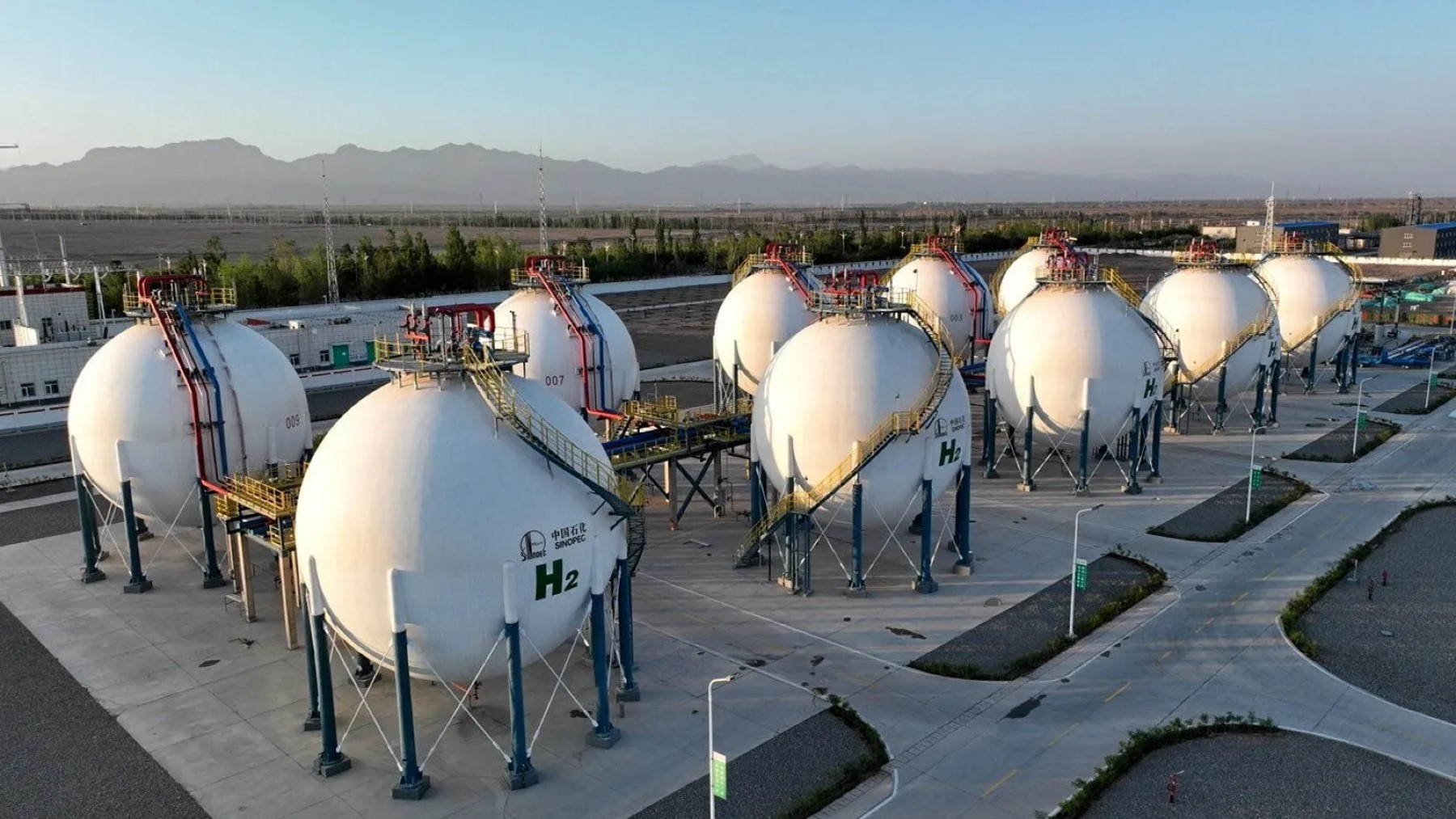
Chinese goals for green hydrogen production have encountered numerous hurdles since the outbreak, but these challenges are particularly significant for Sinopec’s Kuqa 260 MW green hydrogen center, which is currently the largest of its kind globally. As per the report by the Bloomberg New Energy Finance (BNEF), the electrolyzers at the Kuqa facility are produced by three major Chinese suppliers.
The electrolyzers at the Kuqa facility are designed to address the intermittency of renewable energy, which is paramount to the green hydrogen project. In case of having less than half of its full capacity, the electrolyzers are forced to shut down, creating a lot of inefficiencies and risks in safety.
Some of those electrolyzers are regarded as among the most important manufacturers in China, and what the manufacturers say is that their electrolyzers can manage fluctuations in the renewable energy source. However, the problems observed at the Kuqa facility may indicate that this technology is not as sophisticated as people would like to believe.
Hydrogen is not made for China, as they are facing significant problems: What is happening miles away from us
The issues investigated at the Kuqa facility prove that before China can speak of a stable and efficient hydrogen sector, the country has to overcome a number of difficulties. Green hydrogen is considered one of the key tools in the country’s energy transition policy, as the country plans to make it carbon-neutral by 2060.
But safety and how well this place works in Kuqa can make it hard for the country to grow. Depending on the equipment from China prompts the doubts concerning the quality and stability of the electrolyzers. If other projects in China encounter the same problems, this can dent confidence in the nation’s ability to realize its H2 ambitions.
Still, the country does not give up on the development of the hydrogen sector in the country. The country has already planned and targeted production and usage of hydrogen, more so with an estimate of 50,000 hydrogen fuel cell vehicles and 100 hydrogen refueling stations by 2025.
China has the problem, but also the solution: “Hacking” hydrogen was not a good idea
To address the issues at the Kuqa facility, Sinopec and its partners may need to explore alternative solutions, such as:
- Modifying the electrolyzers in order to enhance their ability to follow the variations of the renewable power sources
- Adopting even higher levels of safety measures in a bid to eliminate the dangers of operations that are tritiated in nature.
- Regarding the actual variability of renewable energy inputs, utilizing energy storage technologies can be examined.
- Also, China should consider developing a diverse source for its electrolyzers because the local manufacturers lack expertise in dealing with fluctuations in renewable energy sources.
Peculiarities of Sinopec’s Kuqa facility show the dilemmas thrown upon China in attempts to establish a productive and viable H2 market. Although the country has not given up its hydrogen goals, the challenges during the facility’s operations such as the safety concerns and efficiency problems indicate the need for enhanced and effective technologies.
China’s problem with hydrogen goes beyond not knowing how to produce it on a large scale, the country has not been able to develop a new color either. While in America we are groping between blue and green (which in Australia they confuse) and in Europe they have “fused” to create turquoise, Japan is experimenting dangerously with red or purple. What about China? No new contribution, except for this scare that the whole country has had and which they will now have to solve.