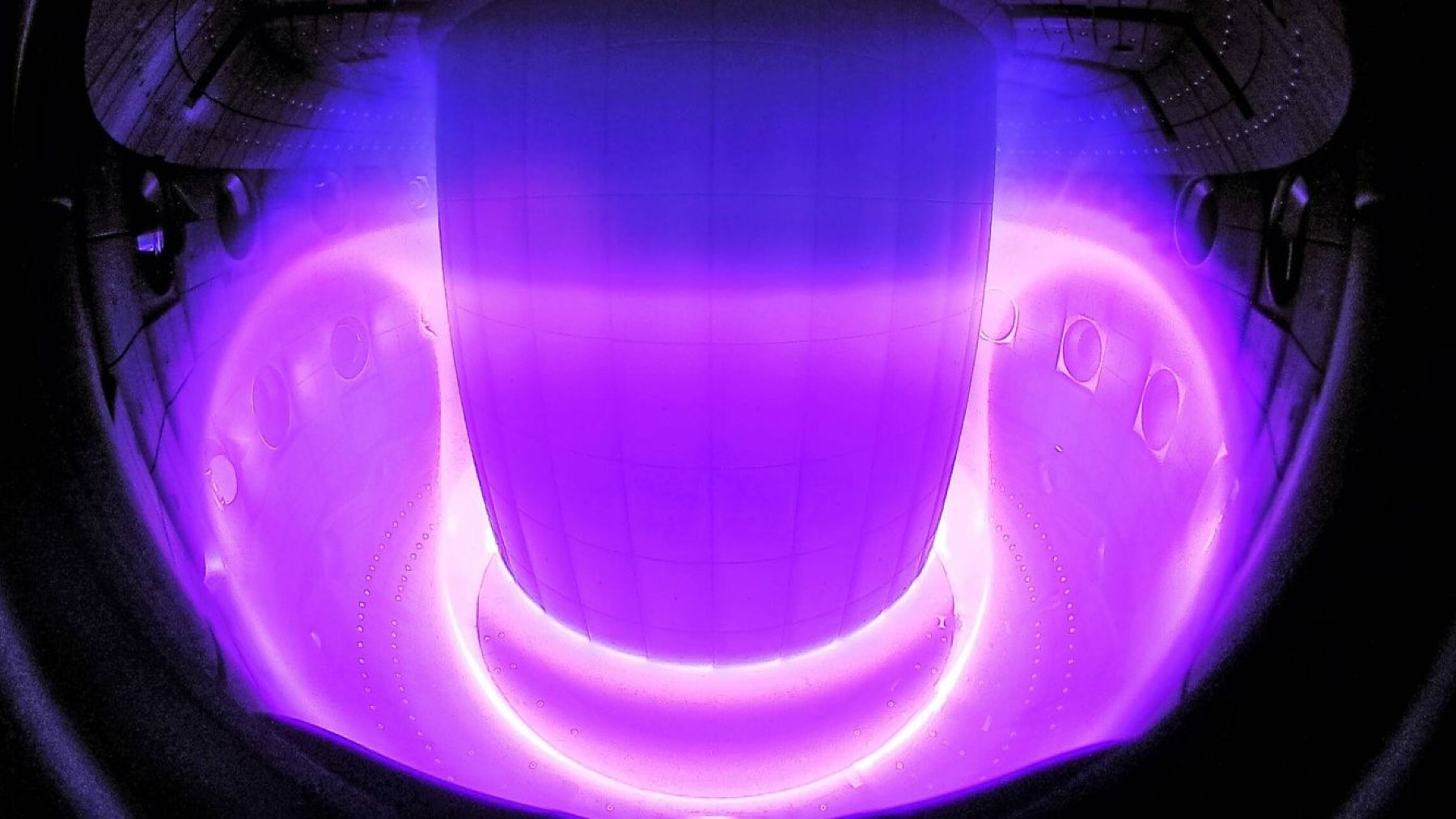
The sun is shining in China, but probably not in the way you would expect. Scientists working on the Huanliu-3 (HL-3) tokamak, a nuclear fusion device in Hefei, China, have had a breakthrough that could change the future of clean energy. The HL-3 tokamak is like an artificial sun. It uses plasma heated to 120 million degrees to create nuclear fusion, producing the same amount of energy as a star. Researchers from around the world have been trying to accomplish this type of nuclear fusion for decades.
Magnets might have just saved the world by helping contain super-hot plasma
Nuclear fusion is a source of clean energy that could power the world. To do it, scientists need to figure out how to manipulate plasma. Plasma isn’t just something that makes your TV work. Plasma is called the “fourth state of matter,” when atoms are moving so fast they lose their electrons.
With that much heat and energy, plasma is incredibly difficult to contain, but that’s where magnetic fields come in. The scientists working on the HL-3 tokamak in China powered up its innovative magnetic field for the first time. There’s hope that the unique design of the magnetic field could mean good things for nuclear fusion.
With the right magnetic field, the plasma inside of the reactor would stay stable long enough for scientists to harness the power of nuclear fusion. Because nuclear fusion releases so much energy, it would easily generate enough turbine electricity for millions of people (but with a non-ecological focus, as you know).
China is leading the world in nuclear fusion, but they rely on international cooperation to do it
China spends a lot of money on nuclear research. The country is deeply committed to making nuclear fusion a real solution to the energy crisis. They’re not doing it alone, though 17 different research institutes and universities are working on the HL-3 tokamak to try to get it online in the next decade.
The international team of researchers is making great progress, but there are many challenges when it comes to containing plasma and achieving sustainable nuclear fusion. Some of the obstacles they face are:
- Getting the plasma hot enough.
- Keeping the plasma stable.
- Using the right materials.
- Creating a super strong magnetic field.
- Managing safety issues.
The general public is scared of nuclear energy, so it may be difficult for scientists to convince people to embrace it. It doesn’t seem to be deterring the research teams as they light up their artificial sun and move ahead with their project goals.
Scientists around the world are on the edge of their seats about this new development
Researchers have had a hard time keeping plasma stable. This new development in China at the HL-3 tokamak is a significant breakthrough that’s keeping people on the edge of their seats. If the magnetic field works correctly, it could mean that scientists are one step closer to harnessing the power that fuels stars and the sun.
Some scientists are skeptical about the supposed benefits of nuclear fusion. So far, no one has been able to keep plasma stable enough to sustain nuclear fusion and generate electricity. The research team working on the HL-3 tokamak achieved something great with their magnetic field, but they still have a long way to go.
The world is facing a serious energy crisis. Governments everywhere are scrambling to find alternative forms of energy. Nuclear fusion is a good option because it doesn’t increase CO2 levels in the atmosphere. It’s considered clean energy. With this development at the HL-3 tokamak, the world could be getting that much closer to a future where all electricity is created by nuclear fusion.