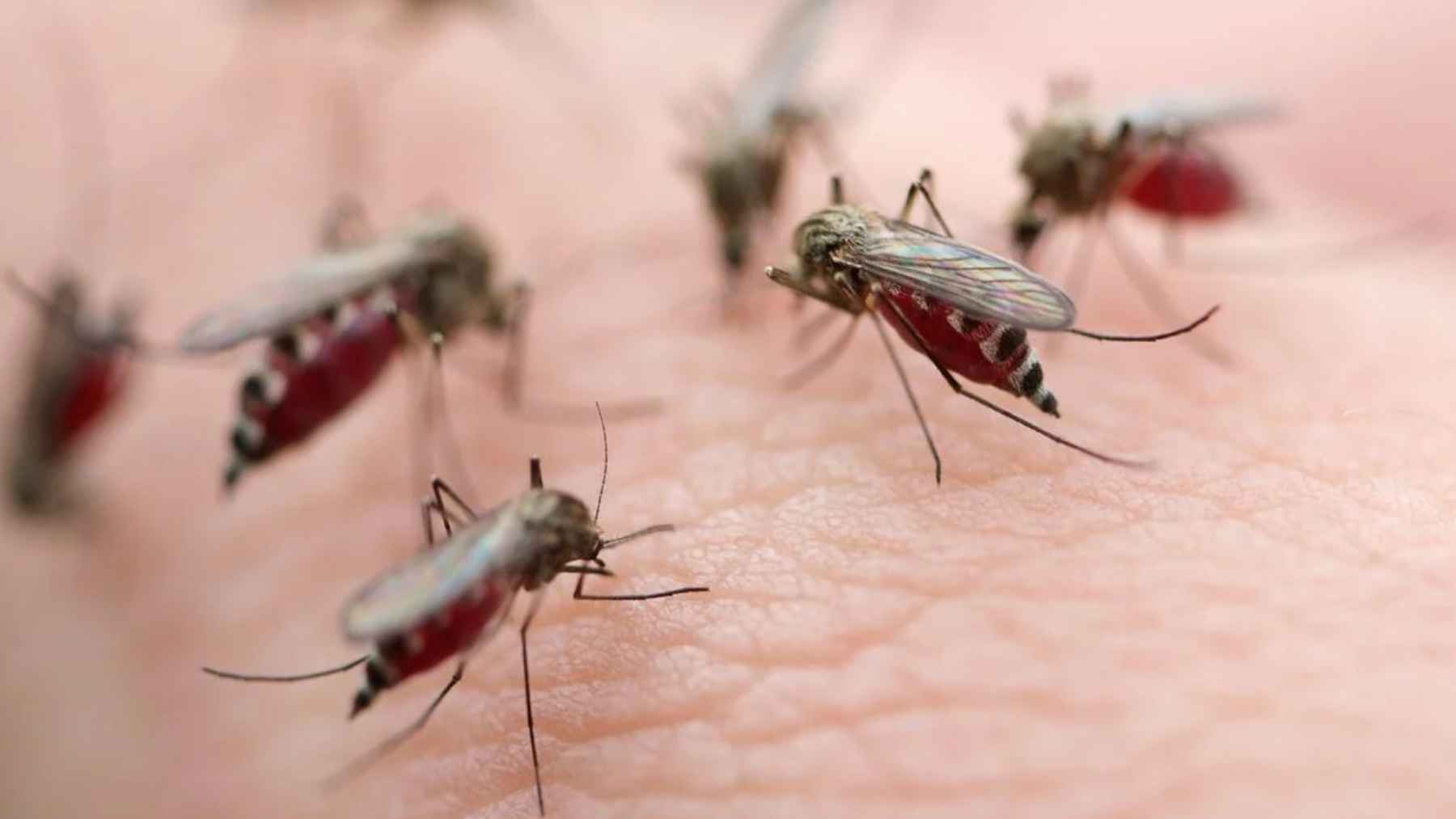
If you have ever watched mosquitoes ignore your friend and go straight for you, it can feel weirdly personal. Is it “sweet blood,” bad luck, or something you did without noticing. A new study suggests the answer is more practical than most myths.
In a collaboration between Georgia Tech and the Massachusetts Institute of Technology, scientists tracked female mosquitoes in three dimensions and built a model that predicts where the insects will fly when key cues show up. For the species tested, the strongest trigger was a one-two punch of the carbon dioxide you exhale and the visual contrast that makes you stand out, which may help explain why bites are not shared evenly.
What makes a mosquito commit
Female mosquitoes need blood to produce eggs, so they spend a lot of their time in “host-seeking,” the hunt for a warm-blooded target. You can think of it as a search mode that turns on when the right clues line up, like at a humid dusk soccer practice or a backyard cookout that runs into the evening.
The new work argues that smell and sight act like a two-step unlock. When a mosquito sees a high-contrast shape and also detects carbon dioxide nearby, it is far more likely to keep circling instead of doing a quick flyby and drifting away.
How researchers watched mosquitoes in 3D
To get beyond guesswork, the team ran controlled experiments that captured how mosquitoes flew, not just where they landed. Groups of female Aedes aegypti, often called the yellow fever mosquito, flew inside a room-like chamber while 3D infrared cameras recorded every turn, speed change, and loop around targets that varied in color and carbon dioxide output.
The tests ranged from simple objects to a protected human volunteer whose clothing created strong light and dark contrast. In results reported March 18, 2026, across about 20 experiments, the researchers collected more than 20 million measurements from hundreds of thousands of flight paths. That is a lot of data, and the team then used Bayesian modeling, a statistical method that learns rules from big datasets, to predict mosquito movement under different cue combinations.
No leader, just shared signals
If you have ever felt like mosquitoes “gang up,” the data points to a less dramatic reason. The insects were not following each other as a group, but reacting independently to the same cues, which naturally pulls them into the same space at the same time.
Mechanical engineering professor David Hu compared it to nightlife, saying, “It’s like a crowded bar.” Study author Christopher Zuo added that the insects are “like little robots” whose rules can be decoded, and the team observed the heaviest clustering around a human’s head and shoulders once both cues were present. He also suggested that traps may work better when they use cues intermittently, because mosquitoes do not tend to linger when the signals are incomplete.
Why some people get more bites
This research does not claim that one signal explains every bite you have ever gotten. But it does offer a clear mechanism for why the odds can shift between people in the same place, especially when one person is easier to spot and also producing a stronger carbon dioxide plume. So why does the person next to you stay untouched.
Carbon dioxide is a chemical breadcrumb trail, because it is the gas your body releases with every breath. Visual contrast is the spotlight effect, because dark clothing or a sharp silhouette can stand out against a brighter background, giving a mosquito something to steer toward.
There is also a timing piece that feels familiar in real life. When only one cue was available in the experiments, mosquitoes were more likely to disperse, but the combined cues kept them engaged longer and made them more likely to orbit and attempt to land. And that is where a nuisance turns into a bite.
What it could mean for traps and disease control
Many mosquito traps rely on lures plus suction, but they often struggle to keep insects close long enough to be captured. A model that predicts when mosquitoes switch from scouting to circling could help designers build traps that combine cues in a more realistic way, rather than leaning on a single signal that triggers only a brief inspection.
The stakes are bigger than itchy bumps. The World Health Organization says dengue, spread largely by Aedes mosquitoes, puts billions of people at risk worldwide, and outbreaks can strain health systems quickly. Malaria, on the other hand, is mostly spread by Anopheles mosquitoes, so the best control tactics can depend on which species is common in a region.
Other clues still matter
Breath and contrast are not the whole story, and mosquito attraction is still a multi-sense puzzle. In 2022, researchers at The Rockefeller University reported that some people consistently attract far more Aedes aegypti than others, and linked that effect to higher levels of certain skin “carboxylic acids,” which are chemicals tied to body odor and were reported in Cell.
Other lab work has also shown that carbon dioxide can sharpen how these mosquitoes track visual targets, boosting their attention to contrast. Put together, the takeaway is less “one weird trick” and more a stack of small advantages that add up on a given night.
The main study has been published in Science Advances.