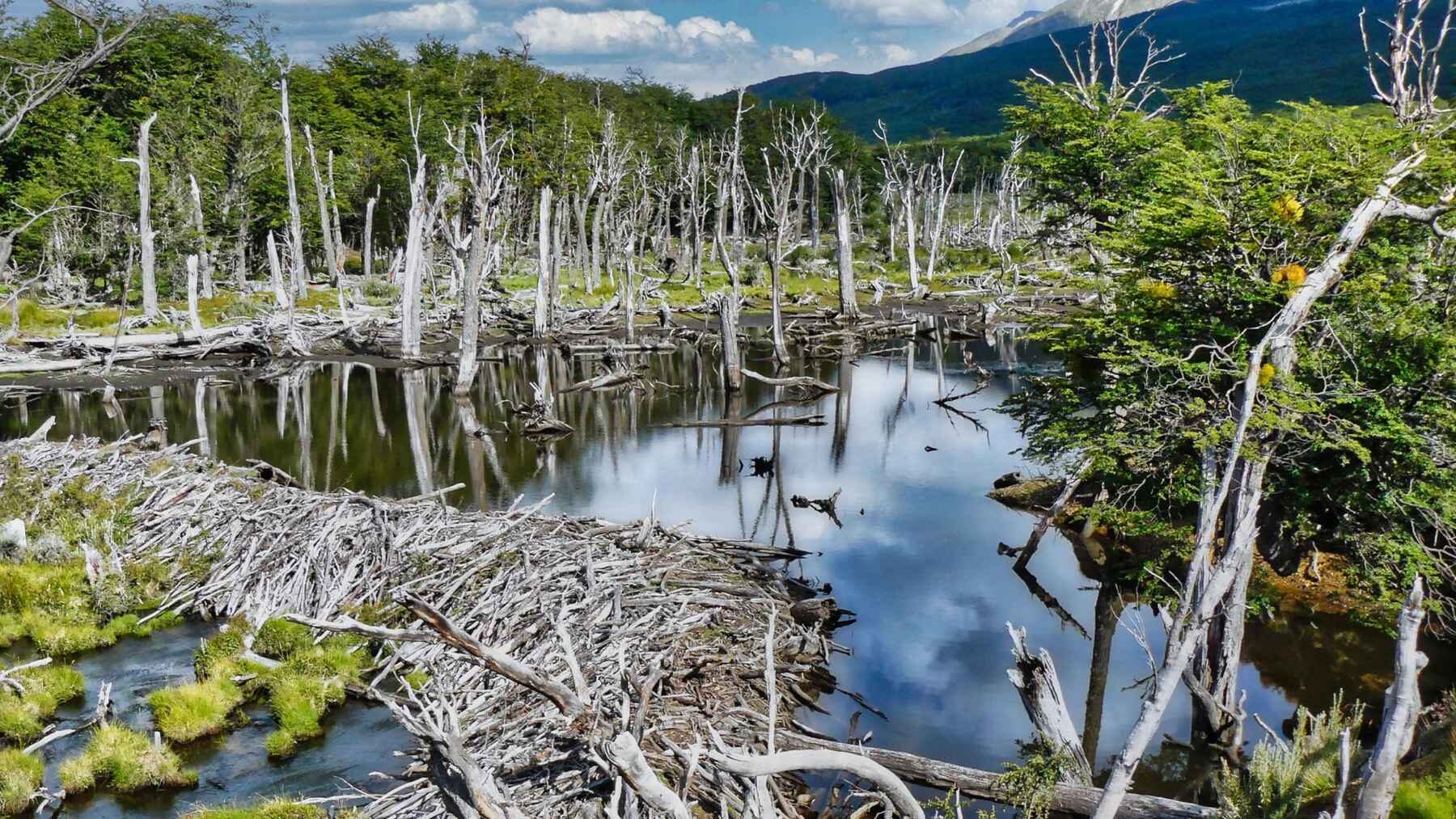
In 1946, the Argentine Navy released 20 North American beavers in Tierra del Fuego, hoping the animals would support a new fur industry. The business never took off, but the beavers did. Without the predators that kept them in check in Canada, their population later climbed beyond 100,000.
Eight decades on, the experiment has become a major biological invasion in Patagonia. Beaver dams and tree cutting have affected roughly 74,000 acres of native forest, while Argentine authorities estimate annual losses at about $66.6 million. The real challenge now is not just removing animals, but repairing a landscape that evolved without them.
A fur experiment backfires
How could just 20 animals cause so much damage? The answer lies in the difference between an animal living in its natural habitat and an invasive species entering a place that is not prepared for it. In simple terms, an invasive species is a nonnative organism that establishes itself, spreads, and harms ecosystems, economies, or both.
Beavers are often called “ecosystem engineers” because their dams can reshape streams and create wetlands. In North America, those changes can provide habitat for fish, birds, and other wildlife. In Tierra del Fuego, however, the same behavior became a wrecking ball because local forests had not evolved alongside beavers.
How dams drown the forest
Beavers block streams with branches, mud, and tree trunks, creating ponds where they can build protected lodges. That survival strategy raises water levels and leaves roots submerged for long periods. Native lenga, guindo, and ñire trees cannot tolerate that constant flooding, so entire stands can die while still upright.
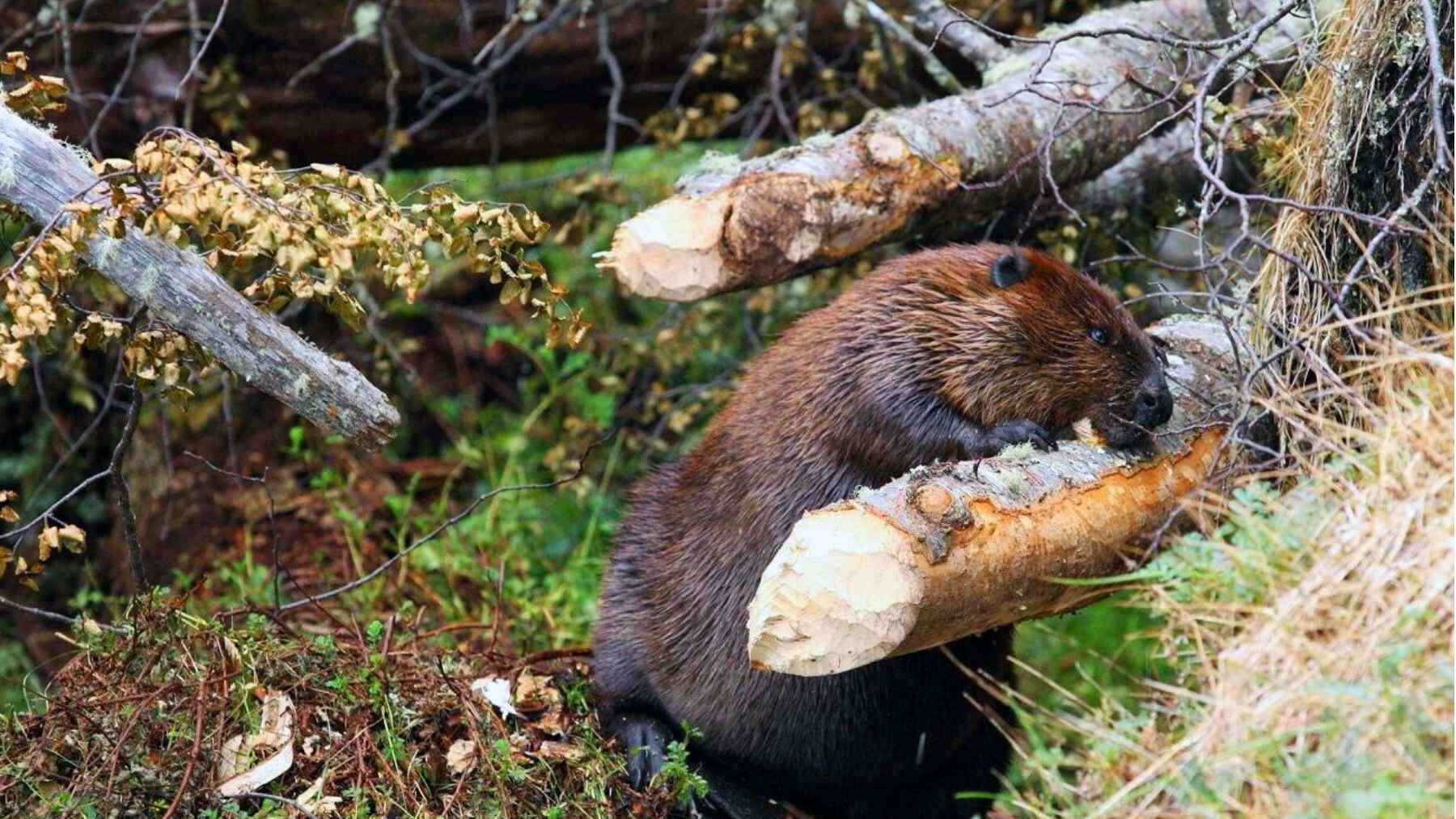
The destruction does not stop at the waterline. Beavers cut surviving trees to eat bark and reinforce their dams, leaving broad areas filled with dead trunks and open ground. Official data indicate that beavers have colonized about 95% of Tierra del Fuego’s watersheds and affected about 4% of its native forest.
Satellite research by Jonathan J. Henn, Christopher B. Anderson, and Guillermo Martínez Pastur estimated that nearly 78,000 acres in the Argentine sector showed visible beaver impacts. Their work found that the damaged area exceeded the land used for forestry since European settlement. The national program separately warns that native species such as lenga may need around two centuries to recover, so this is not a problem that disappears when one dam is removed.
The damage reaches far beyond trees
A flooded forest is only the most visible part of the story. Beaver dams alter water flow, sediment, streamside habitat, and the natural services provided by peatlands. Those wetlands help regulate water supplies, support biodiversity, and hold carbon, which means the invasion can weaken systems people depend on every day.
The economic estimate is just as striking. The annual loss in the Argentine part of Tierra del Fuego has been calculated at $66,556,975, reflecting damage to forests, productive activities, water regulation, and other ecosystem services. That is a heavy bill for an experiment that was supposed to create income from pelts.
There is also a much larger geographic risk. Beavers have already crossed the Strait of Magellan into mainland Chile, and officials warn that they could eventually move north along the Patagonian Andes. In March 2025, teams in Chile’s Magallanes region were still expanding community reporting and ranger monitoring to prevent the species from establishing itself farther north.
Why removing them is so difficult
Field operations have included trained crews, satellite mapping, and helicopter access to reach isolated ponds and stream networks. Eight pilot areas were established on the Argentine side, where intensive removal created beaver-free zones and allowed specialists to test how ecosystems respond. The broader initiative received support from the Food and Agriculture Organization of the United Nations and financing from the Global Environment Facility.
That work highlights the difference between control and eradication. Control lowers numbers in selected places, while eradication means finding and removing every animal from a defined territory and then preventing reinvasion. A binational feasibility assessment concluded that full eradication could be technically possible, but only with long-term funding, access to private and public land, skilled teams, and close coordination between Argentina and Chile.
Commercial hunting has not solved the problem. Hunters generally concentrate around roads and accessible waterways, while the last animals in a remote watershed are the hardest and least profitable to pursue. The number removed matters less than the number left behind.
Early recovery offers cautious hope
The pilot areas have given scientists something important to measure. Where beavers have been removed, native vegetation can begin returning and the landscape is freed from the constant pressure of new dams and flooding. That is encouraging, but recovery is neither automatic nor quick.
Abandoned ponds can leave altered soils and open spaces where nonnative grasses move in. Earlier feasibility work also warned that removing beavers alone may not restore every damaged site, especially where livestock, other invasive species, or lasting changes to drainage continue to block forest regeneration.
Still, the first signs matter. They show that targeted removal can give parts of Patagonia room to heal, even when full recovery may take generations. A fur project launched in a single year has left an ecological bill that could take centuries to settle.
The main account was published on Argentina.gob.ar, while the supporting landscape study appeared in Biological Invasions.