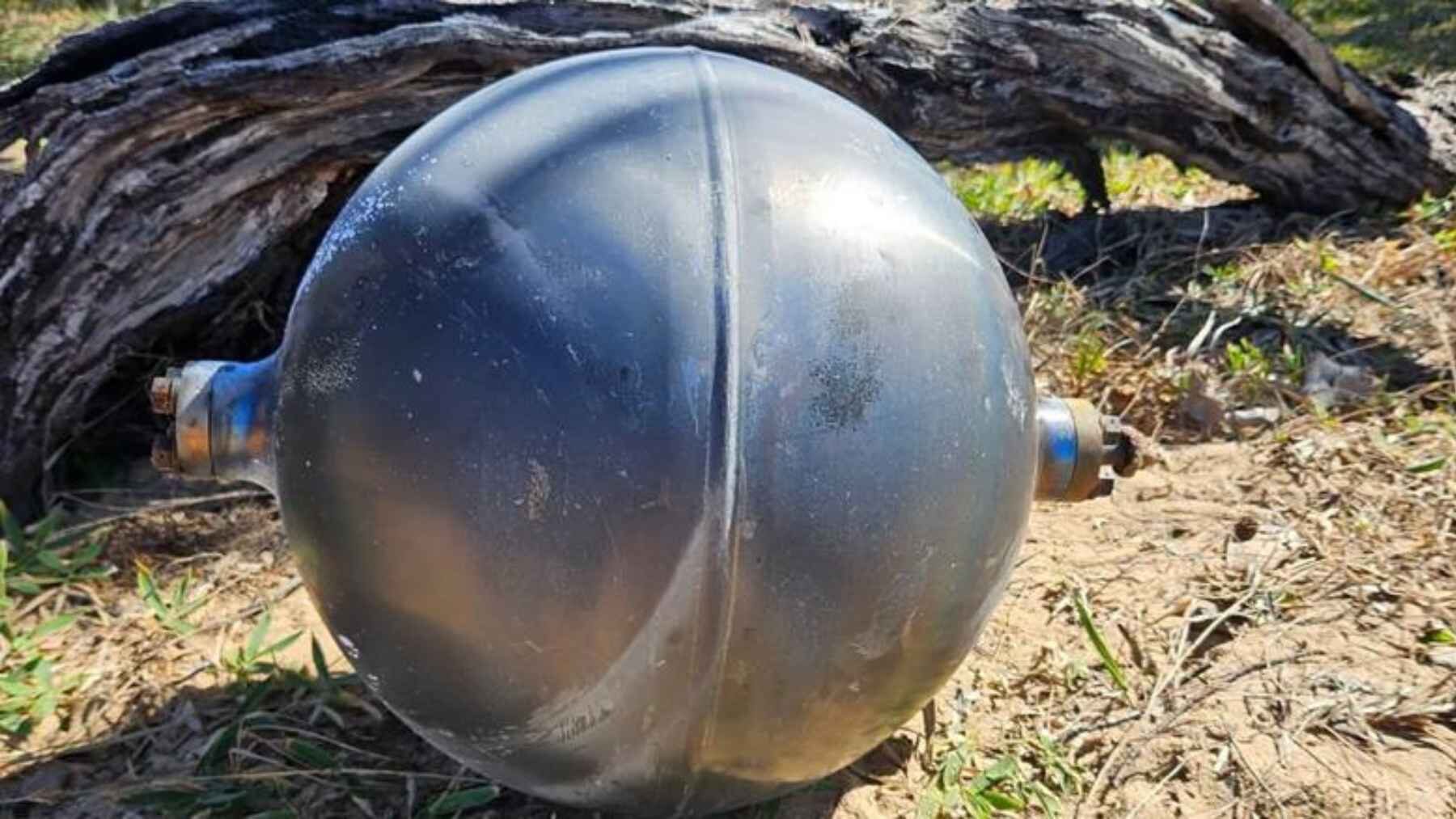
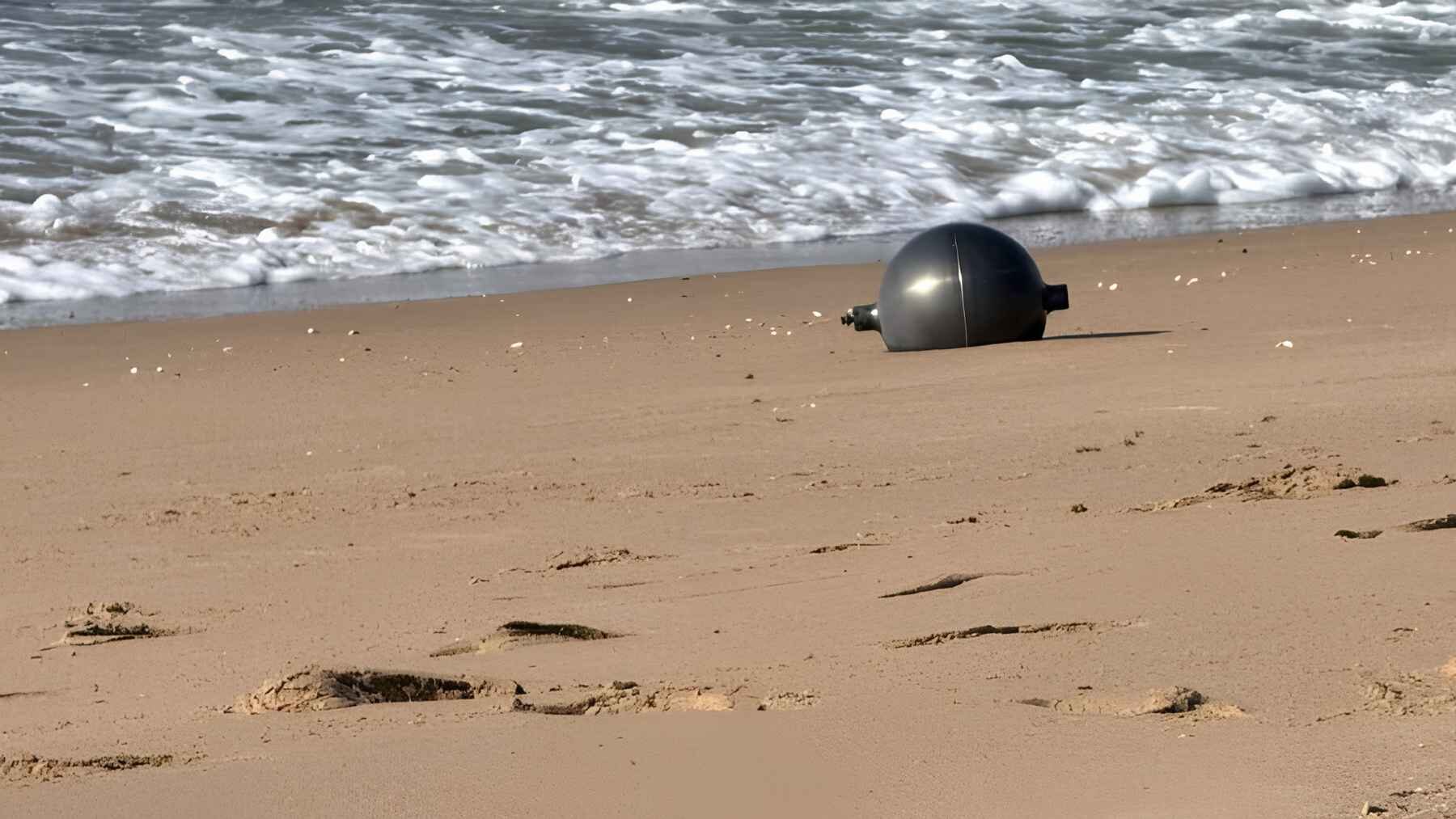
Can you imagine yourself walking around the beach and instead of finding some shells near the sea, you see six metallic spheres? Well, that is what happened on Forrest Beach in northern Queensland at the beginning of July 2026. With these surprising objects on the beach, the emergency teams of Australia had to take action because they needed to confirm right from the very beginning that the spheres were not harmful or dangerous. So, they kept them safe until space officials with the information they gave, the mystery was solved. Their report said: “The objects could be pressure vessels from a foreign rocket body that had recently fallen back through Earth’s atmosphere”.
After they were found it was popular to now know them as “space balls”. What was said was that these metallic spheres were built to hold material under pressure, but also strong enough to survive a whole orbital trip to the ocean.
Six objects on a quiet shoreline
It was not 1, nor 2, it was six space balls that appeared around the small seaside community that local residents found there. This was enough to bring the police, firefighters and hazardous-material teams to the area having no other option but to set up and exclusion zone. Take into account that at the beginning nobody knew what was inside the spheres and if they were actually safe. So yes, taking crowds away from the area was the best and only option.
It was not until Queensland emergency services stayed with the objects that they could confirm that luckily they did not represent an immediate danger. Despite this, it was still said that there were chances of finding more of them along the coast.
What the “space balls” are
Rockets and spacecraft use pressure vessels to store fuel or gases that help move fuel through an engine, where an ordinary tank might crack, leak, or fail. But what are these pressure vessels about? They are very strong tanks that are basically designed to hold gas or liquid under pressure.
It is worth highlighting Alice Gorman, a space archaeologist at Flinders University, who expressed that what had happened here was “a classic example” of objects informally known as “space balls.” She gave more details explaining that these components often use heat-resistant materials and may float once their contents are gone. And she added that this is what allows them to drift before arriving at the beach.
How rocket hardware survives reentry
But now the question is: How is it that something built to be in orbit ends up lying around the sea shore? The key is related to when reentry begins. This can be quite technical, but it happens when a spacecraft, rocket stage, or satellite drops from orbit and passes into denser air. And what does this actually mean? It means that extreme heat is created by compressed gas and air particles.
So, when a rocket falls without a guided trajectory, calculating the crash zone is almost impossible. And this might be why the orbital debris ended up on a specific beach in Queensland.
Why crews treated them cautiously
Although at first, they said that they did not represent an immediate danger, and that they looked quite old or harmless, reports showed that the suspected rocket hardware might contain leftover fuel, pressurized material, sharp edges, or substances that cannot be clearly identified.
They also reminded us that this kind of unfamiliar objects should never be touched and that emergency teams or whichever authority in charge should take action as soon as possible not only for safety but also to conduct the corresponding inspections and take future steps to return them where they belong to.
Australia has seen this before
This is not the first time that Australia has witnessed incidents like the one with the space balls. Remember that Australia’s size, its long coastline, and the surrounding ocean make it a likely place to bring discoveries of this type. Official guidance mentions that Skylab debris fell over Western Australia in 1979, the discarded trunk section of a SpaceX Dragon spacecraft was found in New South Wales in 2022, and last but not least in 2023 on Western Australia coast another launch-vehicle pressure vessel appeared.
That is why the Forrest Beach discovery was of course unusual, but not unique. Officials even said that this was Australia’s third time with space debris in five years.
More traffic above Earth
Low Earth orbit, the region where many satellites are relatively close to the planet, is getting more and more crowded. It is said by Australia’s space authorities that the number of operational objects went from about 2,700 in 2016 to about 8,700 in 2023. That is more than triple in seven years. Can you believe that?
All these incidents are becoming more common. And if you think about the thousands of satellites in orbit, inevitably the risks or events like this one will increase. So this new paradigm shows that in the end tracking, controlled disposal, and careful reentry planning are really important.
The search for the rocket’s origin
When all this occurred, authorities did not say anything about where they probably came from, since the only information they gave was that they were definitely from a foreign rocket. The context obliged local authorities to work hand in hand with international authorities to confirm their origin, because one confirmed the materials would need to be returned to their respective country.
So if you ever go to the beach after reading this news, remember: no matter how unique it is or how much curiosity you have after finding a piece of metal, just leave it where it is and let the experts handle it.
The official guidance and incident statement have been published by the Australian Space Agency.