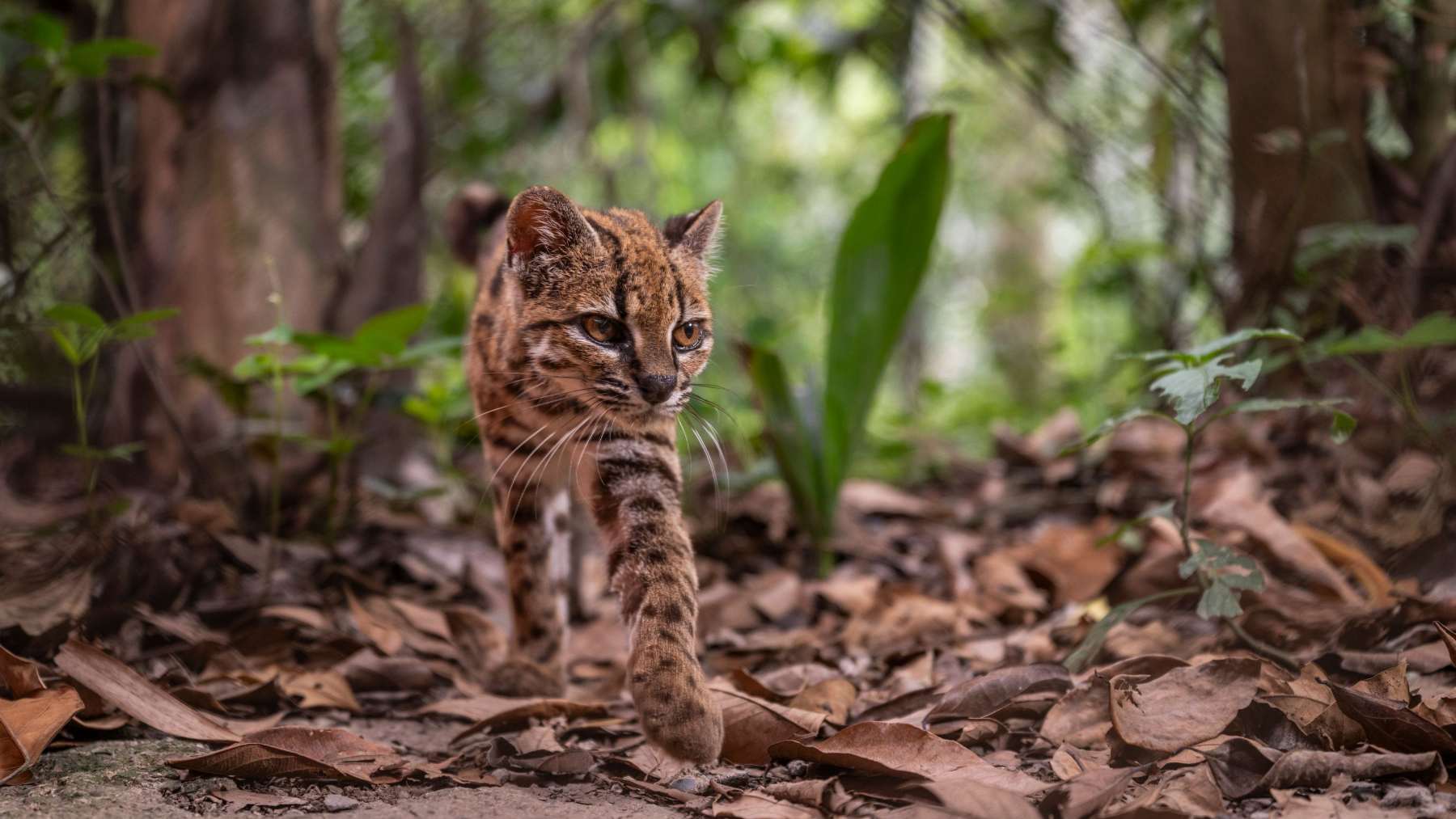
“I saw this cat. It was really, really small, and I couldn’t believe how small it was,” Paola Nogales-Ascarrunz, a Bolivian biologist who volunteers at the Senda Verde Wildlife Sanctuary near La Paz, told NBC News. “I thought it was a kitten.”
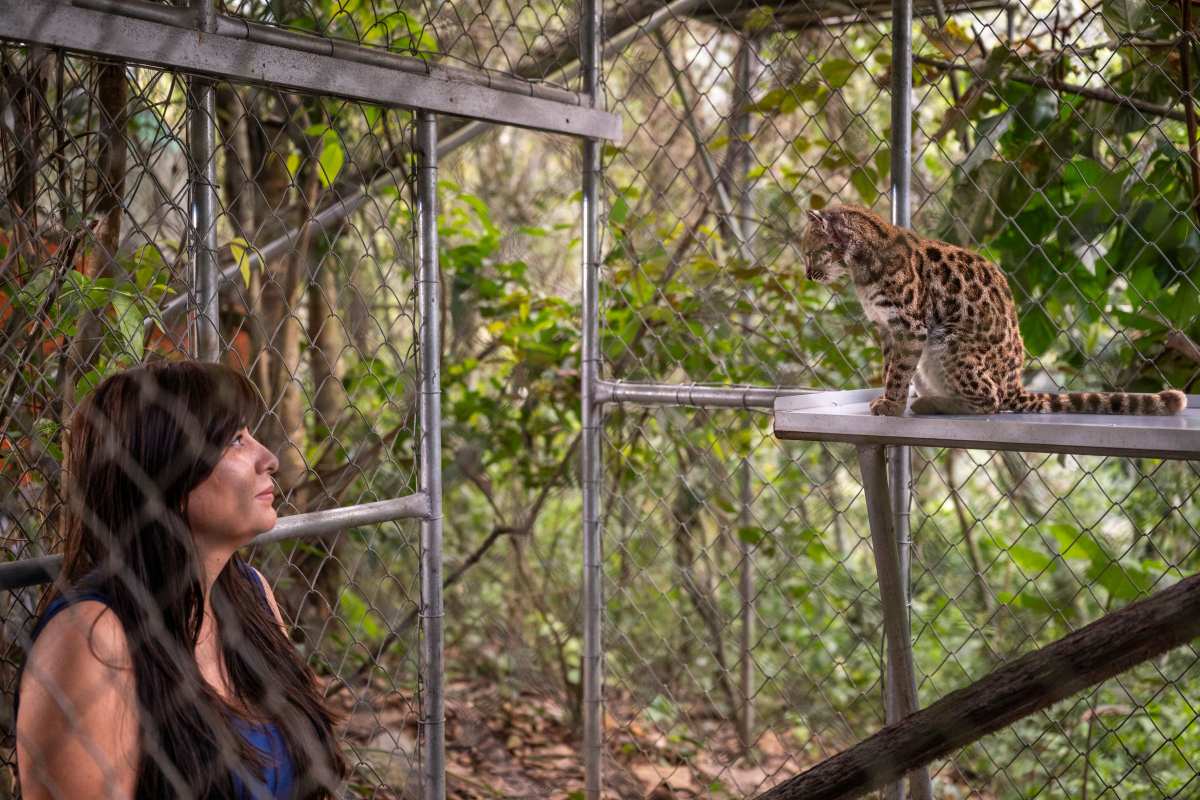
Someone else had made the same mistake before her, since a man from a forest community had taken the animal home as a domestic kitten and fed it noodles, rice and eggs before realizing it was wild and could not stay with him, so he brought it to the sanctuary, according to details recorded by Senda Verde and reported by NBC. That male is now the holotype, the reference specimen, of Leopardus tilcayo, a species described on Sept. 17 in Current Biology and, by the authors’ count, the first new cat species discovered in over a century.
“I took a hundred pictures of it,” Nogales-Ascarrunz told National Geographic, which funds her conservation work. “I was so fascinated.” Colleagues at the sanctuary first took the cat for a known tiger cat species from Brazil, but she wasn’t convinced. “If you look at the spots or the tail, they really don’t match,” she told NBC.
Two cats and 1.43 million years
It took her several more years to learn the genetic methods she needed, and the final study, led by Nogales-Ascarrunz and Jonas Lescroart of the University of Antwerp with Eduardo Eizirik, a geneticist at the Pontifical Catholic University of Rio Grande do Sul in Brazil, compared the complete genomes of 38 cats in the genus Leopardus, 26 of them tiger cats. Eight of those genomes came from museum specimens, six of them from the Guianas, which gave scientists their first genetic look at the original tiger cat, a species named in 1775 from a single illustration of an animal from Cayenne, in French Guiana.
The results split South America’s tiger cats into five distinct species, added a new subspecies in Peru, Leopardus tigrinus antisuyo, and placed the Bolivian cat on a branch of its own that separated from its closest relatives about 1.43 million years ago, early in the Pleistocene, when swings in climate were breaking the Andean mountain forests into isolated patches. “This visual similarity led to different species being confused and classified as one for a long time,” Eizirik said in a university statement.
“Our information at this moment is limited to the two live individuals that we examined, and a small number of camera-trap records,” Lescroart told Reuters. One of those two is the Senda Verde male, and the other a female caught in 2018 near the Indigenous community of Paco, in Bolivia’s Nor Yungas province, then measured, photographed and sampled before being released, according to the formal description that accompanies the paper.
Small, spotted and still a mystery
“He’s such a tiny animal, and he has become something so important,” said Marcelo Levy, a co-founder of Senda Verde, where the male, known there as Tigrino, has lived since 2017 and where visitors have been showing up to see him, according to the Associated Press. In the live animals that the team and an earlier researcher measured, the tilcayo had a head-and-body length of about 17 to 20 inches, a tail of roughly 10 inches and a weight of 1.5 to 2 kilograms, about 3.3 to 4.4 pounds, and its light brown coat is covered in large, irregular dark rosettes, mostly open, with a longer and fuller tail than the northern tiger cat’s.
People in the Yungas were calling it tilcayo long before any scientist did, and when Nogales-Ascarrunz asked whether the word meant something in an Indigenous language, the answer she got, as she told NBC, was “No, my grandpa told me that’s the tilcayo.” So the team kept it. “This is a traditional knowledge that they have in the community. We want to preserve that knowledge and we didn’t want to give it another name,” she said.
“So many basic things are not known,” she told National Geographic about how the cat actually lives. Scat collected in Cotapata National Park suggests it hunts small vertebrates and prefers dense undergrowth in cloud forest between about 4,300 and 6,600 feet, and it has been seen climbing trees with ease, according to the description. Genetically confirmed records come only from the Bolivian Yungas, and because tiger cats are often mistaken for margays in camera trap photos, the authors write, its full range is not yet known.
Five species, five conservation problems
“If you think [the tiger cat] is a single thing from southern Brazil all the way to Costa Rica, you’re going to find it’s not endangered,” Eizirik told National Geographic, explaining why the split matters for conservation. “But if we find that it’s not a single thing, but actually five things, each of them must be assessed separately.” James Sanderson, founder of the Small Wild Cat Conservation Foundation, who was not involved in the study, told the magazine that “once three species become five species, each population is reduced,” adding, “Therefore conservation efforts must increase, perhaps urgently, depending on estimated population sizes.”
“All of them are in habitats that are vanishing fast,” Tadeu de Oliveira, an ecologist at the State University of Maranhão in Brazil and a co-author, told NBC of the five tiger cats, and for the tilcayo the paper spells out what that means. The authors call the Yungas one of Bolivia’s most threatened biomes, where forest is burned and cleared for coca and illegal gold mining leaks mercury into rivers and soil, note that less than 40% of Cotapata National Park is suitable habitat for the cat, and suggest it may meet the criteria for a threatened species. Its genome hints at an older decline too, with the species’ effective population size, a measure of genetic diversity, down by about 63% between the Pleistocene and recent millennia.
Nogales-Ascarrunz is now setting camera traps in the Yungas to find tilcayos in the wild. “We really don’t know how many cats are still in the wild,” she said. “We need science, we need more studies to answer this question, which is actually critical for its conservation.” For her, the cat that a family once mistook for a pet has a larger meaning. “It’s a new reason to protect the world,” she said.
Photo: Fernando Faciole / National Geographic