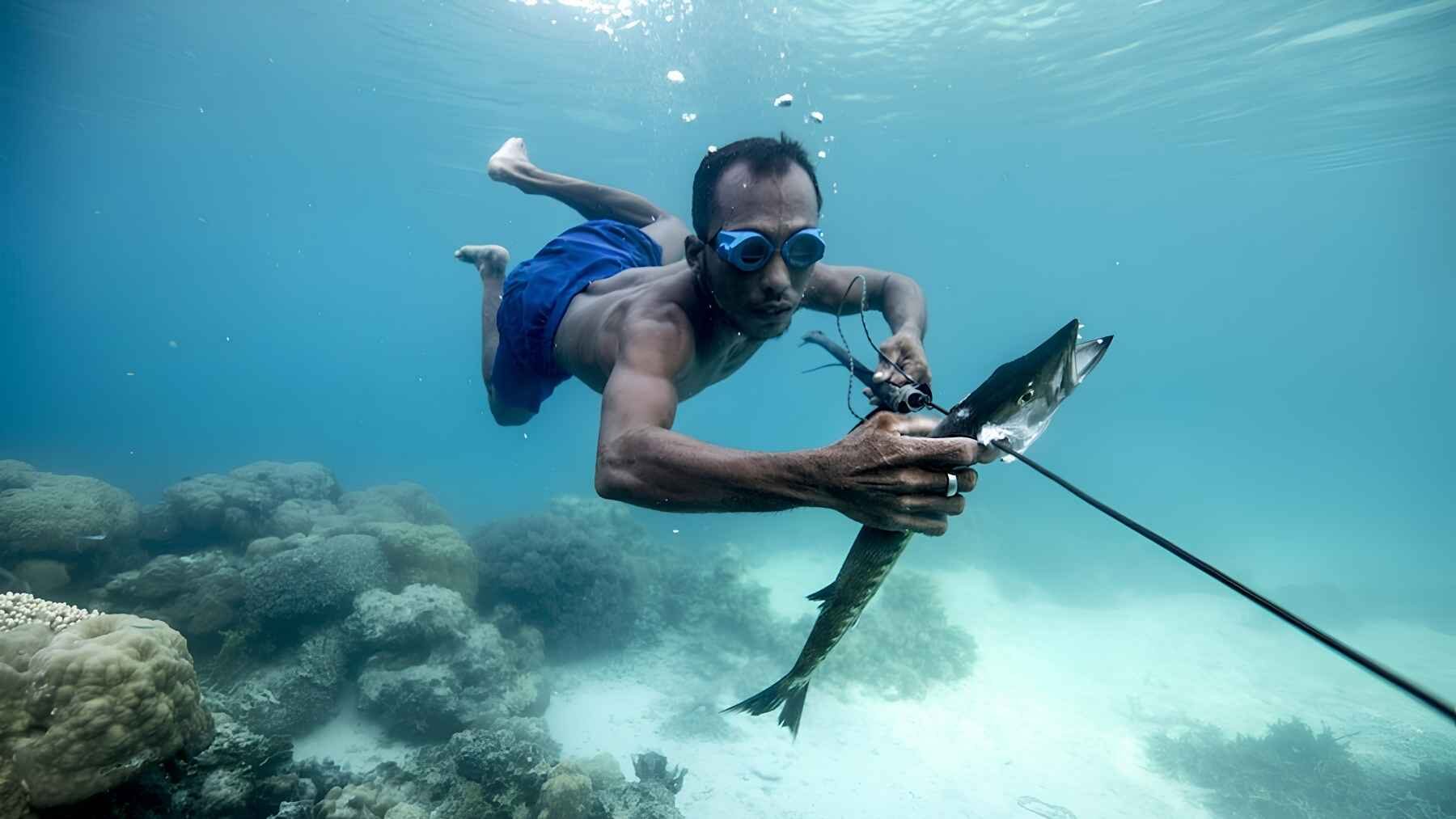
Staying underwater for more than ten minutes without an oxygen tank is inconceivable for most of us, but not to the Bajau divers of Southeast Asia. They can spend over half a working day doing exactly that, dive after dive, with only short breaks above water.
Thanks to a bigger spleen (not larger lungs), researchers say that their blood can stay oxygen-rich without breathing for much longer periods than the average person.
A built-in oxygen reserve
Using portable ultrasound technology, researchers scanned 59 Bajau people and 34 Saluan neighbors in central Sulawesi in 2018. Even in Bajau that were not divers, their spleens were 50% larger on average.
The spleen serves to oxygenate the blood by contracting and squeezing out red blood cells when someone holds their breath. Larger spleens may provide an advantage to the brain and other vital organs during frequent dives, according to researchers.
Genes point to natural selection
Genetics play a clear role, according to the research team. They identified differences in gene PDE10A, which is associated with regulating thyroid hormones and spleen size. BDKRB2, a gene that draws blood in from a person’s extremities as part of the diving reflex, also presented signals.
The study used a small sample size and could only demonstrate association, not necessarily cause and effect. Researchers cannot yet attribute just two genetic variants to the Bajau’s rare abilities.
A later test strengthened the case
In a 2022 follow-up mouse study showed that by blocking PDE10A, spleen size increased and the mice developed higher levels of red blood cell precursors in the bone marrow. The pathway seemed to function independently of erythropoietin, differing from the response typically seen in people living at high altitude.
Human spleens differ from mice spleens in the way red blood cells get produced, however. This study supports the theory of genetic differences better enabling these divers, but it is not enough to call it definitive proof.
Training still matters
Genetics can only tell part of the story. Research on Moken children found that they possessed extraordinary underwater vision without goggles, but that European children could also be trained to acquire it. Practice is the other half of the story.
A 2025 examination of Korea’s Haenyeo divers discovered similar anomalies. They are trained to abruptly drop their own heart rates during dives, while some genetic variants seem to give them higher cold tolerance and lower diastolic blood pressure.
The real achievement is repeated diving
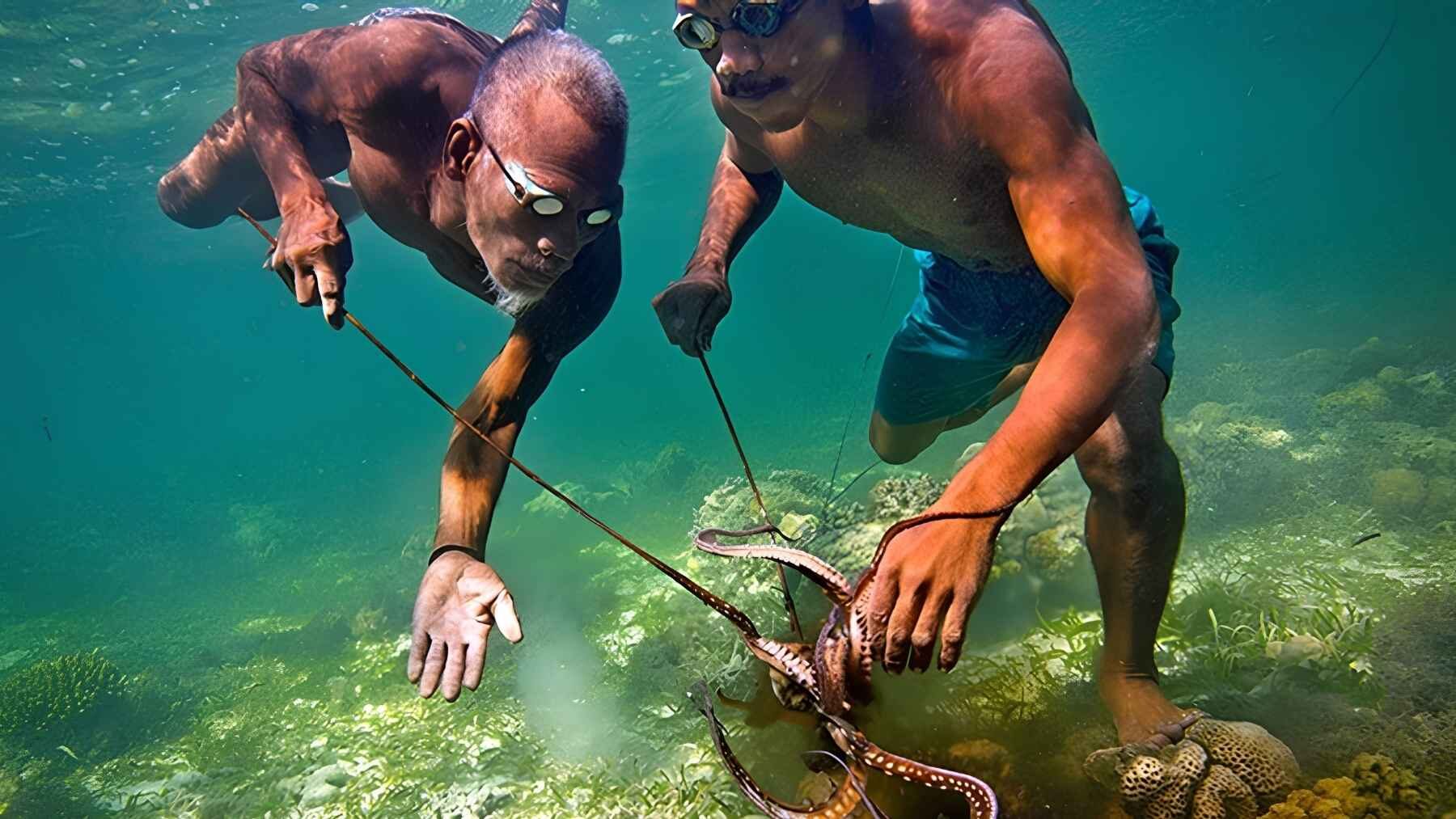
A healthy adult can be taught to hold their breath for minutes longer than they thought possible. The Bajau community often claims their divers can stay submerged for up to 13 minutes, but there is no documented scientific record yet. In any case, the remarkable part is not necessarily the time underwater in one dive, but rather the number of long dives during the same working day.
Biology, training, and the community’s long maritime experience all must come together to give these divers their impressive abilities, which are not without their costs. Hearing damage, dangerous conditions, and legal questions are some of the problems faced by many stateless Bajau families.
Readers may conjure up images of superhero Aquaman, but the reality is more down to earth.
The full study was published in the journal Cell.