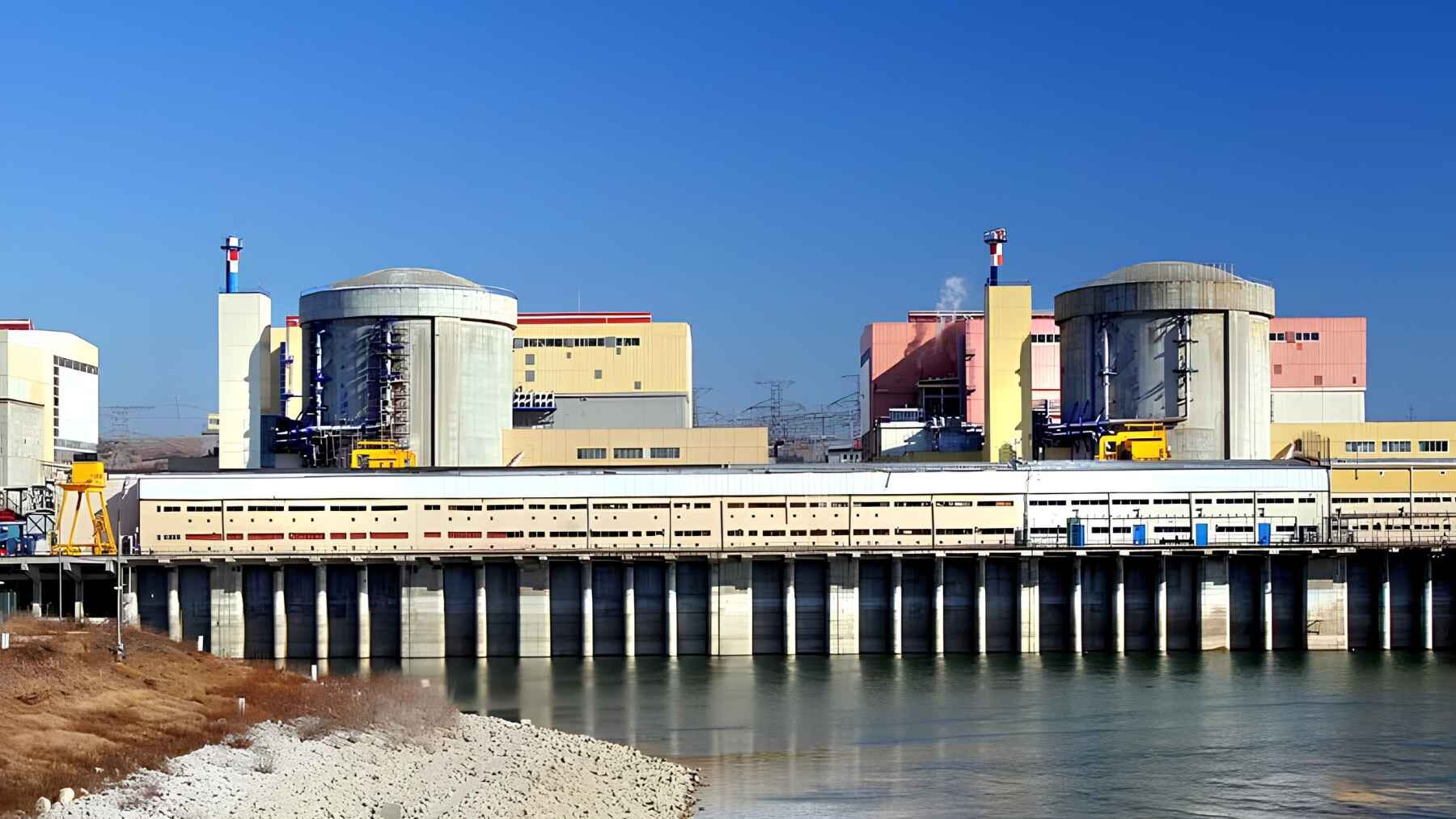
In the 24 hours before Sunday’s update, the river level at Cernavodă rose 1.6 inches even though forecasters expected a 1.6-inch decline — a 3.1-inch swing from the forecast. Romania’s Energy Ministry said the change should preserve operating conditions for at least nine days, while the national hydrology institute warned that Danube inflow would remain at only 49,440 cu. ft./s through Aug. 17, compared with an August average of 137,730 cu. ft./s.
A barrier hidden under the river
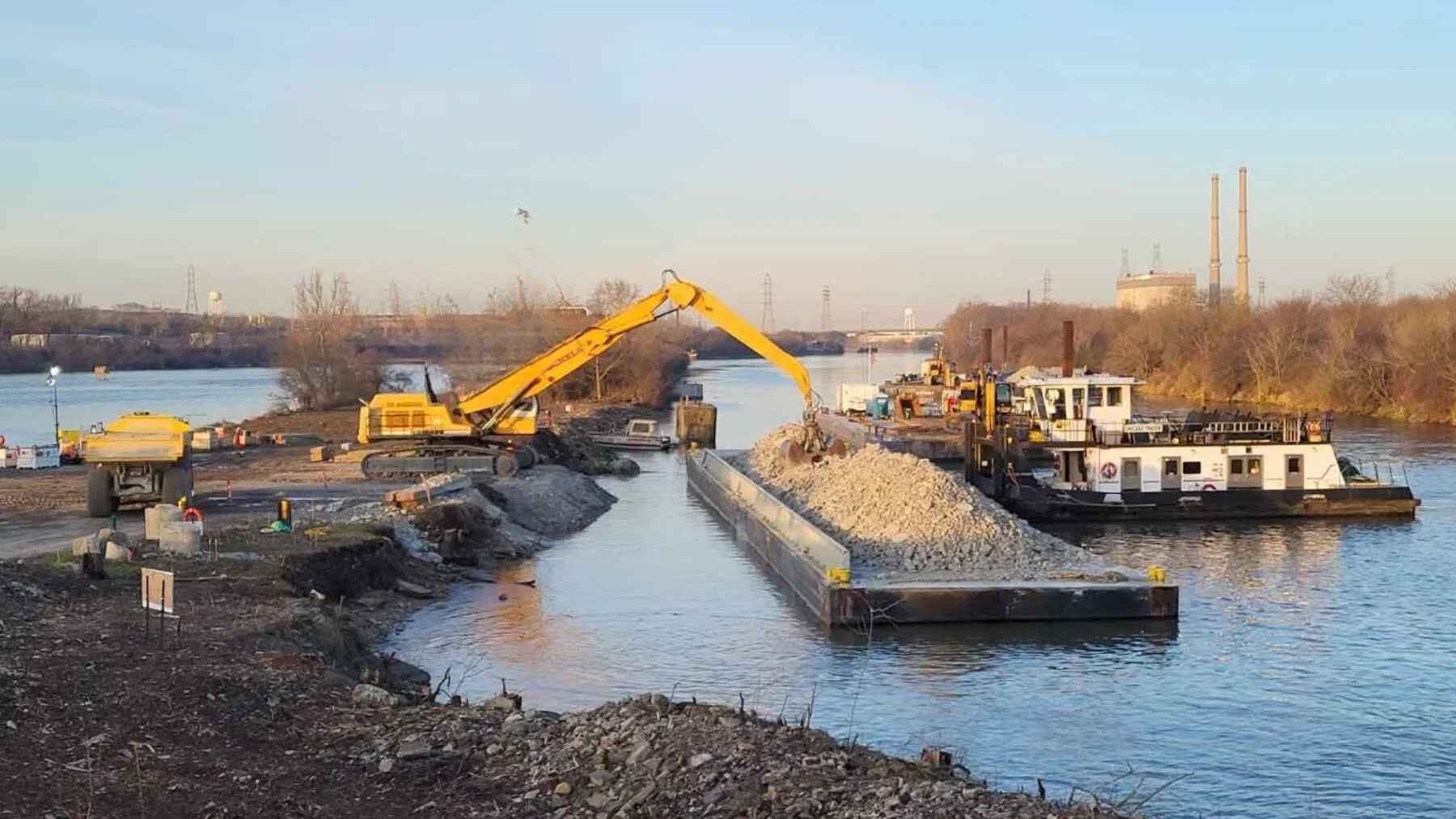
The barges were lowered in two groups and are acting as submerged thresholds — essentially functioning like underwater speed bumps that steer current — rather than conventional dams. Loaded with rock, they alter how the Danube divides at Bala, sending a larger share of water down the main channel toward Cernavodă, roughly 37 miles downstream.
Authorities had already dredged the riverbed and used controlled blasting to remove rock near the channel. The government also approved seven million lei in emergency funding for equipment, measurements, and temporary flow-redistribution works.
Why one reactor matters so much
Cernavodă has two CANDU 6 units of about 700 MW each. Together they normally generate roughly 18% to 20% of Romania’s electricity, so Unit 2 by itself represents about one-tenth of national supply.
Unit 1 was taken offline in a controlled shutdown on July 28 after unprecedented low water pushed operating parameters toward drought limits. Unit 2 was still running at nominal capacity — its maximum designed power output — on Aug. 4, but Nuclearelectrica cautioned that “the possibility of shutting down Unit 2 remains valid” if conditions worsen.
Low water is an operating problem, not an accident
The plant draws cooling water from the Danube-Black Sea Canal, and Romanian nuclear safety documents put the requirement for two operating units at about 3,180 cu. ft./s. When intake levels approach prescribed limits, operators shut a unit down preventively so cooling margins remain protected.
That distinction matters. Nuclearelectrica said Unit 1 remained in a safe shutdown state with no impact on nuclear safety, workers, or the environment, while specialists continued monitoring Unit 2’s equipment and safety margins.
The Danube is barely over one third of normal
On Aug. 10, flow at Baziaș, where the Danube enters Romania, stood at 49,440 cu. ft./s. That is about 36% of the 137,730 cu. ft./s August average, and INHGA expects the same low inflow through Aug. 17.
This is not only a Romanian story. Copernicus reported much-below-average July river flows across large parts of central and eastern Europe, while the European Drought Observatory described drought conditions across much of Europe as critical during mid-July.
Nine days is breathing room
The Energy Ministry’s nine-day estimate matches the period covered by the available forecast. It is not a fixed countdown to shutdown, and the ministry said the hydrological situation would remain under close watch as the final two barges began influencing the flow.
The barges buy time, not rain. INHGA says forecasts at Cernavodă are now only indicative because the intervention itself can significantly soften the expected decline, which is encouraging but also shows how unusual the situation has become.
A warning for Europe’s power system
Low-carbon electricity can still be water-dependent. Across the EU, power-plant cooling accounted for 36% of economic-sector water abstraction on average from 2000 to 2022, and the European Environment Agency says about 65% of European electricity production still relies on water for cooling.
Dry cooling can sharply reduce water use, but it requires additional energy and becomes less effective during extreme heat. The broader lesson from Cernavodă is that climate resilience must be designed into power plants, grids, storage, and cross-border connections before the river falls, not improvised after it does.
What happens next
For now, Unit 2 remains Romania’s only operating nuclear reactor and officials are watching every inch at Cernavodă. Romania has also requested voluntary electricity savings during evening peaks, including switching off architectural and decorative lighting, because every megawatt matters when supply is this tight.
Engineers have won a battle, but how long can four barges hold back an energy squeeze?
The latest official forecast was published on the INHGA website.