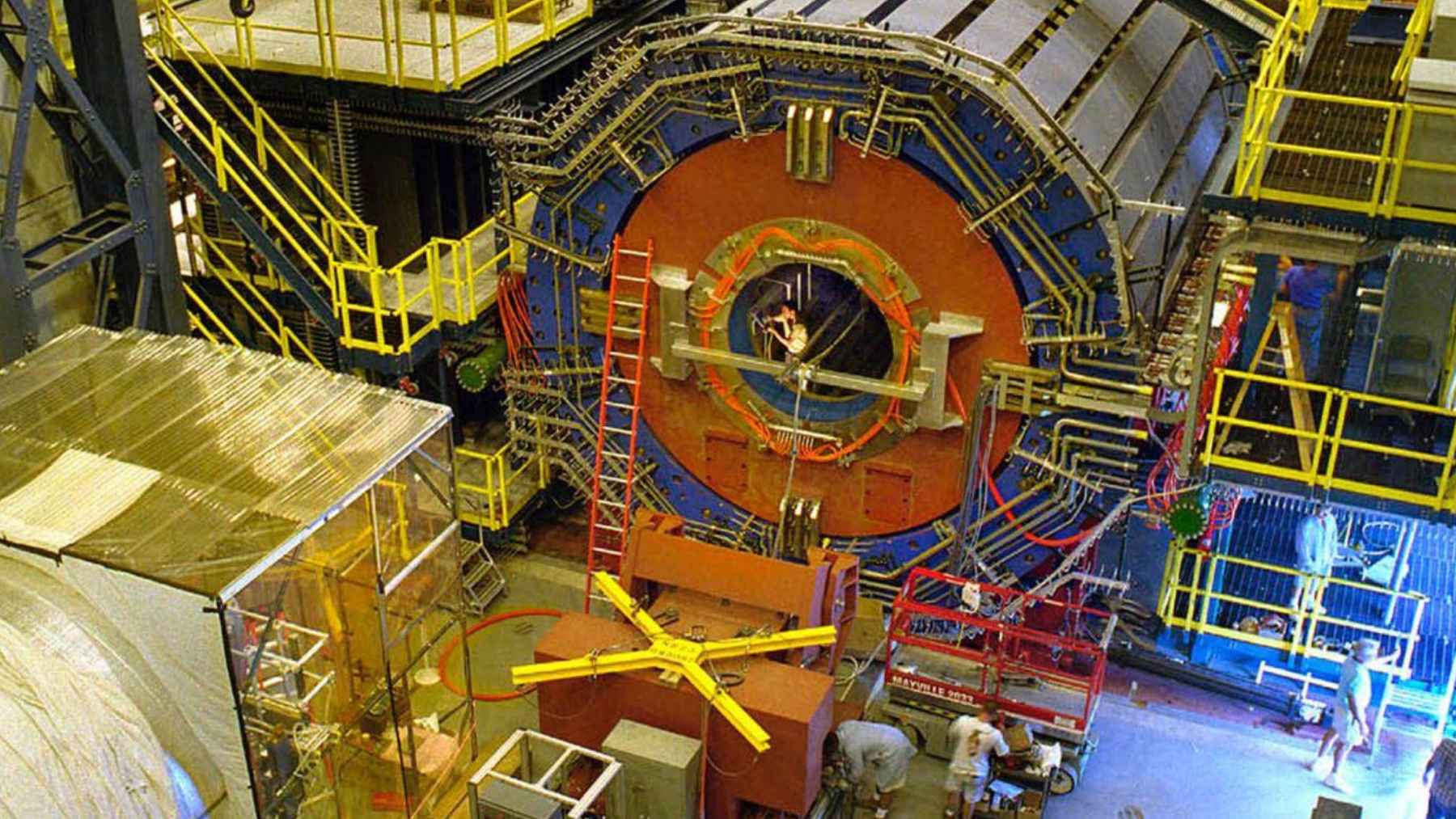
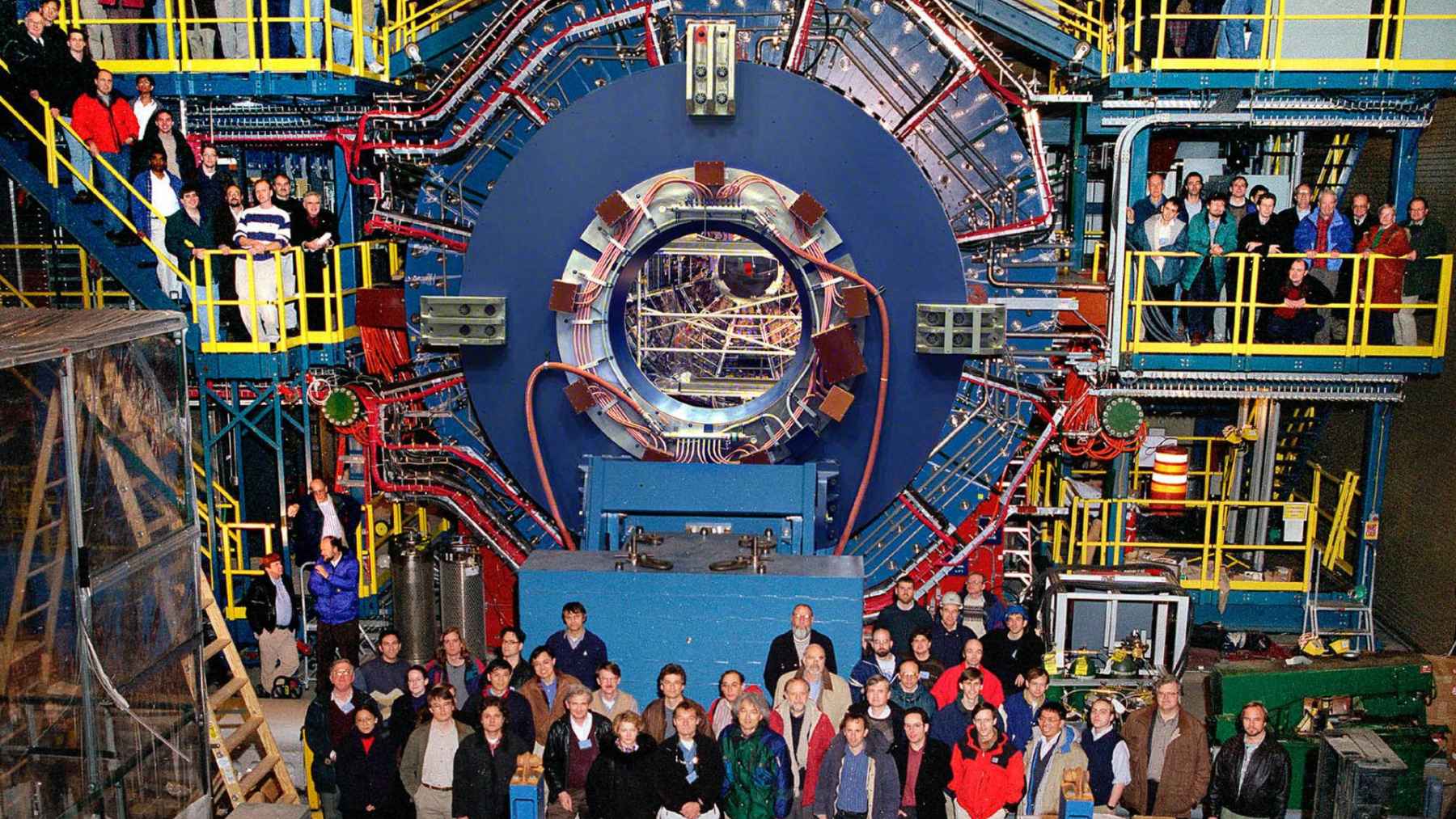
For decades, physicists have argued that “empty” space is not truly empty. Now a team working with the STAR detector at Brookhaven National Laboratory says it has found direct experimental evidence that particles born in high-energy proton collisions can inherit a telltale spin pattern from virtual quark pairs in the quantum vacuum.
The new Nature paper focuses on lambda hyperons and their antimatter twins, and it reports a measurable spin correlation of about 18% for close lambda and antilambda pairs, with a 4.4 standard deviation significance. Researchers say that link offers a fresh way to probe how quarks get confined and how most of the mass of everyday matter emerges.
The vacuum is not empty
In classical thinking, a vacuum is just a blank. In quantum physics, it is more like a simmering background, where particle and antiparticle pairs can briefly appear and disappear, allowed by the uncertainty principle. Physicist Dmitri Kharzeev put it simply, “The vacuum in quantum theory is not empty space.”
In this case, the story runs through quantum chromodynamics (QCD), the theory of the strong force. The Nature paper describes the vacuum as containing virtual quark and antiquark pairs, including strange quark pairs expected to be spin-correlated, and it notes that RHIC accelerates protons to 99.996% of the speed of light to “excite” that vacuum in collisions.
Why lambdas are the perfect messengers
Quarks do not show up as free particles in nature, so STAR cannot just “see” a strange quark and call it a day. Instead, the experiment tracks composite particles that contain strange quarks, especially lambda hyperons and antilambdas.
Lambdas also come with a built-in decoder ring. The Nature paper notes that a lambda lives about 10⁻¹⁰ seconds and that its spin polarization can be reconstructed from how it decays, while Scientific American describes it traveling only a few centimeters (around an inch) before it falls apart into particles the detector can track.
The signal hidden in a million collisions
The STAR team sifted through millions of proton-proton collision events and looked for lambda and antilambda pairs that emerged close together.
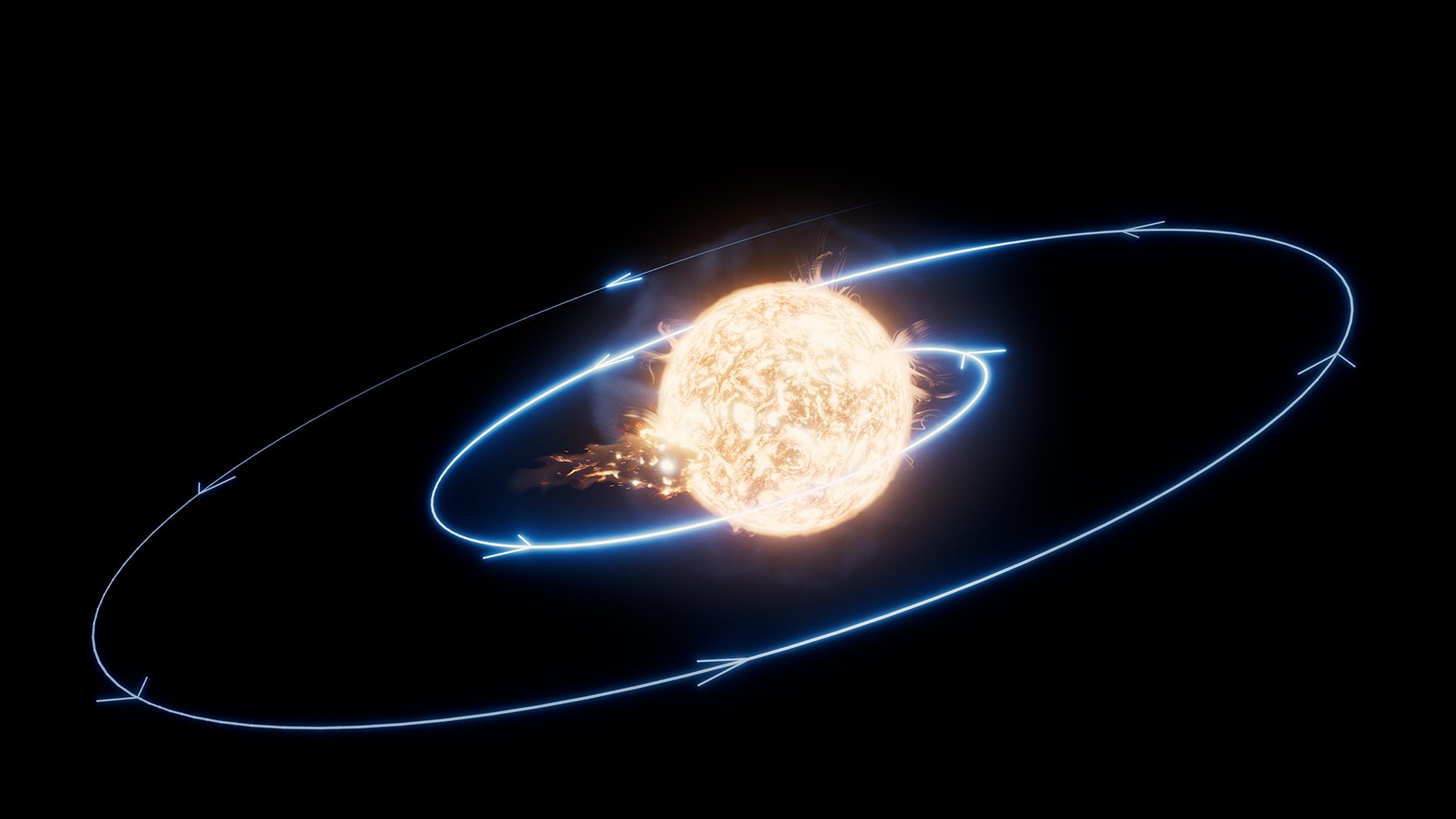
In the Nature analysis, those short-range pairs show a positive spin correlation, quantified as a relative polarization (a measure of how strongly the spins are linked) of 0.181, or about 18.1%, with a 4.4 standard deviation significance compared with zero.
Crucially, the correlation disappears when the pair is widely separated in angle. The authors interpret that pattern as consistent with decoherence, meaning the original quantum linkage does not survive once the particles get too far apart in the collision noise.
You may also see the Brookhaven news release summarize the effect more dramatically, saying nearby lambdas and antilambdas are “100% spin aligned.” The technical result is the 18% relative polarization reported in Nature, but the headline wording is pointing to the same core idea – the alignment is strongest exactly where the vacuum-origin picture predicts it should be.
A new window on where mass comes from
Why should anyone outside particle physics care about a spin correlation in an exotic particle? Because it connects to a surprisingly everyday question, why do protons weigh what they do. Scientific American notes that the quarks themselves account for only a tiny fraction of a proton’s mass, while “the other 99% is thought to arise from interactions” involving the strong force and the QCD vacuum.
That is where STAR’s approach is intriguing. Brookhaven physicist Zhoudunming (Kong) Tu calls it “a unique window into the quantum vacuum,” and the lab argues the same quantum-to-classical transition at play here matters for quantum information science and future quantum-based technologies.
What scientists still need to rule out
High-energy collisions can produce quark and antiquark pairs in more than one way. The Nature paper explicitly notes a competing pathway, gluon splitting into a quark pair, and it uses comparisons and baselines to show that the observed correlation is specific to short-range lambda and antilambda pairs.
Even with a strong statistical signal, this kind of work lives or dies by cross-checks. The Brookhaven team has already framed a next step, using future measurements to send quark and antiquark pairs through different nuclear “environments” and see how the correlations evolve, rather than relying on one collision system forever.
Why this matters to an environmental newsroom
This is fundamental physics, but it is not cut off from the world of sustainability. Brookhaven’s own Electron-Ion Collider (EIC) project update argues that deeper knowledge of matter and forces has produced broader benefits, including advances in energy systems and electronics.
There is also a tangible, nuts-and-bolts sustainability angle in how this research infrastructure evolves.
The EIC plan is to reuse RHIC’s 2.4-mile-circumference tunnel and more than 1,000 superconducting magnets, and Brookhaven says reusing RHIC’s most complex components reduces cost compared with starting from scratch. RHIC itself is described as a $2 billion federal investment, while the EIC project is projected at about $2.8 billion.
RHIC shut down on February 6, 2026, and the EIC is planned to begin electron-hadron collisions around 2035, meaning the same site will keep asking “where does matter come from” with sharper tools.
If some of that work eventually helps build better sensors for Earth monitoring or makes energy-hungry computing more efficient, that is when a discovery like this can show up on something as ordinary as the electric bill.
However you picture “empty space,” this result makes it harder to treat the vacuum as a passive backdrop.
The study was published in Nature.