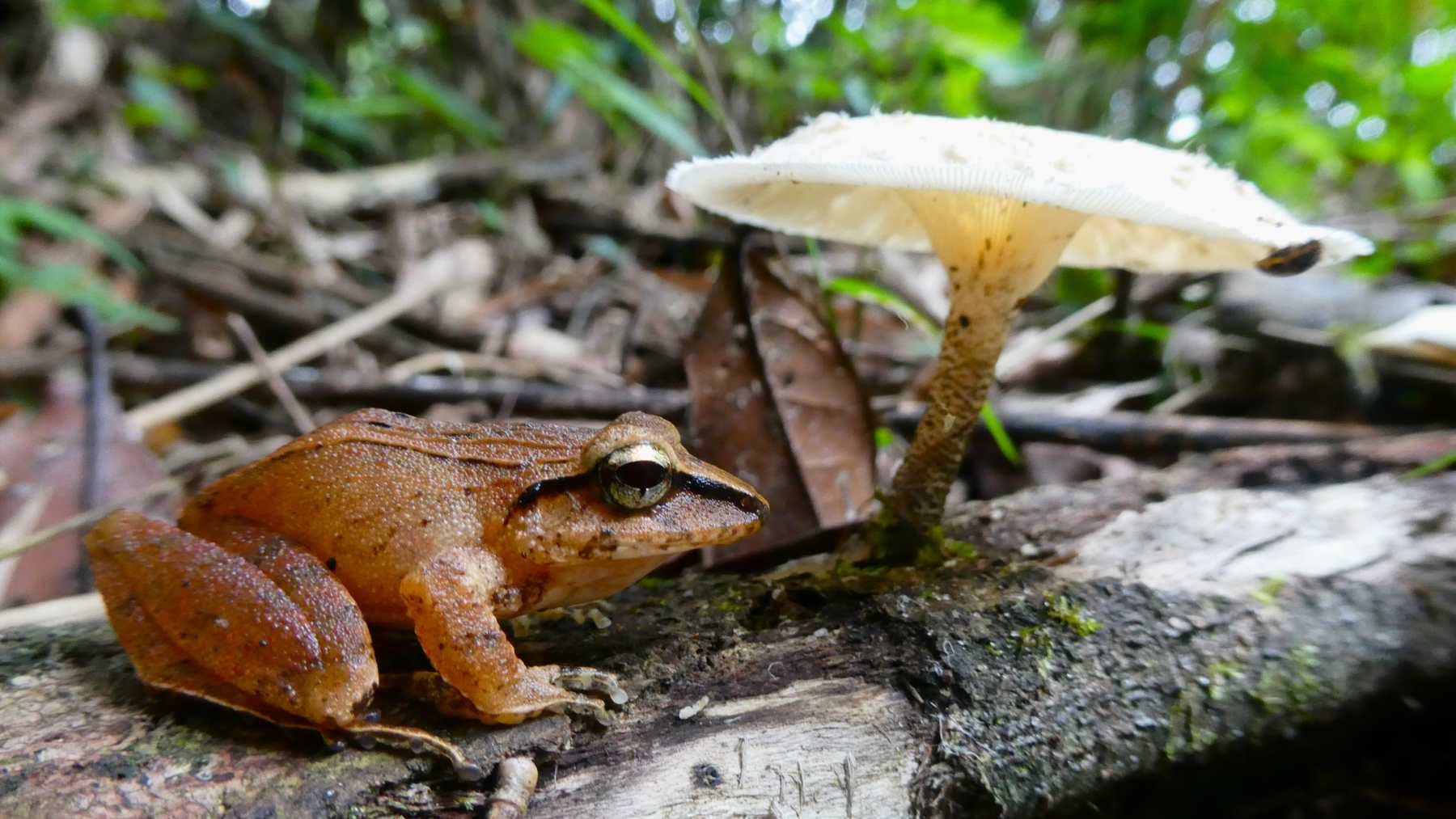
W. Ronald Heyer kept collecting frogs at Brazil’s Boracéia Biological Station after many of them stopped showing up, and his jars, stored for decades at the Smithsonian, have now let scientists check them for the chytrid fungus. In 230 frogs collected before 1979 they found no trace of it, and in the 1980s, after the die-off, 57 of 97 frogs were infected.
Jack Boyette, a graduate fellow at the Smithsonian’s National Zoo and Conservation Biology Institute (NZCBI) and a doctoral candidate at Pennsylvania State University, led the work with co-authors in the United States, Brazil and Panama.
“After almost 50 years, we still aren’t confident what caused many historical amphibian die-offs, making these declines some of the most enduring cold cases in wildlife epidemiology,” Boyette said in a statement from NZCBI.
A die-off nobody could explain
Between 1979 and 1982, Boracéia, in São Paulo state, lost frogs fast. Six species dropped drastically and five more seemed to vanish, while 16 kept their numbers, according to Heyer’s 1988 account.
Chytridiomycosis, the disease in question, is caused by a microscopic fungus, Batrachochytrium dendrobatidis, or Bd, that attacks amphibian skin.
Bd was only formally described in 1999. By then, the authors note, global declines had already peaked in the 1980s, which is why so many old crashes were never tested.
Some scientists blamed Boracéia on climate change and extreme weather instead, and a 2025 paper, as the new study puts it, went “so far as to argue that Bd-driven declines in the Atlantic Forest are ‘implausible.'” “While environmental factors could have played a role, our findings most directly implicate the chytrid fungus, revealing that regional invasion of the pathogen coincided with these unexplained amphibian disappearances,” Boyette said.
Five trips, two before and three after
Heyer, a former curator of amphibians and reptiles at the Smithsonian’s National Museum of Natural History, went to Boracéia in 1975 and 1976-1977, then again in 1983, 1984 and 1988. Nobody collected there from 1978 to 1982 “due to political instability and prohibitively high fuel costs,” the authors write.
Boyette’s team swabbed 327 frogs from 17 species, 306 of them from Heyer’s five trips and 21 older ones from the 1940s. They also swabbed the inside of 33 storage jars in case loose fungal DNA was floating in the alcohol. “Reassuringly, Bd was not detected in any of our 33 jar swab controls,” they write.
The Smithsonian’s release speaks of “more than 370 museum specimens,” but the paper counts 327 frogs, and the 33 jar swabs plus four blanks bring the DNA extractions to 364.
“Museum collectors could not have anticipated how important their collections would be to our modern conservation challenges, but without them, we would never be able to detect pathogens that went unnoticed for decades and reconstruct disease outbreaks that would otherwise remain a mystery,” said Michael Campana, an NZCBI genomicist on the study. Old collections keep doing this, as when a bear shoulder blade found in England in 1864 helped date medieval bear-baiting.
Zero before 1979, 58.8 percent after
“The results were stark,” the Smithsonian said. The 230 pre-decline frogs, including 21 from the 1940s, came back clean, and 58.8 percent of the 1980s frogs were positive.
A second DNA method, droplet digital PCR, matched the first in 94 percent of 84 rechecked samples. Ancient DNA has pulled off similar feats, such as finding plague in 5,500-year-old skeletons from Siberia.
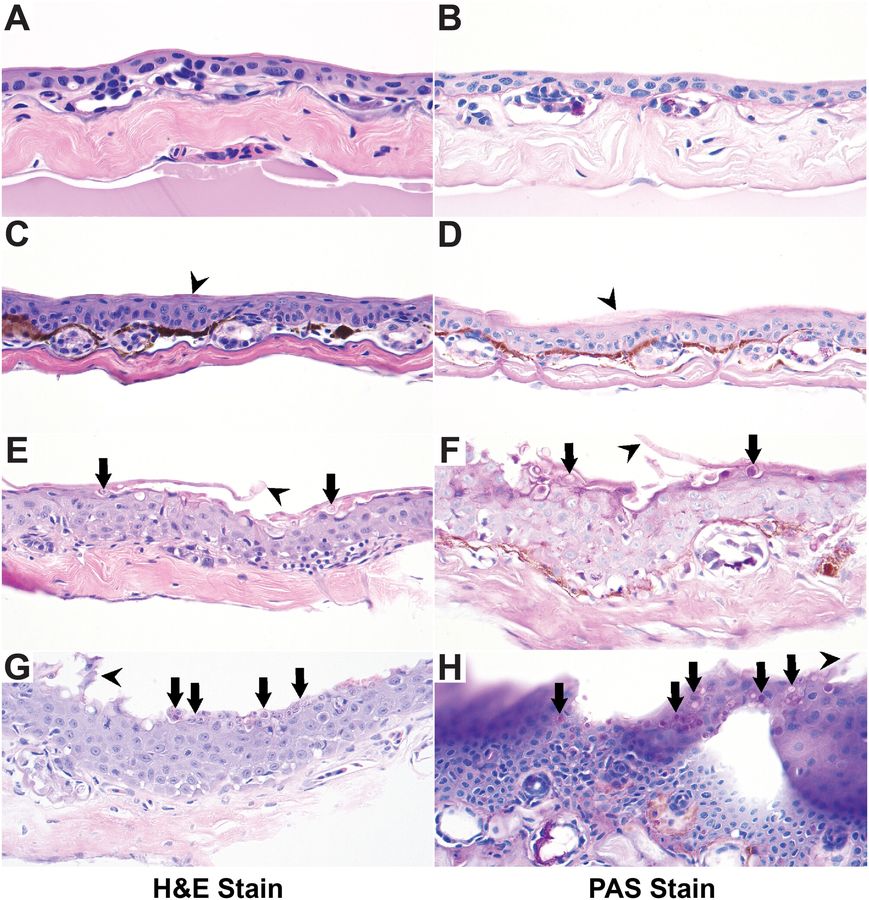
Skin slices went under the microscope at the Histology Laboratory of the University of Florida Veterinary Hospital. Bd sporangia, the fungus’s spore-making bodies, showed up in 14 of 15 heavily infected frogs and in none of the 25 that had tested negative, 21 of them collected before 1979.
The frogs that crashed tested clean
The species breakdown was stranger, because in four species that never declined, 34 of 42 frogs from the 1980s carried Bd, while in three species Heyer called drastically reduced, it was zero of 15.
“It’s important to keep in mind that not all species suffered catastrophic losses at Boracéia,” Boyette said. “The species that didn’t decline may have naturally tolerated the fungus, allowing them to become infected without suffering mass mortality. By contrast, the species that declined most dramatically may have been so susceptible that infected frogs died before Heyer could collect them.”
Those three survivors breed on land, with no tadpoles in streams, where Bd lives. The six other declined species, all stream breeders, were simply too rare to collect. “In effect, the only observed-decline species persisting at abundances sufficient for collection were those with the lowest exposure risk,” the authors write.
Ben Scheele of the Australian National University, whose 2019 survey counted at least 501 amphibian species in decline from the disease, 90 of them extinct, explained the other half of the puzzle in a Smithsonian release. “On the one hand, it’s lucky that some species are resistant to chytrid fungus; but on the other hand, it means that these species carry the fungus and act as a reservoir for it so there’s a constant source of the fungus in the environment,” he said.
The global strain arrived first
Bd comes in genetic lineages, and Bd-GPL, the “global panzootic lineage,” is the hypervirulent one behind most declines worldwide, while Bd-Brazil is a local strain that is usually milder with the region’s frogs.
Every genotyped frog from 1983 carried Bd-GPL. Bd-Brazil appeared in one frog in 1984 and dominated by 1988, when the first hybrid showed up, so the team concludes Bd-GPL “invaded Boracéia between 1979 and 1982.”
“The increasing frequency of hybrid genotypes is particularly concerning, as experimental studies have shown that Brazilian Bd hybrids can exhibit higher virulence than parental lineages,” the new paper adds.
Boracéia’s frogs mostly came back
From 2022 to 2024 the team returned six times with University of São Paulo researchers and swabbed 539 live frogs. Twelve of Heyer’s 17 species were there, and the other five may be gone or hiding in tiny numbers.
About 29.5 percent carry Bd today, roughly the same in species that crashed (30.1 percent) and those that didn’t (30.4 percent). “At Boracéia, however, the story today is one of resilience,” the Smithsonian said, pointing to “the evolution of widespread pathogen tolerance among species that historically declined.”
Recoveries like that are what bigger programs, such as a $200 million project to recover 100 species that includes frogs, are chasing elsewhere.
What the jars cannot settle
“By focusing exclusively on frogs collected at Boracéia, we cannot extrapolate our findings to the broader Atlantic Forest,” the authors write.
Heyer himself warned that his “field data were not collected in a form that allows precise quantification of collecting effort,” and that he made “special efforts” to collect species that seemed decimated. The 1988 sample is small, and tolerance is read from field infection rates, with no lab infection tests.
The authors also leave room for weather, writing, “We do not view these explanations as mutually exclusive, as environmental conditions are known to influence Bd transmission.”
Salamanders may be next
The team is already pulling DNA from the museum frogs to study how species responded, and other projects will use ancient environmental DNA to fill gaps. The Smithsonian warns that a related fungus, B. salamandrivorans, “threatens salamanders in Europe and could pose a serious risk to salamander populations in North America.”
The full study was published on October 14 in Molecular Ecology.
The five species the team could not find in 2022-2024 are still unaccounted for.
Photo: Jack Boyette, Smithsonian’s National Zoo and Conservation Biology Institute