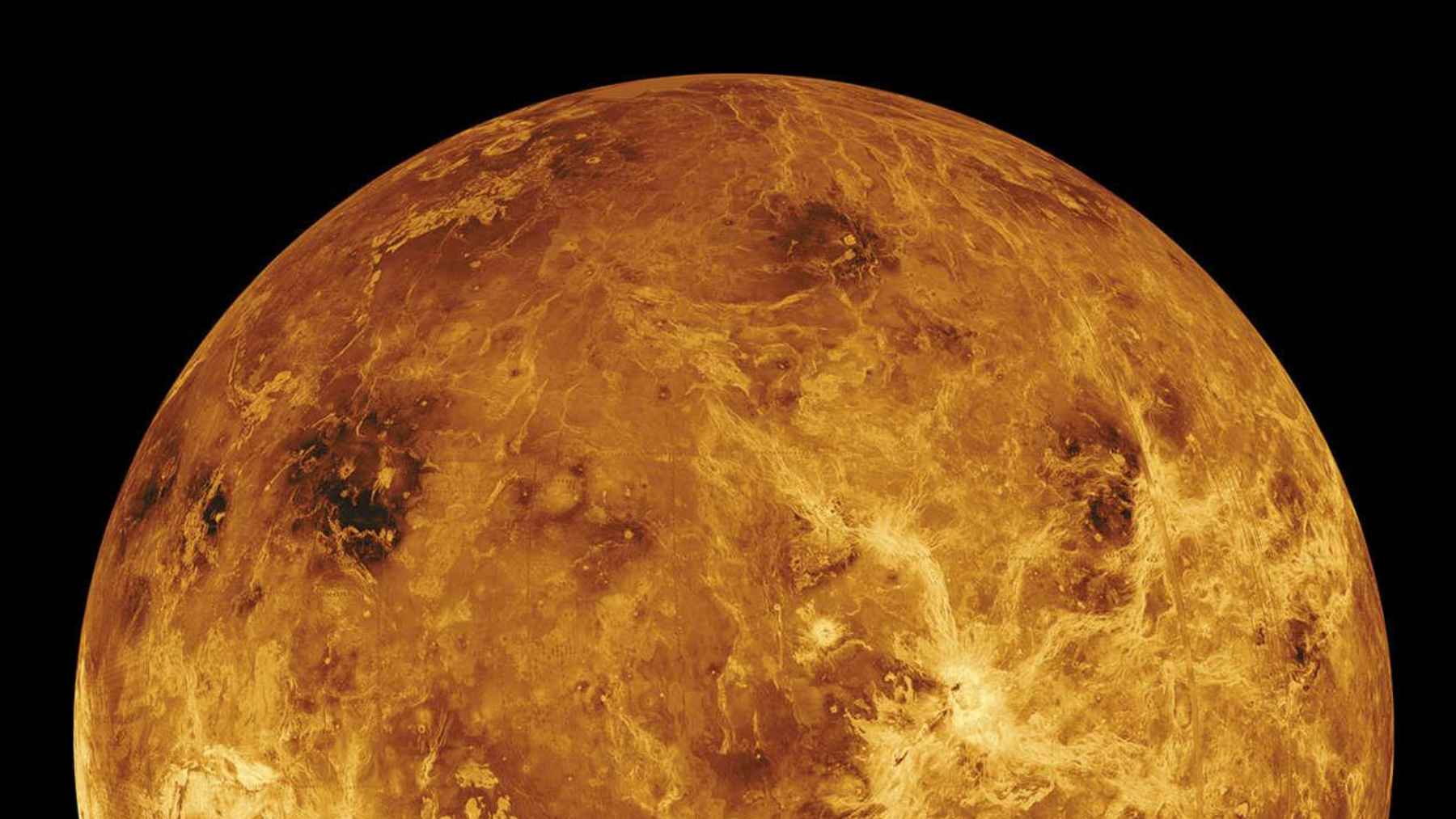
What can a 30-year-old radar image still reveal about Venus? Quite a lot, apparently. Scientists reexamining data from NASA’s Magellan spacecraft say they have found the first evidence of a giant empty subsurface conduit on Venus, a discovery that turns a long-debated idea into something researchers can finally measure and study.
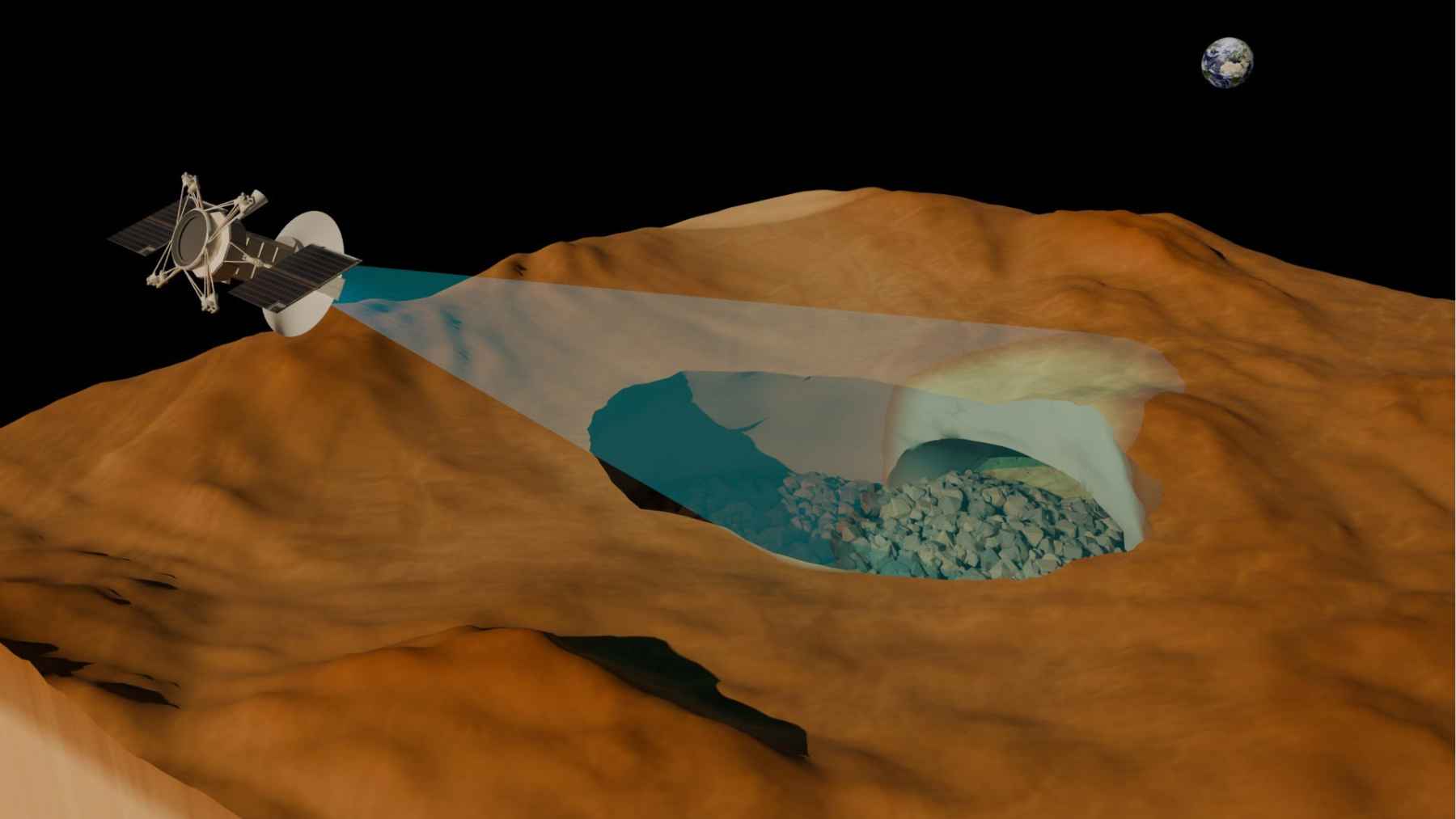
The feature sits near Nyx Mons, where radar images show a collapsed opening, or “skylight,” leading into a huge underground void.
That matters because Venus keeps most of its secrets behind thick clouds, and ordinary cameras cannot see through them. For the most part, if scientists want to understand the planet’s surface or what may lie just below it, radar is the tool that makes the story possible.
A giant hollow space under Nyx Mons
The work was led by the University of Trento and funded by the Italian Space Agency, with the paper appearing in Nature Communications on February 9, 2026. The team revisited synthetic aperture radar images collected by Magellan after the spacecraft reached Venus in 1990 and began returning the radar maps that reshaped what scientists knew about the planet.
Their measurements point to a truly enormous structure. The conduit is about 1 kilometer (about 0.6 miles) wide on average, with a roof at least 150 meters (about 492 feet) thick and an empty interior at least 375 meters high. The skylight itself measures roughly 1,545 by 1,070 meters, and the radar signal appears to travel at least 300 meters into the cavity, suggesting the opening is only the first visible section of a much larger underground system.
How the tunnel likely formed
Researchers interpret the feature as a lava tube, sometimes called a “pyroduct.” These tunnels form when the outer part of a lava flow cools and hardens while molten rock keeps moving through the middle. Once the eruption slows down, a hollow passage can remain below the surface.
That process is familiar on Earth, and scientists have also identified related structures on the Moon and Mars. Venus, though, had remained the missing piece, which is why the new result stands out so strongly. It offers the clearest evidence yet that the planet’s intense volcanic history also built large underground spaces, not just the sprawling lava fields seen from orbit.
And the scale is hard to ignore. In the paper and the university statement, the researchers describe a feature larger than theorized examples on Mars and at the upper end of what has been proposed, and in one case observed, on the Moon. Lorenzo Bruzzone, who coordinated the study, said the discovery helps “validate theories” that had gone unconfirmed for years and opens a new path for understanding how Venus evolved.
Why Venus may produce outsized lava tubes
Why would Venus host a cave this large? According to the study, the planet’s lower gravity and much denser atmosphere can help a thick insulating crust form quickly once lava leaves a vent. In practical terms, that can trap moving lava below the surface for longer and make tube-fed flows more likely.
That explanation also fits a broader pattern, because Venus is already known for lava channels that are larger and longer than those seen on other rocky worlds. So this giant conduit does not look like a random oddity. It looks, to a large extent, like another sign that Venus builds volcanic features on a very big scale.
A first look into a much bigger underground world
There is still some caution here, and that nuance matters. The researchers say the available data confirm and measure only the part of the cavity closest to the skylight. Based on nearby pits and the surrounding terrain, they infer the system could stretch at least 45 kilometers below the surface, but they also note that a different process linked to dike intrusion cannot be completely ruled out.
Even so, the finding could reshape future Venus exploration. The paper says Magellan’s 75-meter pixels likely missed many smaller skylights, which means similar cave entrances may be hiding elsewhere in the old dataset, and that is where newer missions come in.
ESA says EnVision will be the first Venus mission with a subsurface radar sounding instrument, while NASA says VERITAS will improve on Magellan’s radar maps by orders of magnitude.
So the real shift is bigger than a single cave. A radar archive from the early 1990s has now opened a new chapter in Venus science, showing that the planet may have a hidden underground architecture that researchers are only beginning to map.
If future missions confirm more of these conduits, Venus could start looking less like a sealed mystery and more like a volcanic world with a second landscape under its surface.
The study was published in Nature Communications.