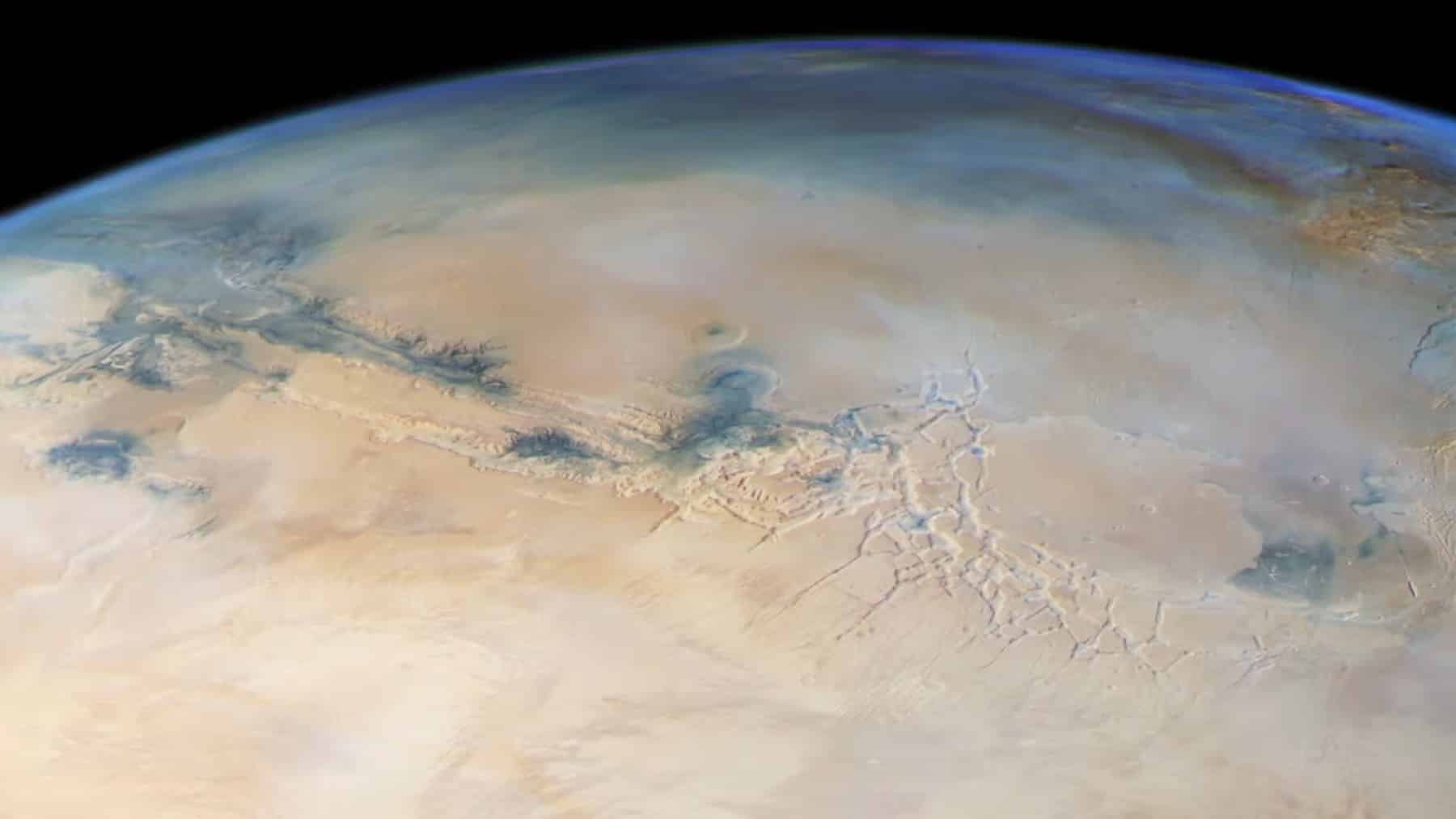
The decades-old mystery of Martian water is getting a new twist! New evidence points to the possibility that Mars once had lakes of liquid water, not just ice, and NASA is keen to discover what secrets could be lurking beneath the ancient, now-dry lake-beds.
Evidence of ancient lakes on Mars revealed by wave ripples
Whether Mars ever had liquid water has long been a subject of debate among scientists, and a study published recently offers compelling evidence. Researchers evaluating data collected by NASA’s Curiosity rover have found “wave ripples” in Martian rocks, suggesting that there were standing bodies of water on the planet billions of years ago.
These ripples, which are only a few millimeters high, indicate that part of Mars was home to shallow lakes about 3.7 billion years ago. Claire Mondro, a CalTech postdoctoral scholar and the study’s lead author, emphasized the importance of this finding.
“These form of ripples could only form in water that is open to the atmosphere and subjected to wind,” she added. She says her models show that when these potentially large lakes form, they stretch across much of the area in question, out of any fault line.
Her conclusions indicate that these lakes were shallow, no deeper than two meters (6.5 feet), but enough of a find to suggest a past Martian climate that was more like Earth’s. If these lakes lasted and were liquid for a long time they would create life friendly conditions for microorganisms.
The quest for the hidden water on Mars begins
This finding is proof that Mars once had water, it brings about important questions about what may still lie hidden under its surface. Ancient lakes that once speckled the Martian surface might have left traces of their existence behind, entombed beneath layers of rock and dust.
Curiosity’s observations of the Gale Crater region suggest Mars’ lakes weren’t permanently frozen. The formation of wave ripples suggests these lakes were exposed to the atmosphere and interacted with them. This means Mars used to have a much thicker atmosphere that potentially supported liquid water.
However, throughout millions of years, the planet lost that atmosphere, leaving behind the dry, inhospitable landscape we witness today. If there was once water on the surface, could underground reservoirs still exist? Scientists suspect past water is preserved below Mars’ dry lake-beds, including underground ice deposits or briny liquid water. NASA’s upcoming missions are targeting these possibilities, looking for chemical signatures that may suggest ancient microbial life (just like this Mars revolution that could happen in 2 years).
Could the traces of Martian water help us live on Mars?
Finding past liquid water on Mars has direct implications for NASA’s future exploration goals. Knowing where and how water was present on Mars in the past could help inform future missions’ selection of landing sites for collecting samples and for human exploration.
NASA’s Perseverance rover exploring Jezero Crater is gathering rock samples that might hold signs of ancient microbial life. NASA’s Mars Sample Return mission will return these samples to Earth for more detailed study, presenting an unparalleled opportunity to investigate Mars’ history in detail.
Crewed missions to Mars in the future will also depend on soil and water resources for drinking, oxygen generation, and even rocket fuel. If there are bits of ancient Martian water sources still sitting below the surface, they could be critical for sustaining long-term human habitation of the planet.
Finding Martian wave ripples is a turning point. Not only does it show that Mars used to have liquid water, but it raises interesting questions about what might still be lurking beneath the surface. With the upcoming NASA rover, the hunt for planetary resources is on with strong potential for ancient microbial life or underutilized water-rich elements. With each mission, we’re getting closer to uncovering the mystery behind Mars’ past, and possibly also its potential for future human habitation (just like the possible discovery of frozen life on Mars).