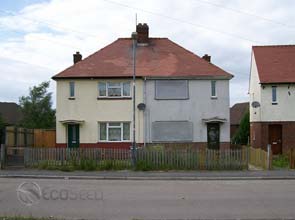
The Building Performance Institute Europe released findings that the United Kingdom currently holds the record for having the oldest houses in the E.U., with more than half of the U.K.’s housing stock being built before 1960. Unsurprisingly, with older homes come problems, like poor repair and upkeep, unsatisfactory energy efficiency and similar related problems.
Figures compiled by the Association for the Conservation of Energy using official E.U. data has in fact found that housing in the U.K. is among the least efficient within Europe, ranking tenth worst out of twelve. Homes with poor efficiency rating are not only bad for the environment, but also can have extremely negative ramifications with those who live in the homes.
These homes are generally a lot colder than they should be, meaning they cost more to heat up and maintain comfortable levels of warmth. This is a result of poor insulation and draughts, usually due to dated building regulations that just don’t meet up to modern standards. Cold houses in the U.K. lead to poor health and sometimes death for the more vulnerable in the colder months and have also contributed to helping fuel poverty in the U.K. surge.
U.K. homes having poor energy efficiency has led to the U.K. having the highest proportion of fuel poverty in Europe, with nearly 20% of U.K. households being unable to heat their homes sufficiently. Fuel poverty is when a household is required to spend more than 10% of the household income to achieve adequate levels of warmth in the home.
With the U.K.’s housing stock being responsible for almost one quarter of its carbon emissions it is imperative that steps are taken to make the homes more efficient to benefit both inhabitants and the environment. There are a few very easily implementable home improvements that can made to the home to decrease its overall carbon footprint and also save the owner money.
However, there are only so many cost effective improvements that can be made to old homes. Some argue it would be better for the environment and economy if new houses were built in some of the more run down house’s place.
Currently, only around one tenth of U.K. homes have been built after 1991 meaning modern, more efficient housing remains relatively rare in Britain. However, there are many benefits to living in, or owning a newer home.
As standard, many new builds are extremely energy efficient, for example, Abel Homes who specialise in new homes in Norfolk install triple glazed windows and Solar PV as standard and construct homes using ‘superwall’ insulation. Alternate renewable energy sources not only reduce carbon emissions but can also help to earn the inhabitant money as they sell electricity back to the grid.
There have been many advances in technology and with different materials becoming more readily available, the construction of cheaper, more environmentally friendly houses is becoming a reality. In making necessary changes to existing homes and replacing tired, older builds with newer ones the UK is becoming ever closer to reducing emissions and helping to improve lives for those who struggle to heat their homes.
Ruth Barton is a professional writer who is passionate about environmental issues. She is constantly looking for ways to reduce her carbon footprint.