The solar industry has long been inundated with debates surrounding the environmentally friendliness of solar panels themselves. Though the panels work off the initial carbon emissions needed to create them, the environmental cost of their production is not to be disregarded. The next step in solar might be maximising the energy production of solar panels to reduce the rate at which they must be replaced.
Are solar panels really all that environmentally friendly?
Traditional solar panels are made using silicon-based cells. These silicon cells are somewhat limited in terms of their flexibility and their efficiency. They can only be used in flat solar panel designs atop roofs or in sunny fields where they remain fixed in place.
They are also damaging to the environment as they produce hazardous run-off. The by-products of solar panel production can damage waterways and land for decades to come. The process of producing solar panels is also energy intensive and highly technical.
It stands to reason, then, that we want our expensive and environmentally threatening solar panels to last as long as possible, producing maximum energy outputs for as long as possible. That’s why scientists have recently developed a way to preserve a particular type of solar panel for a very long time.
Perovskite cells: the fickle future of solar power
Perovskite cells present the solution to much of the problems facing traditional solar panels. Unlike their traditional silicon-based counterparts, the perovskite cell is flexible. It is able to acclimate to a number of surfaces (like this solar skin used to make an entire building photovoltaic).
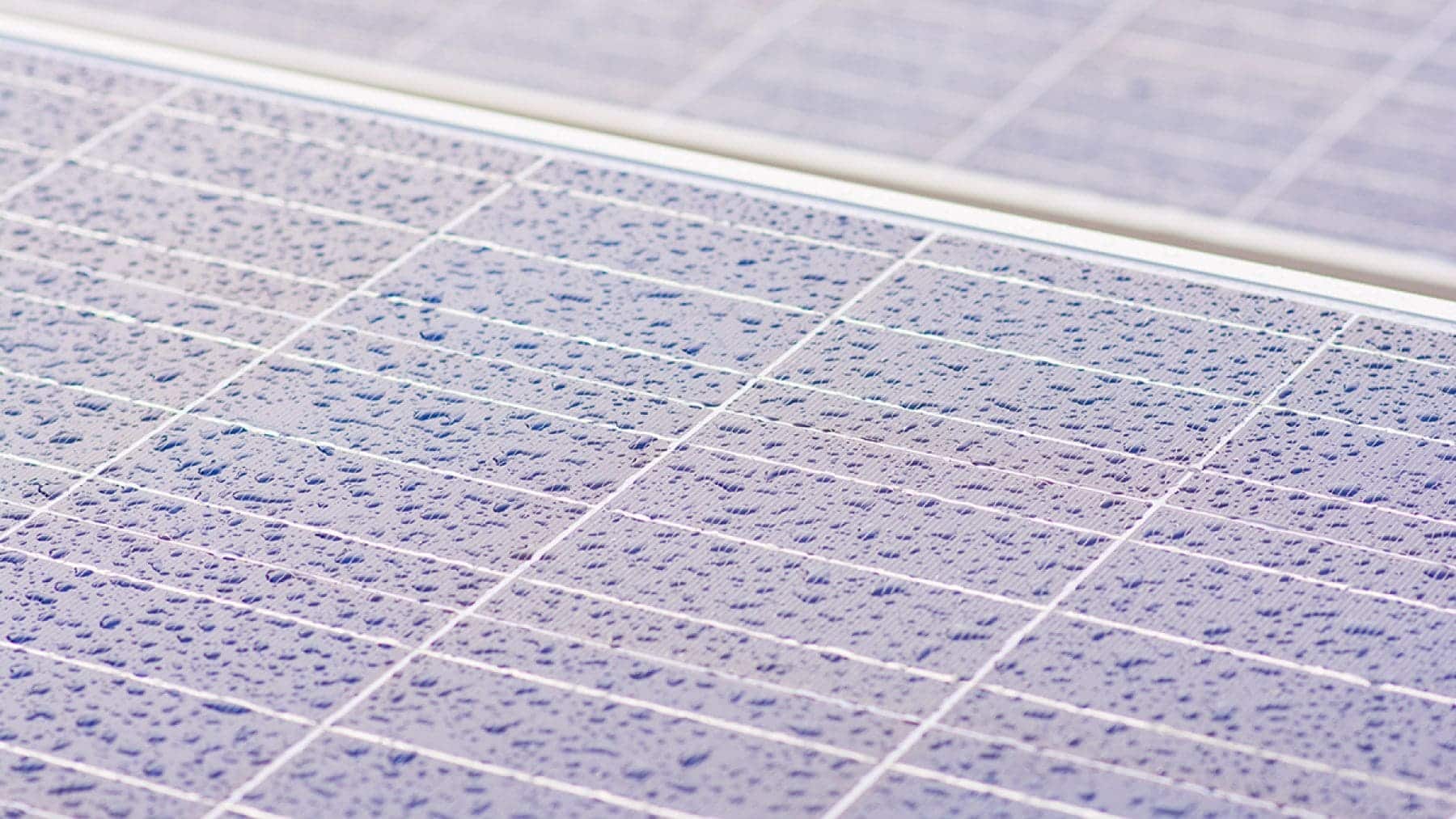
Despite the benefits of perovskite solar cells, their disadvantages often make them unusable. They rapidly degrade due to chemical reactions with air moisture which leads to an iodine leakage. If this iodine is improperly disposed of, it can pose a threat to the environment, particularly marine life.
Thankfully, it seems that a solution has been found. Researchers discovered that integrating nanoparticles into the perovskite can prevent iodine leakage and increase the cells’ lifespans to 1,530 hours. That is almost 10 times longer than earlier alternatives.
Scientists incorporated aluminium oxide nanoparticles into perovskite cells during fabrication. In addition to preventing iodine leakage, the aluminium oxide particles were found to help create a more uniform and conductive solar panel.
These solar panels were tested under extreme heat and humidity conditions. After more than two months of this testing, the cells were able to maintain their characteristically high performance. The unmodified cells in the experiment only lasted 160 hours (nearly seven days).
What do these newly-durable perovskite cells mean for solar power?
Scientists have been drawn to the use of perovskite in solar panels because they are highly efficient and much cheaper to produce than traditional silicon-based solar panels. If this experiment holds, perovskite solar panels could make solar energy more efficient and more accessible.
These panels, due to their flexibility, also broaden the horizon of what is possible when it comes to solar-powered technology. Perovskite panels will be able to mould themselves to buildings, cars, and streetlights so that any technology can become solar powered.
The incorporation of these versatile and durable devices into every aspect of our lives could greatly accelerate the rate at which we shift to renewable sources of power. These panels, because they last so long, will also not need to be replaced as often, reducing their initial harm to the environment.
Could solar power see an unprecedented boom in the near future?
The versatility, longevity, and efficiency of these modified perovskite cells are all very appealing qualities in a world where non-renewable sources of power are becoming increasingly unreliable. The solar industry is a burgeoning market and new products (like this solar roof that could beat Tesla) will continue to challenge our ideas about what is possible.