Imagine generating 20 kW of heat from a single solar dish array. Well, with parabolic panels, this surely is a possibility. There are some exciting new breakthroughs in terms of solar power that are becoming far more exciting and ensuring better power potential. The IBM and Airlight Energy’s High Concentration Photovoltaic Thermal (HCPVT) system is rather interesting since these parabolic dishes are able to produce power equivalent to the intensity of 5,000 suns, delivering 20 kW of heat whilst retaining 12 kW of electricity. These kind of innovations are not only important for our energy future but necessary.
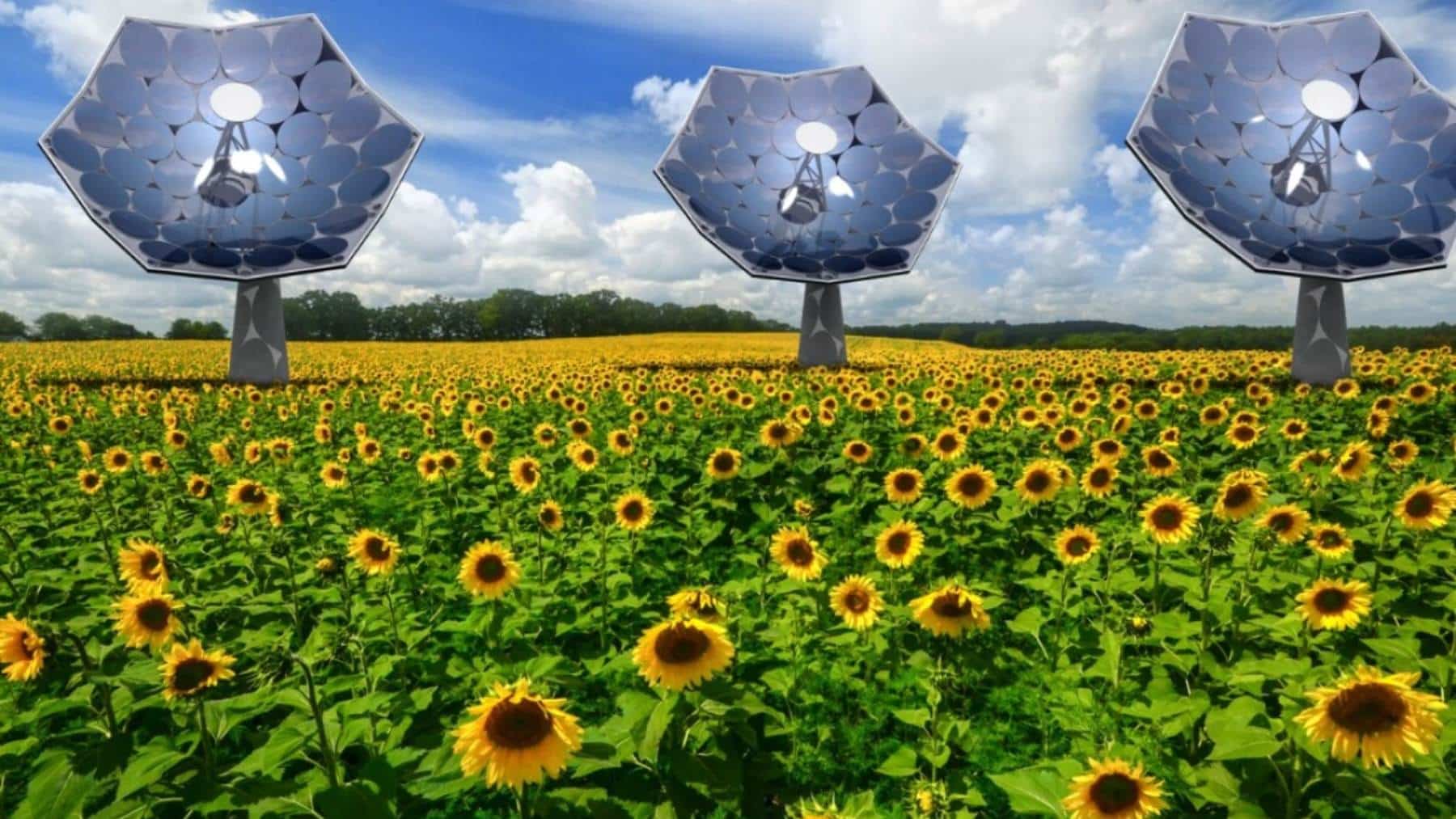
HCPVT resembling sunflowers
When it comes to the HCPVT, they stand rather tall at more or less 10 meters tall and in such a way that all panels directly face the sun. Aside from being more floral in appearance, the HCPVT is an example of fine engineering genius. Utilizing 40 square meters of mirror-coated plastic film can lead to sunlight being reflected on photovoltaic chips that has already been cooled.
Every chip that sunlight gets reflected on is merely 1 cm² generating more or less 57 watts of electrical power at peak conditions. In combination, the entire array of sunflower-like chips can generate 12 kW of electricity and 20 kW of thermal energy producing a total output of 32 kW. Engineering excellence means that 80%, the system can efficiently generate energy.
The HCPVT comes equipped with a cooling system that draws inspiration from the human body and pumps water behind solar chips.
The HCPVT expanding power beyond traditional solar offering
This HCPVT was designed specifically to ensure that off-the grid energy can be brought to more remote communities. Such high-output systems are great in terms of ensuring next generation power is on offer to all who may need it. The HCPVT ensures that sunlight is concentrate and enables massive thermal and electric power to be gained from the system and thus this type of scalable and renewable energy source is surely warranted.
The HCPVT panel is yet another solar panel array that fully understood the value of moving away from the traditional solar panel array. Similar to the petal-shaped PV that fits curved roofs, the time has come to say goodbye to the more well-known rectangle panels.
Ensuring sustainable power for all
The HCPVT adds humanitarian value ensuring that any waste heat gained from solar concentrators can be used for desalination purposes. In the process of harnessing the sun’s power, the HCPVT can produce more or less 40 liters of clean water per square meter. One single solar installation could, as such, provide water to an entire town while also ensuring that the town can rely on this off-the-grid power solution as well.
The best part is that the HCPVT has a lifespan of about 60 years should the system undergo regular maintenance and upkeep. This solar system offers a longer-term solution even in more modern settings, but more so in rural communities. The idea conceptualized by IBM and Airlight Energy is that of ensuring that all underprivileged communities can have their energy and water needs taken care of. In the process, all water and energy needs get taken care of in the most cost effective way by relying of these solar arrays.
It is true that finally a more scalable and clean energy solution has become rather important. Due to creations like IBM’ solar sunflowers, the future of energy is already looking much brighter. While this is not the first ultra-efficient solar panel, it is surely living up to its scalable energy agenda. Other new ultra-efficient solar panels with insane energy is on offer too and together these high-power panels are reaching milestones never before achieved in photovoltaics.