When 400-million-year-old rocks hide 260,000 trillion liters of natural gas, America is well underway to introduce its next energy era. Hidden under the Appalachian Basin is America’s rich energy future. The Marcellus Shale is an underground formation that contains 262 trillion cubic feet of natural gas, which is 262,000 trillion liters of this gas. Although a mere number, the gas discovered could provide power to America for over a century.
Marcellus Shale offering a glimpse into a better energy future
When the future of energy doesn’t lie in wind power or solar solutions, but in ancient rock, the Marcellus Shale’s value becomes understood. The Marcellus Shale is perhaps the largest natural gas reserve throughout the United States, and this reserve stretches between New York, Pennsylvania, Ohio, West Virginia, Maryland, Virginia, Kentucky, and Tennessee. The Shale covers an area of 95,000 square miles and is said to be approximately 4,000 to 8,000 feet deep.
What the Shale compensates in size, it exceeds in terms of energy potential. As per the U.S. Geological Survey and Department of Energy, contained in the formation is 262 trillion cubic feet of gas waiting to be recovered. This gas seems trapped in between ancient black mudstone layers that resulted from the Devonian period. The formation has always existed; however, the hidden potential in this formation has only recently been discovered. Thanks to horizontal drilling and hydraulic fracturing (fracking), the site has become an economically viable one.
Potential unlocked that will have an economic impact
Tapping into the potential of the Marcellus Shale is clear. By tapping into the existing potential, over 280,000 jobs could be created. More than $6 billion in government revenue will also be generated from tapping into the underlying potential.
The wells drilled into the Marcellus Shale will bring about $4 million each. The figures are of importance to the smaller towns across Appalachia, which see gas operations resulting in new infrastructure, higher-paying jobs, and increased tax revenues.
Beyond being economically feasible for the locals, tapping into the potential that lies beneath could introduce a cleaner fuel source to America and to the world. Being rich in methane, the Marcellus Shale is worth tapping into to provide a stable energy supply to America.
The shale is coming under serious environmental scrutiny
The shale holds much potential; however, extracting the valuable gas is a matter of scrutiny, as environmental concerns such as the contamination of groundwater and methane emissions exist. Since modernized drilling practices have taken over, states including Maryland and Pennsylvania have implemented comprehensive regulations in terms of fracking that will ensure all extraction occurs at safer distances from drinking water sources.
In fact, Maryland’s Department of the Environment has modernized oil and gas regulations to take into consideration the effects related to horizontal drilling and fracking. Some safety measures include closed-loop systems and water recycling technologies. While environmental concerns will always be at the forefront of tapping into this potential with the rocks, there is a way forward. Surely, with the 400-million-year-old rocks with 260,000 trillion liters inside, the future of America depends on unlocking the potential that lies beneath.
Realizing the potential that exists beneath a gas field
More than just a gas field, the Marcellus Shale signifies sustainability with 260,000 trillion liters of energy waiting to be unlocked. If the United States considers this potential, the country can rely less on imports and push for more resilient grid solutions.
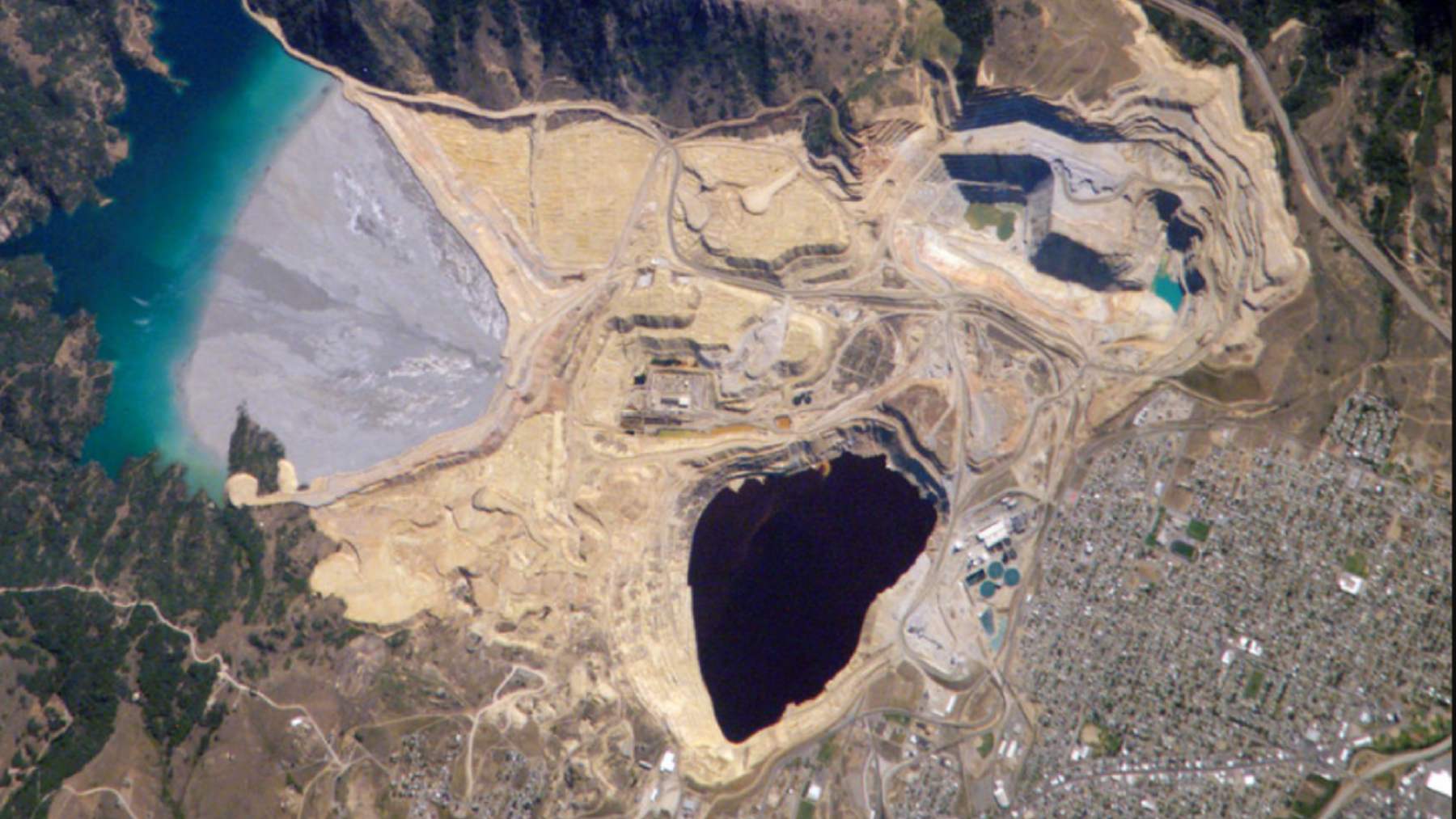
An ancient is now rock formation is now the source of power; however, it is up to America to ensure that a more climate-conscious future is created. From the rocks, America can gain the energy that the country so desperately seeks, and in the process, America can rewrite an energy era of its own. Beneath an ordinary spot, satellite images expose America’s largest mine.