NASA has been closely monitoring the behavior of a phenomenon in the Corona Borealis constellation for some time now. Recently, scientists noticed that this body was behaving somewhat strangely. They decided to investigate further and discovered that there are some changes happening to it that could cause an event never seen before in the entire universe.
A mysterious star that appears and disappears
Astronomers recently observed unusual signs: a star that gradually dims and, without warning, releases a surge of energy, suddenly becoming visible to the naked eye. This cyclical pattern is so rare that fewer than a dozen known stars in our galaxy exhibit anything similar.
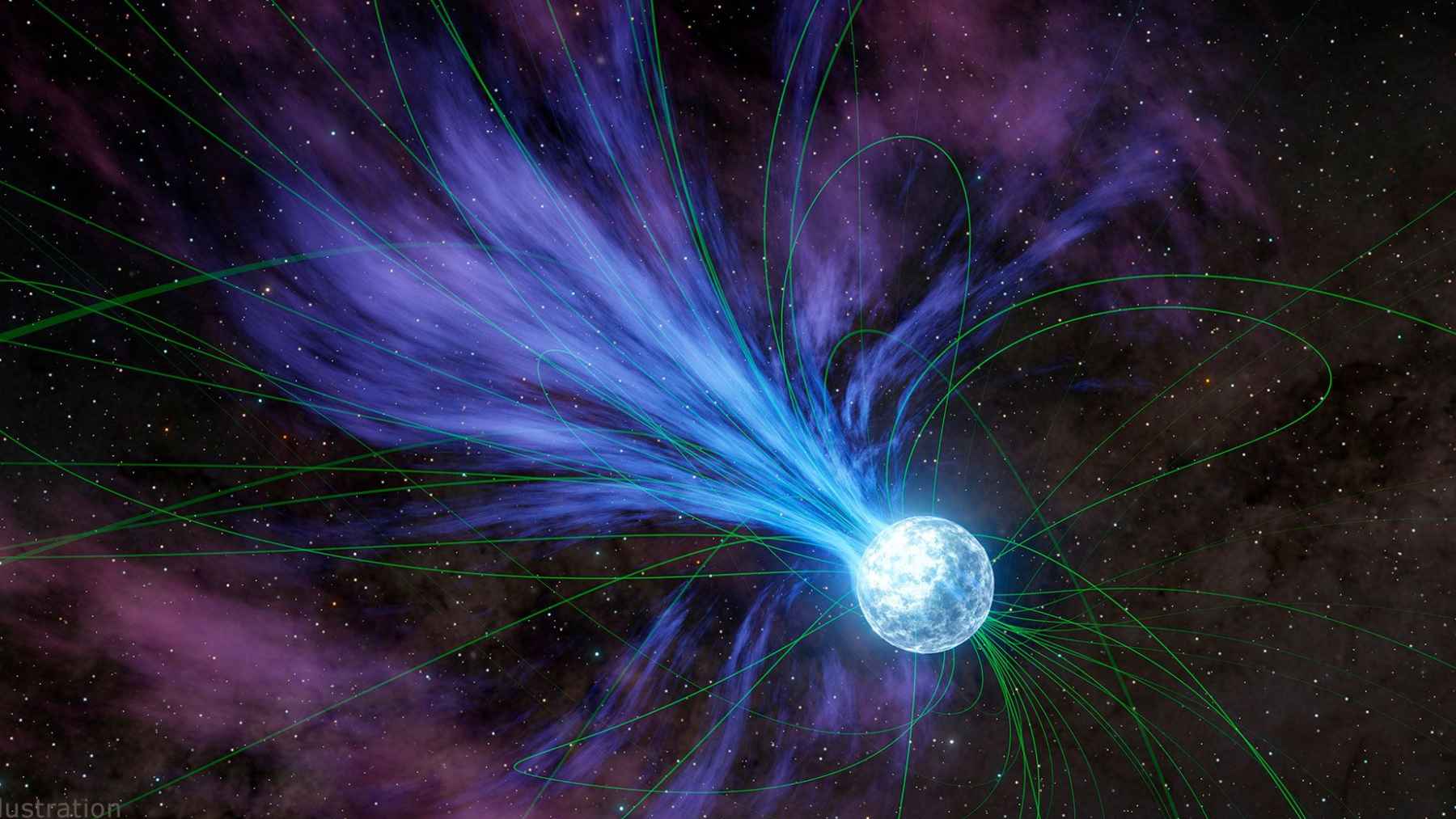
This unusual behavior originates from T Coronae Borealis (T CrB), also known as the Blaze Star, which is situated approximately 3,000 light-years away in the constellation Corona Borealis (the Northern Crown). It is a recurrent nova, a binary system formed by a red giant and a white dwarf that, together, produce bursts of brightness approximately every 80 years.
It is worth noting that this interval has made the star a longtime favorite among astronomers. The last recorded burst was in 1946, and before that, there are records dating back to the 13th century. In 1217, Abbot Burchard of Ursberg, Germany, described “a dim star that for a time shone with great light.” Explaining what triggers the explosion is fascinating and violent because the white dwarf slowly pulls gas from the red giant. This buildup acts like a cosmic pressure cooker. When the amount of material reaches its limit, a thermonuclear detonation occurs.
A fleeting cosmic beacon is fascinating scientists
In normal times, T CrB is invisible to the naked eye, with a brightness of magnitude +10. But at the moment of explosion, it can jump to magnitude +2, becoming as bright as the North Star (Polaris). This sudden appearance can be seen by anyone, without the need for a telescope. The problem is that the window is short. Astronomer Stephen James O’Meara explained:
“When T CrB erupts, it will rise in brightness to 2nd magnitude, equal to that of the North Star… How long will it stay that bright? Less than one day. Yep, that’s it.”
If you’re thinking about seeing it, know that the star is in the constellation Corona Borealis, a delicate semicircle of stars between Boötes and Hercules. A practical way to find it is to imagine a line between Arcturus (the brightest star in Boötes) and Vega (in Lyra). Remember that astronomy apps can also help you quickly locate the region. Speaking of locating, it’s worth noting that recently another star caught attention by revealing something inside it that no one expected.
A natural lab in the sky: What are we learning?
More than just an opportunity for contemplation, the upcoming T CrB explosion is a natural laboratory for astronomy. Observing this type of event up close helps us better understand how stars interact in binary systems and how to differentiate a nova from a supernova.
- Nova: A temporary increase in brightness caused by nuclear fusion on the surface of a white dwarf.
- Supernova: The death of a massive star, a colossal explosion that can outshine an entire galaxy.
Bear in mind that scientists had already noticed promising signs in 2024. In April, T CrB showed a sudden drop in brightness, a classic sign that an eruption was approaching. And in subsequent observations with the Alfred Jensch telescope in Germany, researchers detected an intensification of spectral lines, suggesting that the white dwarf was accreting matter at an accelerated rate. These signs keep astronomers on alert, as the flare could begin any night. And then, after that, only 80 years from now, like this other fascinating star explosion.