How can a dinosaur that weighed less than two pounds help untangle a debate that spans continents and deep time? A newly analyzed fossil from northern Patagonia, Argentina, is offering one of the clearest pictures yet of alvarezsaurs, a strange branch of the theropod family tree.
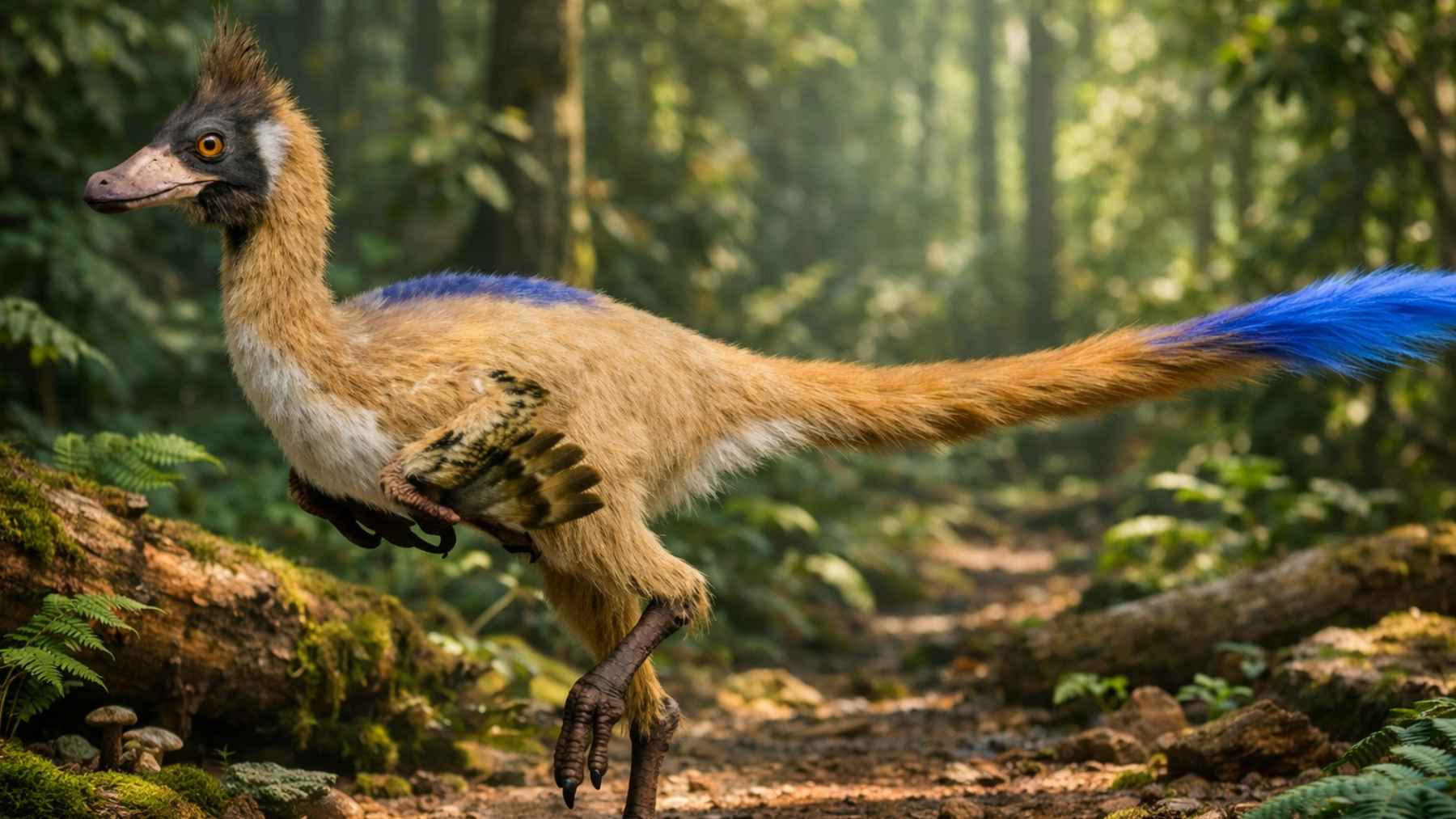
The near-complete skeleton belongs to Alnashetri cerropoliciensis, a small dinosaur that lived roughly 90 million years ago. Researchers describe it as a “missing link” that helps explain how these animals evolved their odd bodies and how they ended up scattered across the globe.
Why this fossil stands out
The skeleton was uncovered in 2014 at La Buitrera, a fossil-rich site in northern Patagonia, and later studied by an international team co-led by the University of Minnesota Twin Cities. Bone analysis suggests the animal was an adult about four years old and weighed less than 2 pounds, making it one of the smallest dinosaurs ever found in South America.
Lead author Peter Makovicky compared the leap from scraps to a near-complete skeleton to finding a “paleontological Rosetta Stone,” and the team says more fossils from the same area are already being prepared.
Small dinosaurs are often the hardest to find in good shape because their bones are thin and easily damaged. That is why an articulated skeleton, with many bones still close to their life positions, is so valuable.
With a solid reference specimen, paleontologists can more confidently identify fragmentary bones sitting in collections or weathering out of rock. In practical terms, it turns a lot of “maybe” fossils into usable clues. That matters.
The weird theropods with one big claw
Alvarezsaurs belong to theropods, the broad group that includes many meat-eating dinosaurs and the lineage that eventually produced birds. They are called bird-like because of their lightweight build and some skeletal traits, but they were not birds. Many later members had stubby arms ending in a single enlarged claw, almost like a built-in tool.
For years, one leading idea has been that this claw was tied to a specialized lifestyle that involved ripping into insect nests. A 2023 Communications Biology study used biomechanical comparisons and argued that alvarezsaurs likely used their rock-pick-style claws for digging, fitting the long-standing “anteater-like” interpretation of the group.
So why did their history stay so murky for so long? For the most part, the best-preserved fossils have come from Asia, while many South American finds were isolated pieces that were tough to compare. Without a clear baseline, the family tree gets blurry fast.
How scientists knew it was fully grown
When a fossil is tiny, a basic question always hangs over it. Is it a small species, or is it a juvenile that would have grown much larger? One way to answer that is bone histology, which means looking at thin slices of bone under a microscope for growth patterns.
In reporting on the new work, Sebastián Apesteguía of Argentina’s CONICET said “the level of histological detail is exquisite,” which matches a specimen preserved well enough for close inspection. He also argued the fossil is a reminder that the Cretaceous in Patagonia “wasn’t a time of giants, but rather a time of immense biodiversity”.
A preserved growth record does not just tell an age. It also helps scientists avoid confusing a baby animal with a separate small-bodied species.
Small body, not-so-small teeth
Alnashetri appears to sit at an early point in the group’s history, before alvarezsaurs developed their most extreme features. Compared with later relatives, it had longer arms and larger teeth, suggesting it was not yet a highly specialized insect hunter.
That flips a common assumption that the weird anatomy came first and the small size followed.
In an interview about the findings, the lead author said “our study suggests that alvarezsaurs as a group are small for dinosaurs with species ranging from crow-sized to man-sized.” The same explanation emphasized that body size seems to shift within a narrow band rather than moving in one steady direction.
At the end of the day, that changes how the story is told. Instead of one simple trend toward tininess, the evidence points to repeated size changes as different species tried different lifestyles.
A global puzzle hiding in plain sight
The geography problem has always been awkward. If most of the best fossils are in Asia, it is tempting to assume that is where the group started, with later migrations explaining scattered finds elsewhere. But long ocean crossings are a stretch for small land animals.
The new study says the answer is more about shifting land than heroic travel. By reexamining older fossils, the researchers recognized two alvarezsaurs among historical specimens from the Northern Hemisphere and rebuilt the group’s evolutionary relationships.
Their biogeography analysis points to an ancestral distribution across the supercontinent Pangaea, with populations later split as continents separated over tens of millions of years.
This process is often called vicariance, a scientific way of saying “the map changed underneath them.” Over time, the same kind of animal can end up on different continents without ever crossing water.
What earlier research said
Back in 2012, Alnashetri was introduced to science from much more limited material, mainly leg bones from the same general fossil area. That Fieldiana Life and Earth Sciences paper showed how little was known and how easy it was to misread the bigger story.
A later Current Biology paper focused on growth and size change in alvarezsauroids and argued that miniaturization and growth strategies varied widely across the group. Those kinds of analyses depend on which fossils are available, so adding a near-complete specimen can shift the math.
More recently, a Cladistics study published online in December 2024 mapped body size and evolutionary rates across alvarezsaurians, highlighting a complex history rather than one simple trend. Finds like Alnashetri help test those models with better anatomical detail, and they hint that museum drawers and Patagonian rock layers may still have surprises left.
The main study has been published in Nature.