China is deep into building the Pinglu Canal, an 83-mile shipping route meant to connect inland rivers in the southwest to international sea lanes. The goal is simple to say and hard to build: let big cargo vessels move from the interior to the coast without taking a long detour.
Officials say the new waterway could cut hundreds of miles off today’s shipping routes and lower transport costs, a change that can ripple from factories to ports and, eventually, to prices consumers see on store shelves. With the project slated to be finished in late 2026, the canal is also becoming a test case for how China mixes mega-infrastructure with environmental controls.
An 83-mile shortcut from Nanning to the ocean
The Pinglu Canal runs from the Nanning area in Guangxi, following the Qinjiang River south toward the Beibu Gulf, also known internationally as the Gulf of Tonkin. When it opens, it is designed to link inland river traffic directly to coastal ports and ocean shipping.
Local authorities frame the canal as a core piece of the “New International Land-Sea Trade Corridor,” a network meant to move goods between western China and overseas markets more efficiently. It is also described by state media as the first major river-to-sea canal project launched since the founding of the People’s Republic of China.
Why a canal matters for shipping costs
Right now, much of the region’s waterborne cargo exits through longer routes that pass through Guangdong, a traditional gateway to global markets. The Pinglu Canal is expected to shorten the journey by about 348 miles and save more than 5.2 billion yuan a year in logistics costs, which is roughly $750 million using an exchange rate near 6.9 yuan per U.S. dollar.
That kind of savings does not just come from speed. In practical terms, “river-sea intermodal transport” means the same vessel, or a closely matched set of vessels, can move cargo between rivers and the ocean with fewer handoffs, less waiting, and less trucking in between.
Inside the engineering: locks, bridges, and a 213-foot lift
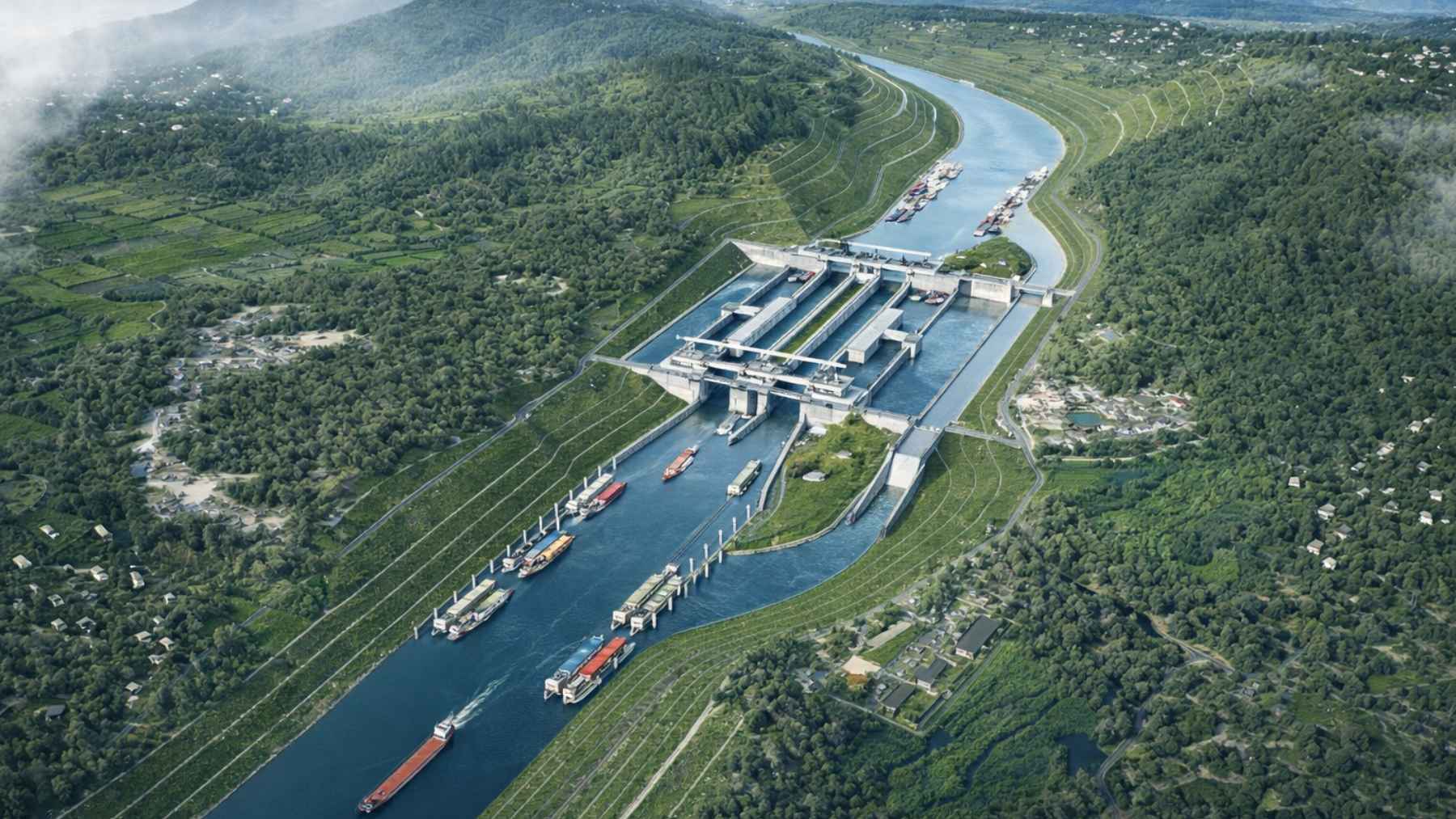
The canal is built for ships in the 5,000-metric-ton class, or about 11 million pounds of cargo, and it relies on three large ship lock hubs to do it. A lock works like a water elevator: it raises or lowers a vessel by filling or draining a chamber, which matters here because the route has to overcome about 213 feet of water level difference.
Along the way, planners have included 27 new or rebuilt bridges, plus other support infrastructure to keep road and rail traffic moving across the canal. One of the key hubs, called Madao, has been highlighted as a major “water-saving” lock site, since moving ships uphill and downhill can consume enormous volumes of water if it is not carefully managed.
Southeast Asia trade is the bigger backdrop
The timing is not accidental. In 2025, China’s exports to the Association of Southeast Asian Nations rose by 13.4 percent while its shipments to the United States fell by about 20 percent, according to reporting based on customs data, as trade flows continued to pivot toward nearby Asian markets.
That shift also helps explain why the Beibu Gulf coastline matters more than it used to. The Beibu Gulf Port system said it handled more than 10 million standard containers in 2025, a milestone that reinforces its role as a growing logistics hub for the southwest.
Building a “green canal” means planning for wildlife
Digging a canal through a living river system raises a straightforward question: what happens to fish, birds, and other animals when you change the water’s path? Guangxi’s environmental authorities say the project includes 36 ecological conservation areas that preserve old river bends and oxbow-lake habitats, along with dedicated crossings meant to help animals move between both sides.
One of the most visible features is a fish passage at the Qingnian hub that stretches about 1,575 feet, paired with a monitoring system that tracks fish movement with sensors and cameras. A fish passage is exactly what it sounds like: a built channel that lets fish migrate around a barrier, instead of being blocked by a dam-like structure.
Outside government plans, researchers have also been studying the canal’s ecological footprint. A 2025 paper in the journal Land warned that large projects can fragment habitats if corridors and restoration zones are not designed well, which is one reason long-term monitoring matters after construction crews leave.
The project is nearing the finish line
As of February 28, 2026, the project had spent about 92 percent of its planned budget, and more than 90 percent of the canal route had taken shape, according to an update from the Pinglu Canal’s builders reported by Xinhua. The full project budget has been put at about 72.7 billion yuan, or roughly $10.5 billion at today’s exchange rate.
What comes next is not only concrete and dredging. China’s transport authorities have also launched a pilot program tied to the canal that focuses on “smart” navigation and support systems for inland shipping, aiming to make parts of the route more automated and easier to manage.
For cities like Nanning and for manufacturers across the wider southwest, the canal is being sold as a new way out to sea that could attract more industry along its banks. At the end of the day, the real test will be whether the promised cost cuts show up in day-to-day logistics, and whether the environmental safeguards hold up once ships start passing through.
The official statement was published on State Council of the People’s Republic of China.