What if one of the most exclusive fabrics in history could also help scientists rethink modern textiles? A team in South Korea has recreated “sea silk,” the shimmering golden fiber once prized in the ancient Roman world, using byssus threads from Atrina pectinata, a pen shell cultivated in Korean coastal waters. The work also explains why this rare material can keep its luminous color for extremely long periods without relying on dyes.
That makes this more than a story about lost luxury. The European Parliament says textile production is responsible for about 20% of global clean water pollution, mainly from dyeing, while UNEP describes textile wet processing as an environmental hotspot because of its heavy chemical and energy use. In that context, a fabric whose color comes from structure rather than added pigments suddenly feels very current.
A fabric once reserved for the powerful
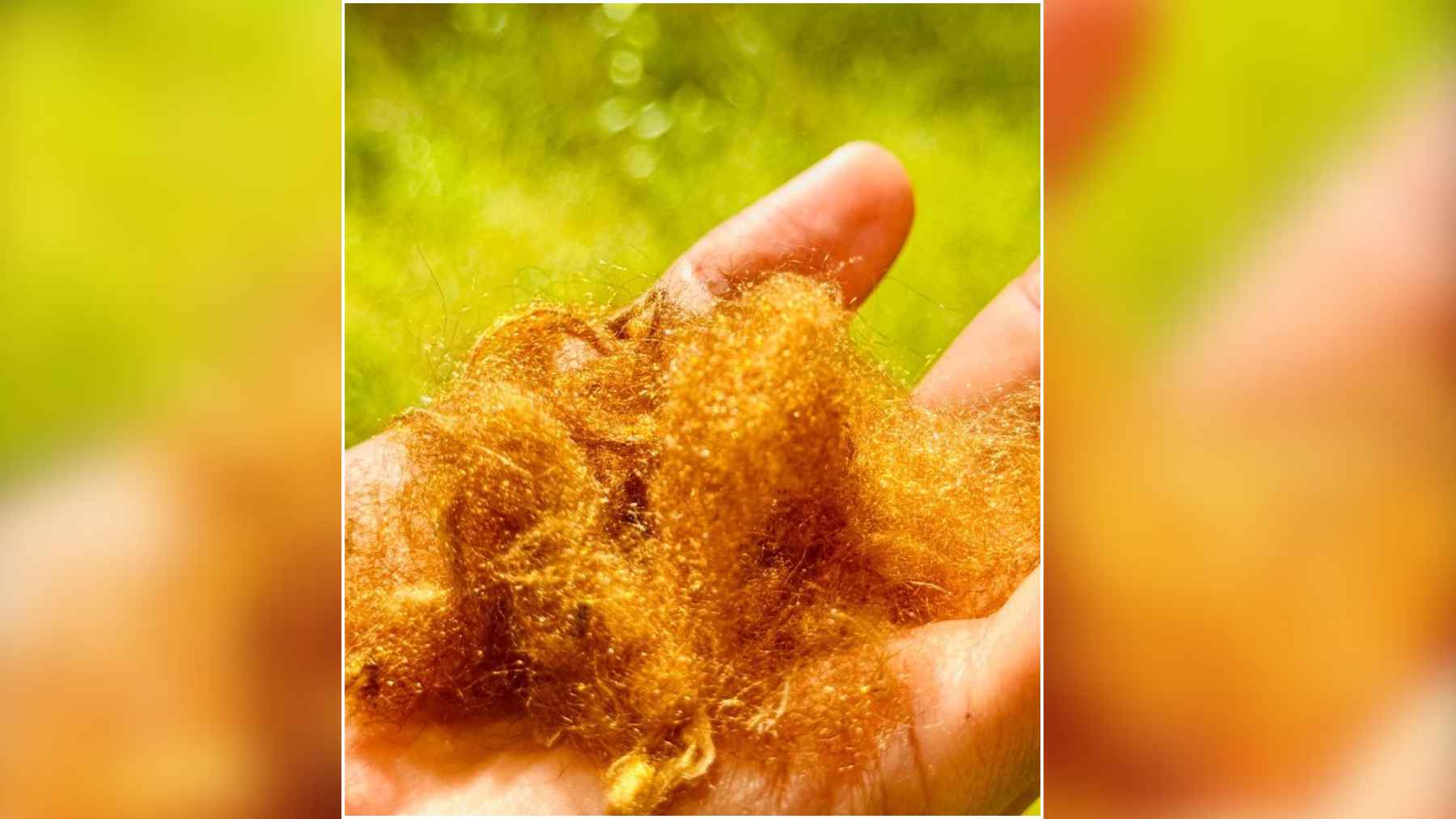
Sea silk, often called the “golden fiber of the sea,” was one of the rarest textiles of antiquity. It was traditionally made from the byssus of Pinna nobilis, a large Mediterranean mollusk, and according to POSTECH, it was associated with emperors, popes, and other figures of high authority during the Roman period.
But the original source has almost vanished from practical use. Pinna nobilis has been legally protected since 1992 and its harvesting is prohibited across European countries, while the IUCN says the species is now Critically Endangered after drastic population decline. That is why authentic sea silk today survives only in very small quantities and in the hands of a few artisans.
How researchers found a modern substitute
Instead of touching the protected Mediterranean species, the team led by Professor Dong Soo Hwang and Professor Jimin Choi turned to Atrina pectinata, a related pen shell cultivated in South Korea for food. The researchers found that its byssus threads are physically and chemically similar to those of Pinna nobilis, and the paper says they can be processed using existing methods to reproduce sea silk.
That is where the story gets especially interesting from an environmental point of view. POSTECH says the pen shell byssus used in this work had previously been discarded as waste, so the researchers were not only reviving an ancient fabric but also upcycling an overlooked marine byproduct into a high-value material. A forgotten thread, now given a second life.
Why the golden color refuses to fade
The real scientific twist lies in the color itself. According to the study and the university release, sea silk does not get its golden hue from dyes at all, but from “structural coloration,” an optical effect produced when light interacts with tiny internal structures, much like the colors seen in soap bubbles or butterfly wings.
The team identified spherical protein structures called “photonin” that arrange themselves in layers inside the fiber. The more orderly those protein arrangements become, the more vivid the shine appears, and Hwang said that “structurally colored textiles are inherently resistant to fading.” Anyone who has seen a favorite shirt lose its color after too many washes can grasp why that matters.
The paper goes even further. It says the material’s brilliant gold tone has exceptional lightfastness and can retain its color for millennia, which helps explain why historical sea silk has kept its glow for so long. In practical terms, the color is built into the fiber itself rather than painted onto it later.
What this could mean for cleaner textiles
No, this does not mean sea silk is about to replace everyday fabrics or fill store shelves next season. Production would still be limited, and the researchers are not claiming they have solved the fashion industry’s pollution problem. But the work does suggest, at least in part, that nature-based color systems could inspire longer-lasting textiles and even bioinspired pigments without depending on conventional dyeing.
That possibility is why ecologists, materials scientists, and sustainable design experts are likely to pay attention. When a study connects marine conservation, waste reduction, and color without dyes or metals, it offers more than a nostalgic look backward. At the end of the day, this ancient fiber may matter now because it shows how the past can still teach modern industry a cleaner way to think.
The study was published in Advanced Materials.