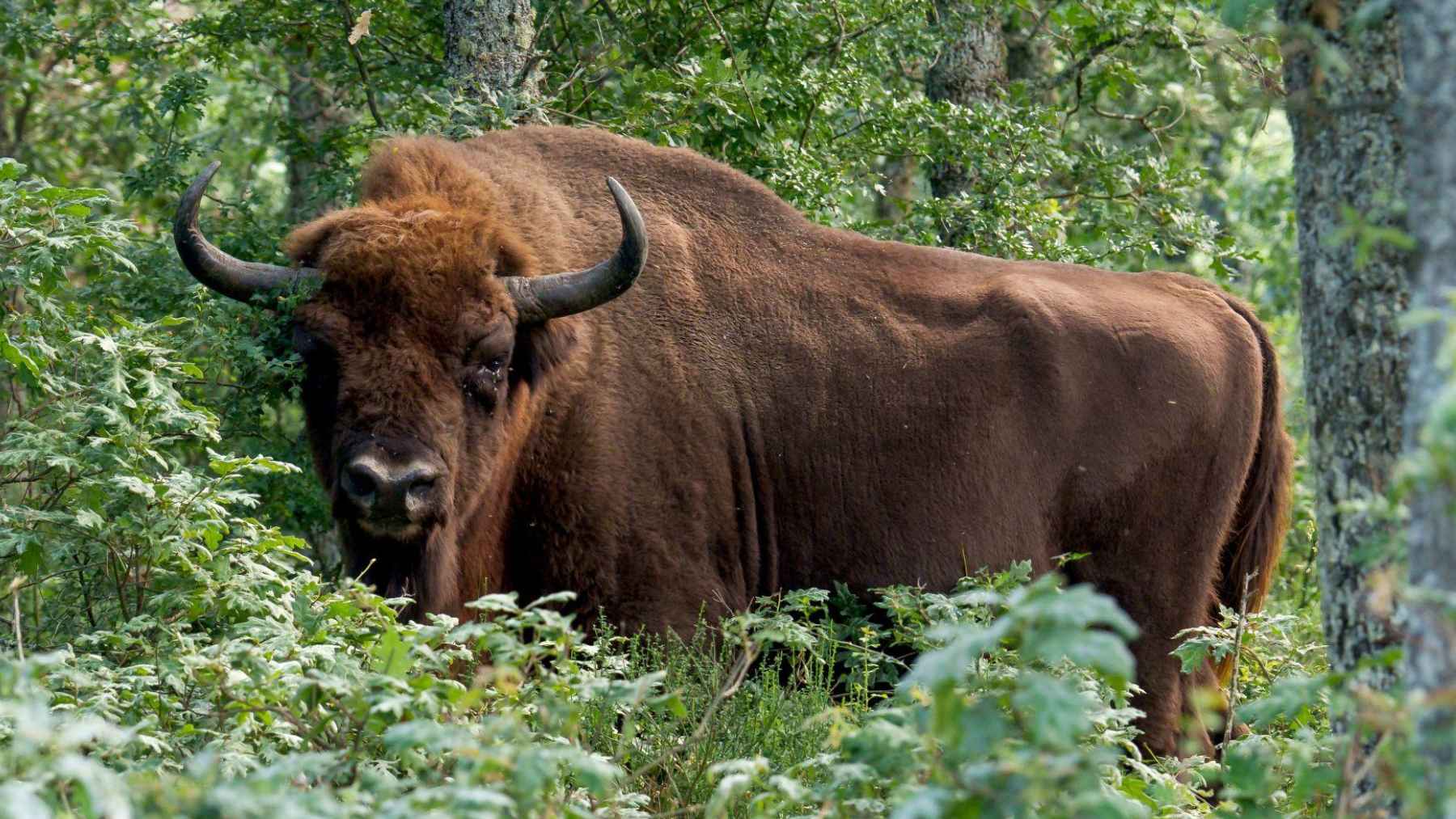
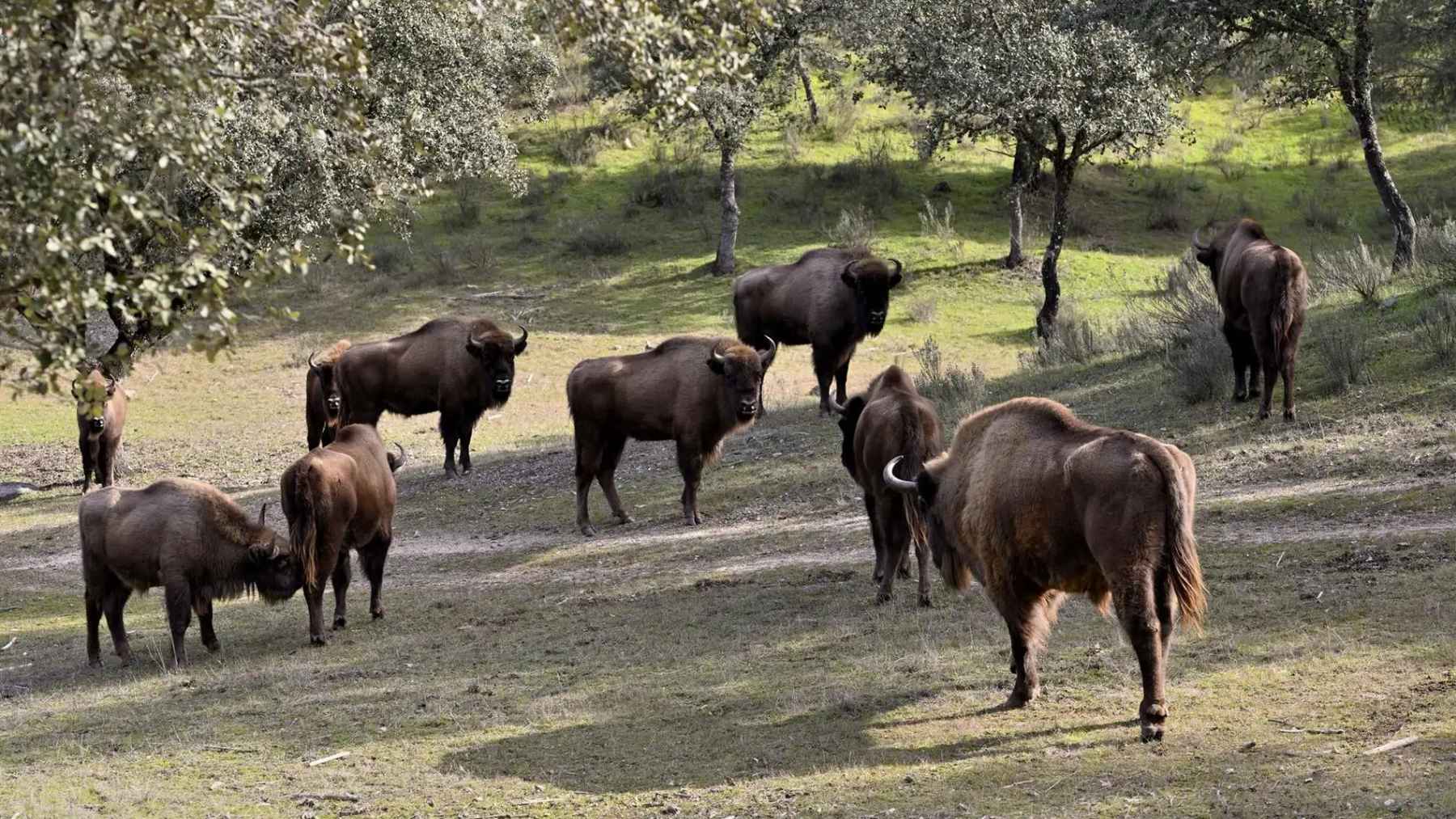
Nine European bison have become the newest residents of El Recuenco, a small village in Guadalajara, Spain, with about 80 people. Since early 2026, the animals have been grazing inside a fenced public woodland of nearly 990 acres, in a pilot project meant to test whether large herbivores can help reduce wildfire risk and restore damaged ecosystems.
At first glance, the idea sounds simple. Let the animals eat shrubs, grasses, and young growth before summer heat turns that vegetation into tinder. But this is not just a story about nine impressive animals in a quiet village. It is also a live scientific argument over whether the European bison belongs in Spain at all.
Why this village wants bison
The herd includes five females and four males. The project is led by Rewilding Spain with the University of the Basque Country, the University of Manchester, and ECONOVO, a research center linked to Aarhus University in Denmark.
The animals are tracked with GPS, and researchers plan to study their diet, stress levels, and effect on woody vegetation.
For El Recuenco, the hope is practical. Less brush could mean less wildfire risk, and a rare animal could bring visitors to a rural town that needs new activity. Mayor Enrique Collada has described the work as a chance for “forest management to prevent wildfires” while also creating jobs and nature tourism.
What rewilding means
Rewilding means helping natural processes come back so ecosystems can begin to manage themselves. In practical terms, that can mean restoring large grazers, predators, rivers, or plant communities that once shaped a landscape before farming, hunting, roads, and abandonment changed it.
Supporters see the bison as a “landscape engineer.” A big grazer can eat, trample, fertilize, and open patches in dense vegetation, creating a more varied landscape instead of one continuous blanket of brush. Rewilding Europe says an adult European bison may eat up to about 130 pounds of vegetation per day, including grasses, bushes, brambles, and young trees.
A comeback with limits
The European bison, known scientifically as Bison bonasus, is a conservation success story, but a fragile one. The species disappeared from the wild in the early 20th century and survived only through captive animals before reintroductions began.
The IUCN moved it from “Vulnerable” to “Near Threatened” in 2020 after the wild population grew from about 1,800 in 2003 to more than 6,200 in 2019.
That comeback does not mean every release is automatically a good idea. IUCN also warned that many herds remain isolated, some live in less-than-ideal habitat, and only a small number of subpopulations are large enough to be genetically viable in the long term. In other words, saving the species still takes careful management.
Why scientists object
A 2024 paper in Conservation Science and Practice, led by Carlos Nores of the University of Oviedo and involving researchers from the Doñana Biological Station CSIC, argued against treating the European bison as part of Iberian fauna.
The paper brought together 40 researchers from 25 institutions and nine countries, and it raised ecological, climate, legal, ethical, and safety concerns.
The critics say the animal cannot restore lost Spanish habitats or slow climate change better than native wild or domestic herbivores already present in the country. They also question whether a species associated with colder European regions can thrive in Spain’s hotter and drier Mediterranean conditions without human help.
That is the trouble with a good-sounding idea. It still has to survive contact with the data.
The Altamira question
One argument used by some supporters is that bison appear in famous Paleolithic cave art, including Spain’s Altamira cave. But critics say those ancient images most likely show the extinct steppe bison, not the modern European bison. Similar shape, different animal.
Spain’s Ministry for the Ecological Transition reached a related conclusion in 2020. Its Scientific Committee recommended not adding the European bison to Spain’s protected or threatened species lists because it found no scientific evidence that this species lived in Spain in the past.
Supporters see a live test
The debate is not closed. In 2026, a group of 12 researchers, including Jordi Bartolomé of the Autonomous University of Barcelona and Jorge Cassinello of the Spanish National Research Council, published a comment arguing that Nores and his co-authors had not proven that a future bison introduction in Spain would be inappropriate as a rewilding initiative.
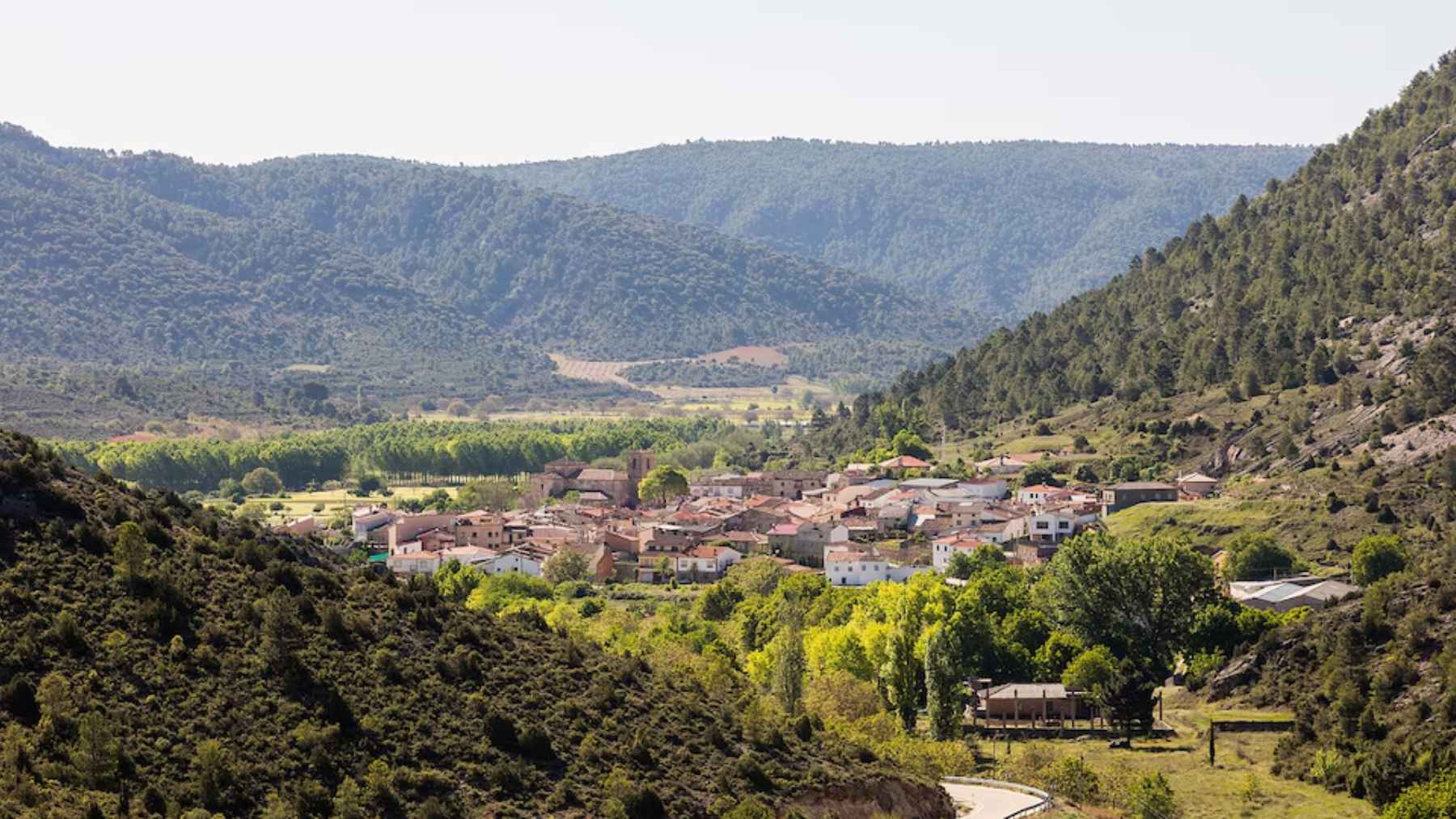
That is why El Recuenco matters. Unlike a full release into the wild, this project is fenced, monitored, and designed to collect evidence. If the bison reduce woody vegetation, adapt well, and avoid major welfare problems, supporters will have stronger data. If they do not, critics will have a stronger case too.
What happens next
For now, the safest answer is cautious. European bison are not a proven wildfire solution for Spain, and they should not be sold as one before the evidence is in. Still, a controlled trial may help answer a question that cannot be settled by slogans alone.
The next two years will be important. Researchers expect comparative results on how the animals adapt and how they affect vegetation, especially the brushy material that can feed wildfires.
Until then, the nine bison of El Recuenco are both a conservation experiment and a reminder that restoring nature is rarely as simple as opening a gate.
The main scientific debate cited here has been published in Conservation Science and Practice.