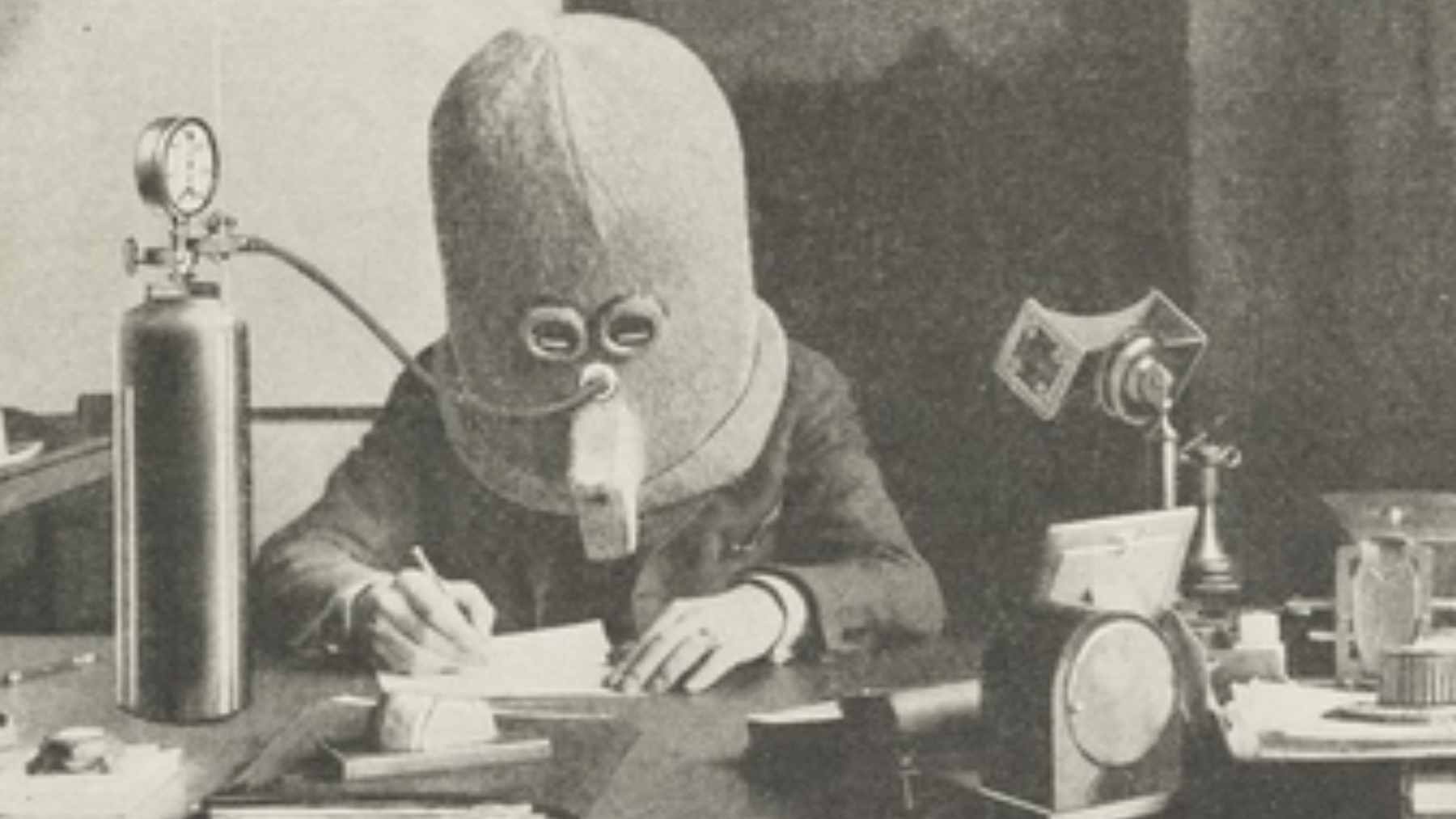
A century before smartphones, social feeds, open offices, and endless notifications, one inventor believed the human mind needed a shield. Not a better notebook. Not a quieter desk. An actual helmet.
In 1925, Hugo Gernsback introduced “The Isolator” in Science and Invention, a strange-looking device built to block noise, narrow the wearer’s field of vision, and help people concentrate on reading or writing.
It looked more like something from a science fiction film than an office tool, but its central question still feels familiar today. How do you think deeply when the world keeps interrupting you?
A helmet for a noisy age
Gernsback was not solving a smartphone problem, of course. His distractions were street noise, ringing bells, slamming doors, wallpaper patterns, moving curtains, and even the occasional fly crawling across a wall. Small things, maybe. But anyone who has lost a train of thought over a buzzing phone can understand the frustration.
In his 1925 article, Gernsback argued that concentration was one of the hardest tasks the mind faced. He wrote that the real enemy was “lack of concentration, mainly due to outside influences,” and the Isolator was his attempt to remove those influences almost completely.
The device was not subtle. The first model was made of wood, lined with cork, and covered with felt. It had three pieces of glass for the eyes and a breathing baffle in front of the mouth, a setup Gernsback said reached about 75 percent efficiency in reducing noise.
How the Isolator worked
The Isolator did not just try to block sound. Gernsback also wanted to stop the eyes from wandering, because even a quiet room can become a trap when your attention starts drifting to the wall, the window, or the mess on your desk.
His later design used blackened glass with two thin white lines scratched into it. The idea was to let the wearer see only the page directly in front of them. In practical terms, it turned the world into a narrow strip of paper.
That was the clever part, and also the unsettling part. The helmet treated concentration almost like a laboratory condition. Remove noise. Remove peripheral vision. Remove the outside world.
The oxygen problem
There was one rather serious drawback. Gernsback found that if the helmet was worn for more than about 15 minutes, the user could become drowsy. That is not exactly the dream scenario for a writer, lawyer, inventor, or student trying to push through difficult work.
His answer was to attach a small oxygen tank. A tube supplied oxygen to the helmet, and Gernsback claimed this helped increase respiration and make the wearer feel more alert. It was an extreme fix for an extreme gadget.
The revised version, which used an air space rather than solid wood, was expected to block about 90 to 95 percent of sounds, according to Gernsback’s own description. Still, even by the standards of early 20th-century inventions, this was a bulky and uncomfortable way to get some quiet.
The mind was already distracted
What makes the Isolator so fascinating is not only how odd it looks. It is how modern the complaint sounds. Gernsback was writing in a world without email, pop-up ads, group chats, or video calls, yet he described attention as something fragile and constantly under attack.
That should make us pause. Maybe distraction is not only a technology problem. To a large extent, it is also a human problem, shaped by whatever tools, rooms, noises, and habits surround us at the time.
Today, many people reach for noise-canceling headphones, focus apps, browser blockers, or quiet coworking spaces. Gernsback reached for cork, felt, black glass, and an oxygen tube. Different century, same itch.
A strange ancestor of focus tech
Gernsback was more than a curious inventor with a dramatic helmet. Science and Invention was a popular technology magazine associated with his publishing work, and archival listings show it ran under that name from 1920 until 1931. The magazine also carried science fiction stories, which fits the Isolator’s unusual mix of real engineering and futuristic imagination.
The Isolator sits in a long line of devices that promise to protect attention. Some are practical. Some are ridiculous. Some, like this one, are both at the same time.
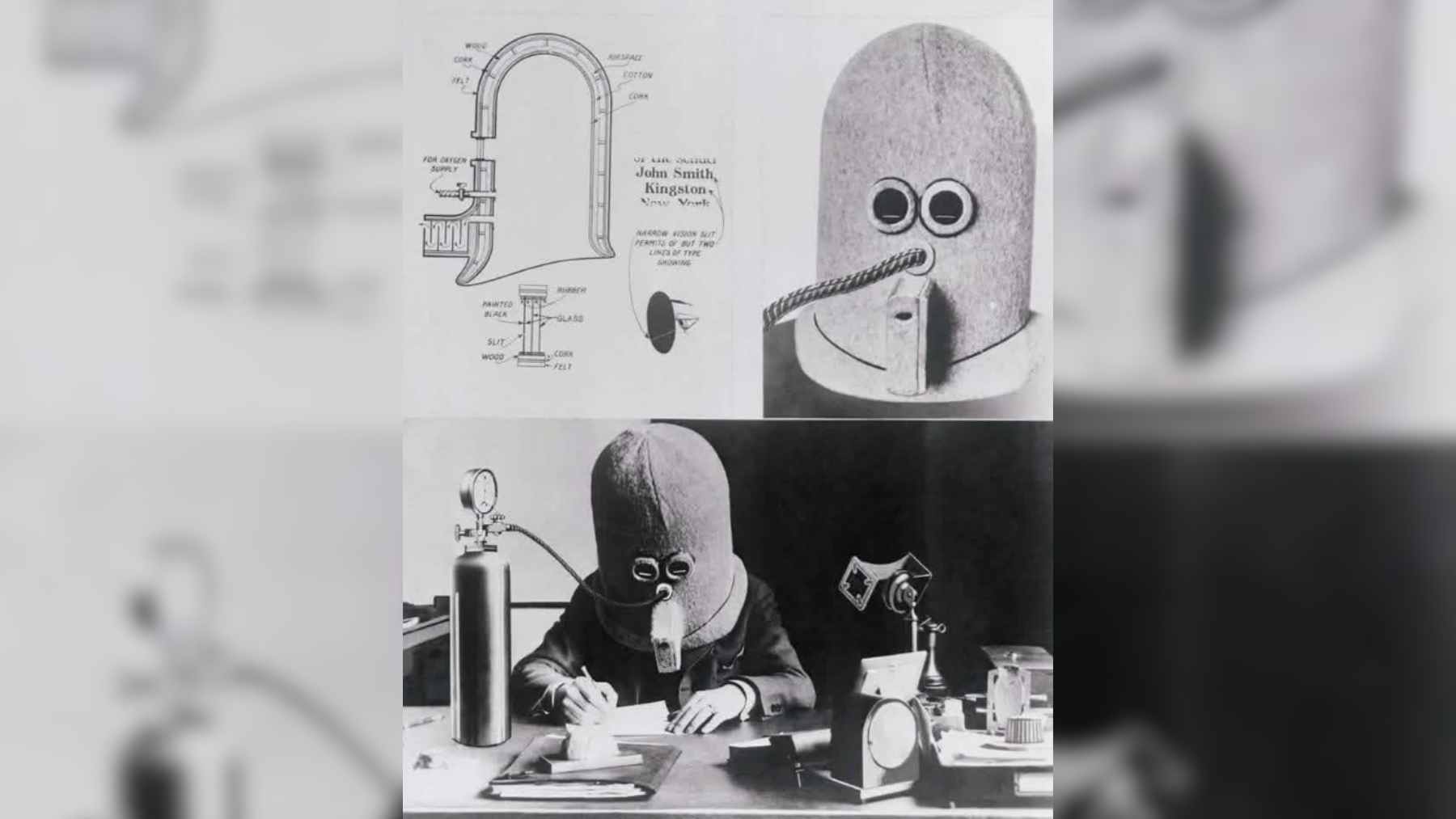
That is why the helmet still circulates in photos and history blogs nearly 100 years later. It is easy to laugh at the image of a person sitting at a desk with a huge helmet over their head, but the laugh fades a little when you remember how often modern workers try to build invisible helmets around themselves.
What the Isolator tells us now
The Isolator did not become a normal office accessory, and that is probably for the best. A helmet that narrows your vision, muffles the world, and needs an oxygen tube was never going to be a comfortable everyday tool.
But the invention still carries a useful lesson. Focus is not just about willpower. It is also about environment, design, and the small interruptions that break a difficult thought before it has time to form.
At the end of the day, Gernsback’s strange helmet was trying to do what many modern tools still promise to do. It wanted to give the mind a quiet room, even when the room itself was not quiet.
The original article was published in Science and Invention, vol. 13, no. 3, July 1925, and is available through the University of Minnesota Press’s Manifold edition.