A new rail bridge rising out of the Gobi has been described as a 1,118-mile mega-project that would slice across one of Earth’s toughest deserts. The verified story is more modest, but it may matter even more. Official sources point to the Ganqimaodu to Gashuun Sukhait cross-border railway, a China-Mongolia freight link planned for 2027, not a confirmed 1,118-mile elevated railway bridge across the entire Gobi.
Still, this is no small footnote. The project is designed to connect China’s Ganquan Railway with Mongolia’s southbound railway corridor and carry up to 30 million metric tons of freight a year, about 33 million U.S. tons.
This means coal, copper, and other heavy materials could move faster through a border region where delays are not just inconvenient, but expensive.
A desert route with a hard job
The Gobi is not an easy place to build anything. Britannica describes it as dry and sharply continental, with average January lows near minus 40 degrees Fahrenheit and July highs around 113 degrees Fahrenheit. That is the kind of place where steel, concrete, workers, and machines all get tested.
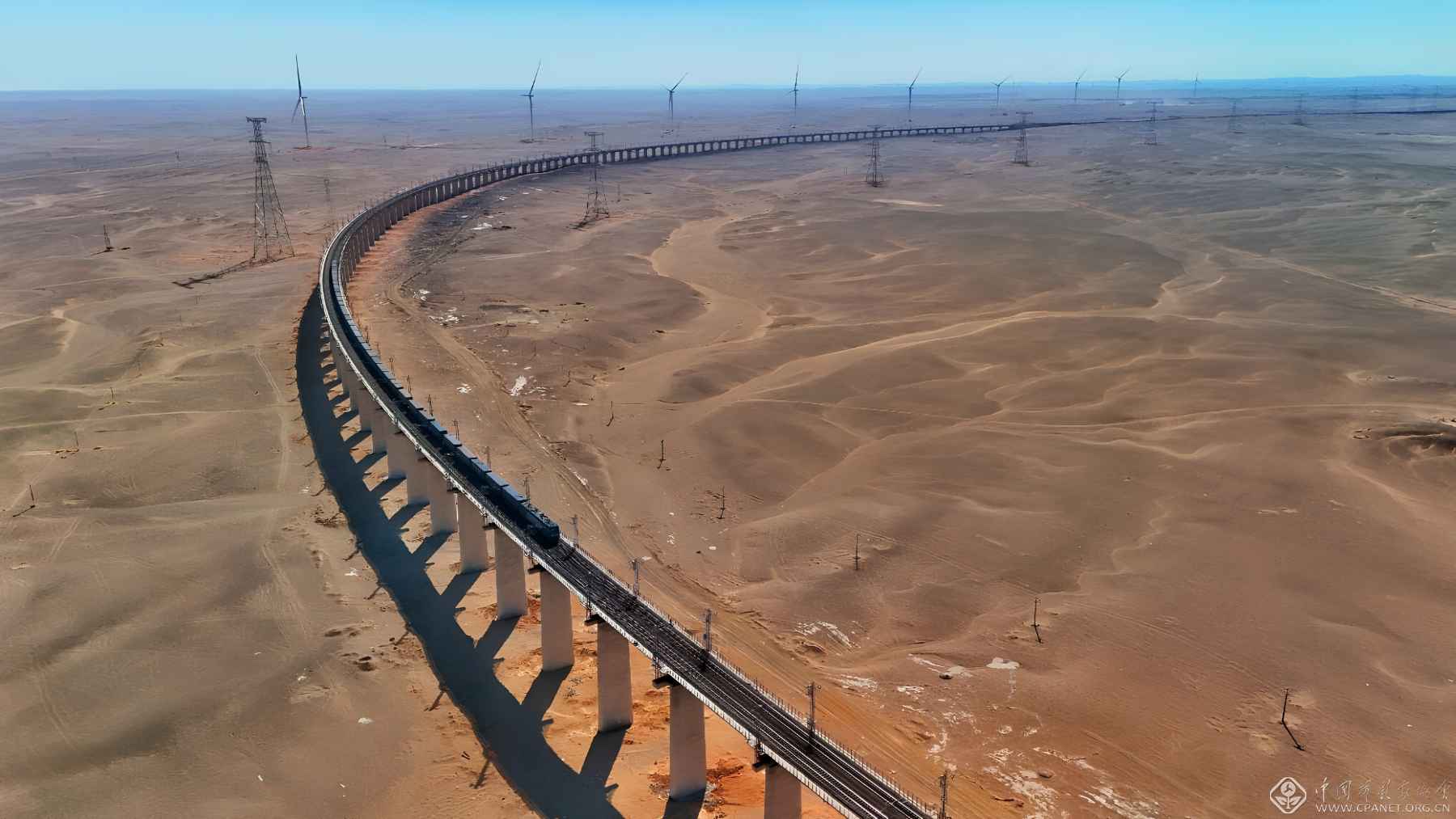
CHN Energy says the rail project also faces strong winds and frequent sandstorms, which make high-elevation lifting work especially difficult. Anyone who has ever tried to keep sand out of a car window on a windy day gets the idea. Now imagine aligning bridge beams weighing more than 100 tons in that weather.
What engineers have finished
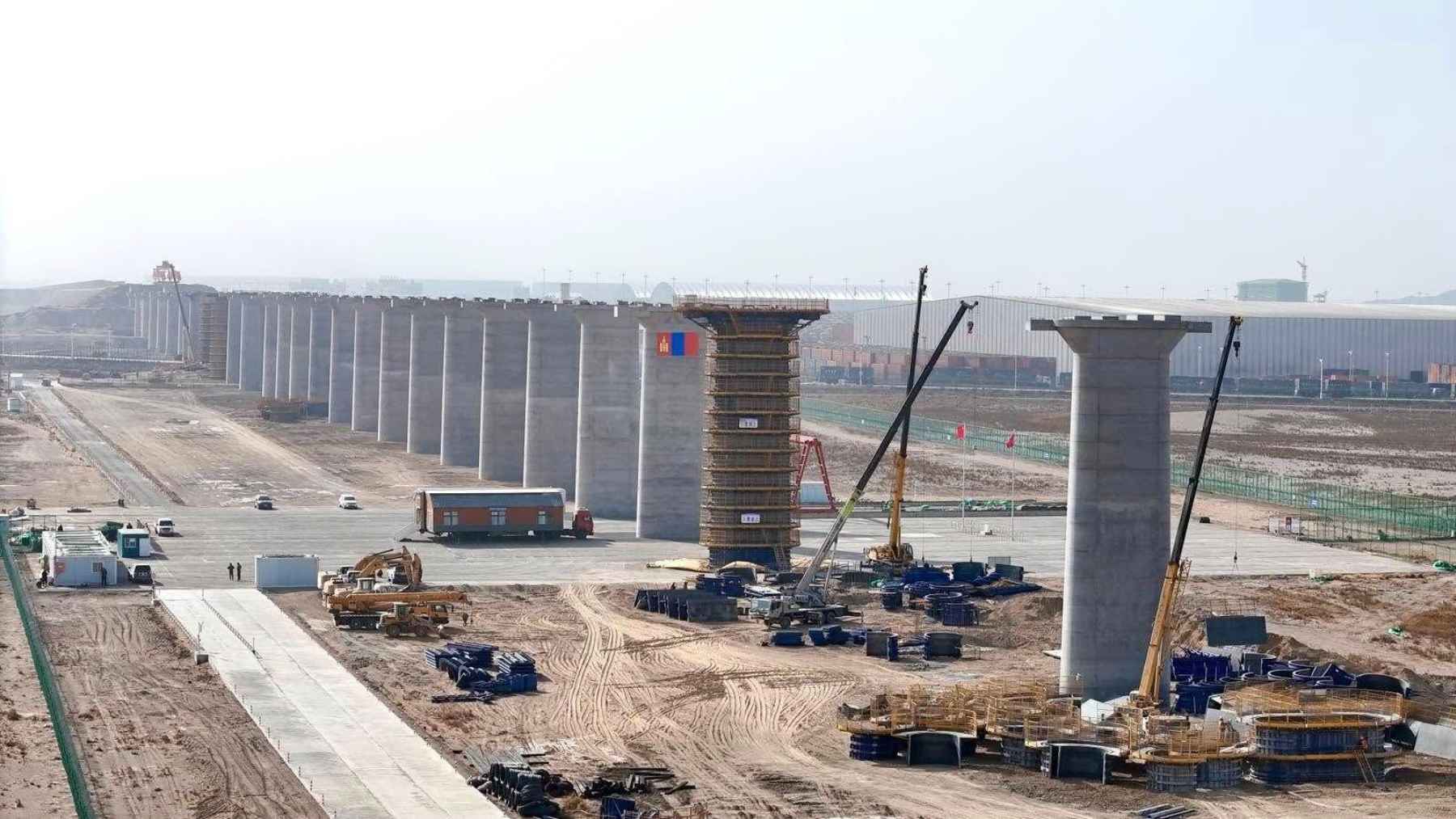
On June 13, crews completed installation of all 94 T-beams on the Chinese section of the Ganqimaodu to Gashuun Sukhait railway. The beams used on the bridge are about 79 feet and 105 feet long, and the heaviest one weighs roughly 165 U.S. tons.
That sounds like a construction detail, but it is the heart of the story. CHN Energy said the work required high-precision surveying, structural alignment, and safety monitoring to place the heavy beams on complex bridge piers. Small errors matter when the cargo is heavy and the weather is rough.
Why this border matters
This line is being built nearly 70 years after the Erenhot to Zamyn-Uud railway, the first rail link between China and Mongolia, opened in 1956. The new crossing runs from Ganqimaodu Port in Inner Mongolia through Mongolia’s Gashuun Sukhait Port and into South Gobi Province.
The point is not passenger comfort or scenic travel. It is freight. The Chinese embassy in Mongolia described the project as an important energy cooperation channel and said it is meant to improve mineral supply chains and cross-border logistics.
The minerals behind the bridge
Mongolia’s mineral wealth is the real engine behind the project. Oyu Tolgoi, in Mongolia’s Umnugovi province, is one of the world’s largest known copper and gold deposits, and Rio Tinto says it could become the fourth-largest copper mine in the world by 2030. At peak production, it is expected to produce about 551,000 U.S. tons of copper per year from 2028 to 2036.
Then there is coal. Tavantolgoi’s own company information estimates the deposit at about 6.5 billion tons, with coking coal ranked among the world’s top 10 by resource amount. Those are huge numbers, and they explain why a short bridge can carry outsized strategic weight.
The clean energy twist
Here is the tricky part. Some of the same minerals that feed global climate solutions come from landscapes already under pressure. Copper is essential for electrification, power grids, wind turbines, and electric vehicles. Rare-earth elements also matter because they are used in permanent magnets for EVs and wind turbines.
The International Energy Agency says demand for magnet rare-earth elements has doubled since 2015 and could grow by another third by 2030 under current policy settings. It also says China accounted for 91% of global refined output for magnet rare earths in 2024. That is why rail links near resource zones are not just local infrastructure anymore. They are part of the global energy map.
The gauge problem
Railways can look simple from a distance. Two steel lines, one train, and off it goes, but borders have a way of complicating everything.
China uses standard-gauge rail, while Mongolia and Russia use a broader gauge. A 2022 study on the China-Mongolia-Russia corridor noted that track-changing and docking at border cities can take time and money.
CHN Energy says the new project uses a combined single-track design with both standard-gauge and broad-gauge railways, which is meant to smooth that handoff.
The environmental question
A rail corridor can reduce some truck congestion, exhaust fumes, and border bottlenecks. That matters when freight routes are clogged with heavy vehicles and diesel smoke. Building through the Gobi, however, also raises a harder question. How much pressure can a fragile desert carry?
Researchers studying the wider China-Mongolia-Russia high-speed rail corridor warned that the region faces natural and ecological risks, including frozen soil hazards, desertification, biodiversity loss, and fragile ecosystems.
The trouble is, mineral demand is rising faster than many environmental safeguards can be tested in real life.
What happens next
The latest official update says the Chinese section has finished its core T-beam installation and will move on to the bridge deck and related works. The broader cross-border railway is planned to open in 2027, giving China and Mongolia a second rail connection after decades of relying on the older Erenhot to Zamyn-Uud route.
So, is China building a 1,118-mile bridge across the Gobi? Verified public sources do not show that. What they do show is a shorter, highly strategic bridge that plugs into a much larger minerals corridor. Sometimes the smaller story is the one that tells us more.
The official statement was published on CHN Energy’s website.