Amazon has finally put a hard number on how much water its global data centers used in 2025. The company says the total was about 2.5 billion gallons, or roughly 6.8 million gallons a day, and its water-efficiency score was about three-hundredths of a gallon for each kilowatt-hour sent to IT equipment. It also says water withdrawals at the sites it directly owns and operates fell 2 percent from 2024.
The news is not simple. The cloud can feel invisible when you send a message, stream a show, or ask an AI tool a question, but the machines behind it sit in real buildings that get hot. Cooling those buildings is where the good news and the bad news start to collide.
Why the number matters
Data centers are the physical homes of the internet. They hold the servers that support video calls, online banking, maps, medical records, and the apps people open before they even finish breakfast.
Those servers burn through electricity and turn part of it into heat. Anyone who has felt a laptop warm up on their knees understands the basic idea, just scaled up to warehouse-sized buildings full of machines.
A yearly figure of 2.5 billion gallons is not the largest water use in the economy. Still, water is local. A company cannot draw from a global bucket when a town is watching its wells, rivers, or reservoirs during a dry summer.
The good news is efficiency
Amazon’s strongest argument is not that 2.5 billion gallons is small. It is that its data centers now use far less water for each unit of computing work than many industry benchmarks suggest.
The key metric is called Water Usage Effectiveness. In plain English, it measures how much water is used to cool servers for each kilowatt-hour of electricity sent to the IT equipment, the same kind of electricity unit that shows up on an electric bill.
By that measure, the company is presenting itself as unusually efficient. Microsoft’s latest public table lists its global data center water-efficiency figure at just over seven-hundredths of a gallon for fiscal 2025, although company-to-company comparisons can get tricky because reporting boundaries differ.
How Amazon cools servers
The physics is stubborn. Servers produce heat, and if that heat builds up, performance and reliability suffer. That is why Amazon data center engineering leader Joern Tinnemeyer describes the job as removing the heat created by computing as efficiently as possible.
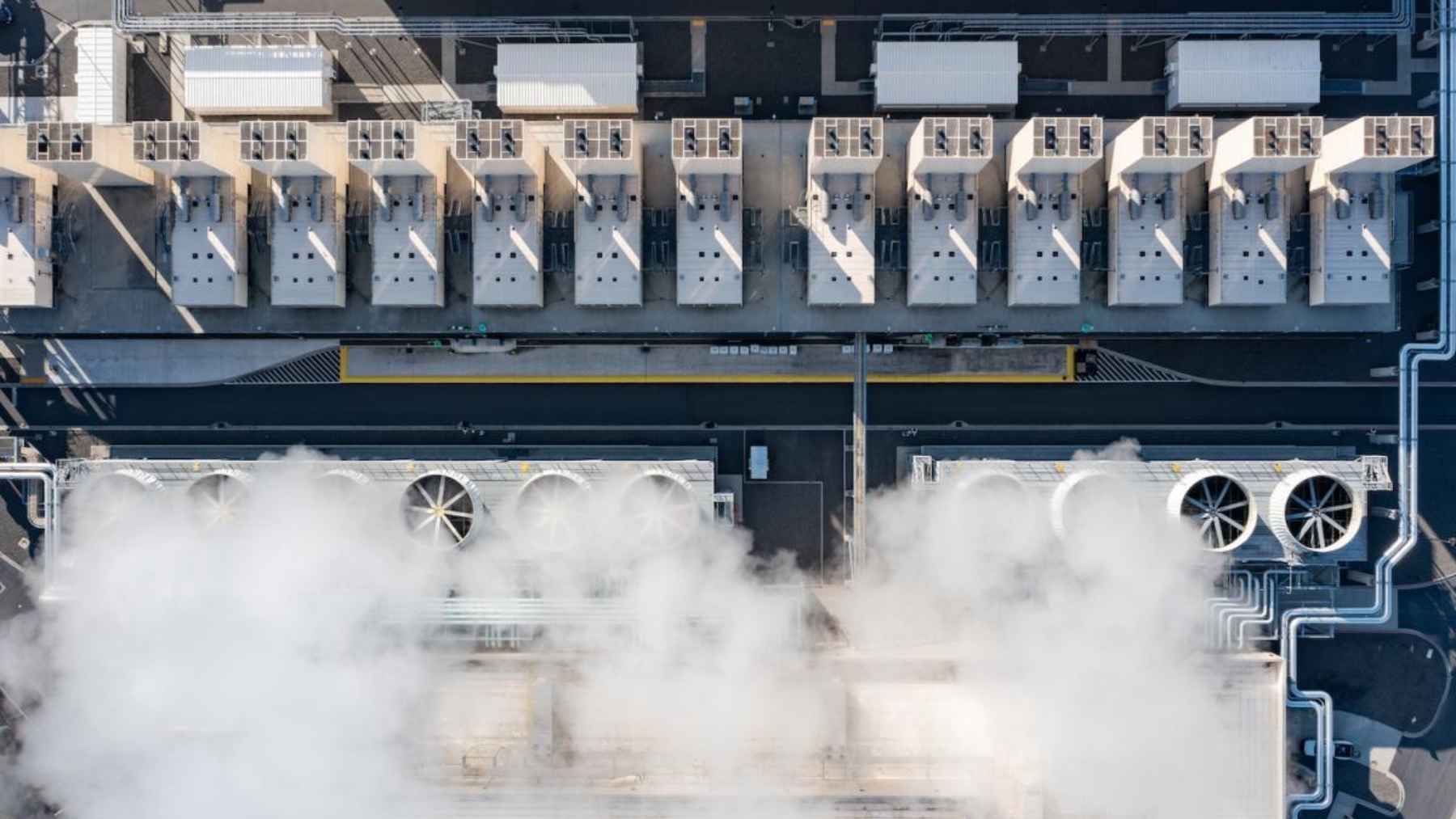
Most of the time, the company says it relies on outside air. Think of opening a window on a mild morning instead of running the air conditioner, only with industrial fans, sensors, and strict temperature controls.
When the weather turns hot, especially in that sticky summer heat we all know, the company uses evaporative cooling. Amazon water specialist Beau Schilz compares the process to sweating, because water pulls heat away as it evaporates, while the company says water is used for incoming air only when temperatures rise past about 85 degrees Fahrenheit.
Geography changes the story
Location gives some data centers an advantage. Cooler or milder regions can use outside air more often, while hotter sites may need more water just when local demand is already peaking.
That is why a single global average can hide the pressure felt near one facility. A low companywide number may still come with hard questions from a county board, a farmer, or a family worried about summer restrictions.
There is also a difference between water withdrawal and water consumption. A water footprint can include water used on-site, water tied to power plants that make the electricity, and water used in chip manufacturing, so one clean-looking number rarely tells the whole story.
The local problem remains
Critics argue that efficiency does not erase local stress. A 2025 investigation by SourceMaterial and The Guardian reported that Amazon, Microsoft, and Google operate or plan data centers in water-scarce regions, where extra demand can matter more than it would in wetter places.
That is the uncomfortable part of the story. A data center may be efficient on paper and still become a flashpoint if residents think it is competing with farms, homes, or future growth.
For nearby communities, this is not an abstract tech debate. It can look like another public meeting, another infrastructure promise, or another question about who gets priority when the weather turns dry.
Water positive is not magic
Amazon says it plans to be “water positive” by 2030. In practical terms, that means the company aims to return more water to communities and the environment than it uses in its data center operations.
The company says it was about three-quarters of the way to that goal in 2025. It also says its announced water projects are expected to return more than 5.8 billion gallons each year once fully running, and that recycled water is already used for cooling at 24 data centers.
Those projects can help. But restoring a watershed or funding reclaimed-water systems does not always refill the exact pipe, well, or river that feels pressure during the hottest week of the year.
Why transparency matters now
Amazon’s disclosure is a useful step because it gives the public a number to examine. For years, debates over cloud computing and AI infrastructure have often moved faster than local communities could get clear data.
The next step is comparability. Residents, regulators, and utilities need reporting that shows not only annual totals, but where the water comes from, how much is reused, and what happens during heat waves.
At the end of the day, the question is not whether data centers should exist. It is whether the digital systems we rely on can grow without leaving some communities carrying the hidden water bill.
The official disclosure has been published by About Amazon.