A small yellow robot is sliding across an emerald lagoon in Majuro, and its job is bigger than it looks. The unmanned craft, called Yellowfin, is helping coral scientist Anne Cohen hunt for reefs that stayed alive while record ocean heat turned many others pale.
The reason matters far beyond one Pacific atoll. The National Oceanic and Atmospheric Administration says the fourth global coral bleaching event likely ended in mid-2025, after heat stress touched 84 percent of the world’s reef area and mass bleaching was documented in at least 83 countries and territories.
When corals bleach, they expel tiny algae that feed them and give them color, leaving the animals stressed and vulnerable, though not always dead.
The hunt for super reefs
Cohen, a senior scientist at the Woods Hole Oceanographic Institution, has spent years looking for “super reefs,” coral communities with the rare ability to withstand heat and seed nearby reefs. The Nature Conservancy describes a super reef as a diverse coral community that is more resistant or resilient to damaging heat waves.
After launching the Super Reefs effort, Cohen helped build broader work with conservation partners and Stanford University. The idea is simple enough for anyone who has watched a garden recover after a bad summer, save the hardiest survivors first, then use them to help damaged places grow back.
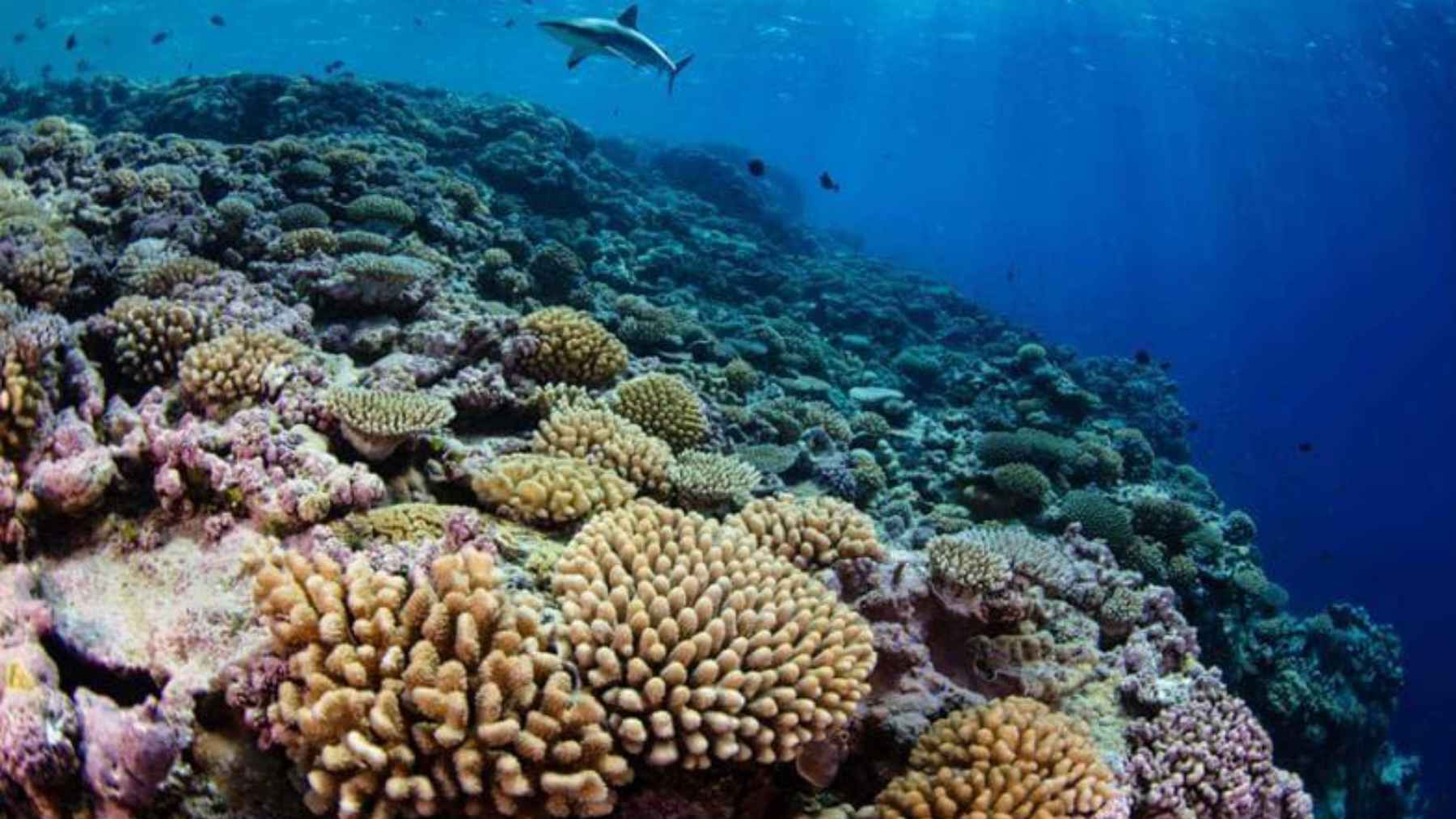
Cohen described one Majuro reef as “like a wonderland,” after seeing table corals and staghorn corals still glowing with color. That contrast is what keeps pulling scientists back into the water.
Majuro is built on coral
The Marshall Islands are not just near coral. In many places, they are coral, thin strips of land formed over millions of years as reefs grew around sinking volcanoes and left bright lagoons behind.
Majuro, the capital, is one of the country’s low-lying atolls. A 2021 World Bank study projected that rising seas could endanger 40 percent of existing buildings in Majuro and put 96 percent of the city at risk of frequent flooding, threatening everything from the walk to school or work, to a simple grocery store run. Reefs also help put food on the table.
Dua Rudolph, deputy director of the Marshall Islands Conservation Society, warned that many residents depend on reef fish, and that “when the reef disappears, the fish also leave.”
How Yellowfin sees more
Yellowfin makes the search faster. Built by coastal oceanographer and engineer Peter Traykovski, the surface robot can carry a camera under its hull and collect up to 20,000 images while surveying about 40 miles of reef in a day.
Each photo is tagged with GPS coordinates, so researchers can return to the same coral colony after the next heat wave. That matters because a coral that looked bright last year might bleach, recover, or die, and the difference can tell scientists where resilience is real.
Cohen once had to study those images by hand. Now her team is training artificial intelligence to sort the pictures and building 3D reef models, a step that may show why one table coral survives while a neighbor in the same hot water fails.
Why some corals hold on
Before Yellowfin takes over, old-fashioned testing still matters. Cohen worked with oceanographers Weifeng Zhang and Yan Jia to model Majuro’s currents, waves, and temperatures, then the team found a hot spot near Laura, where the water appeared almost four degrees Fahrenheit warmer than much of the capital.
Stephen Palumbi, a marine biologist involved in the work, helped test fragments in a local dockside lab made from coolers, aquarium heaters, chillers, and temperature controllers. It was not glamorous science, but it was revealing. Some corals quickly bleached under controlled heat, while others held on.
What makes the survivors different? It could be genes, their exact species, nearby currents, depth, or even how a coral is angled beside its neighbors. That is why Cohen is sending samples from table corals to James Cook University for genetic work, looking for traits that could guide future reef restoration.
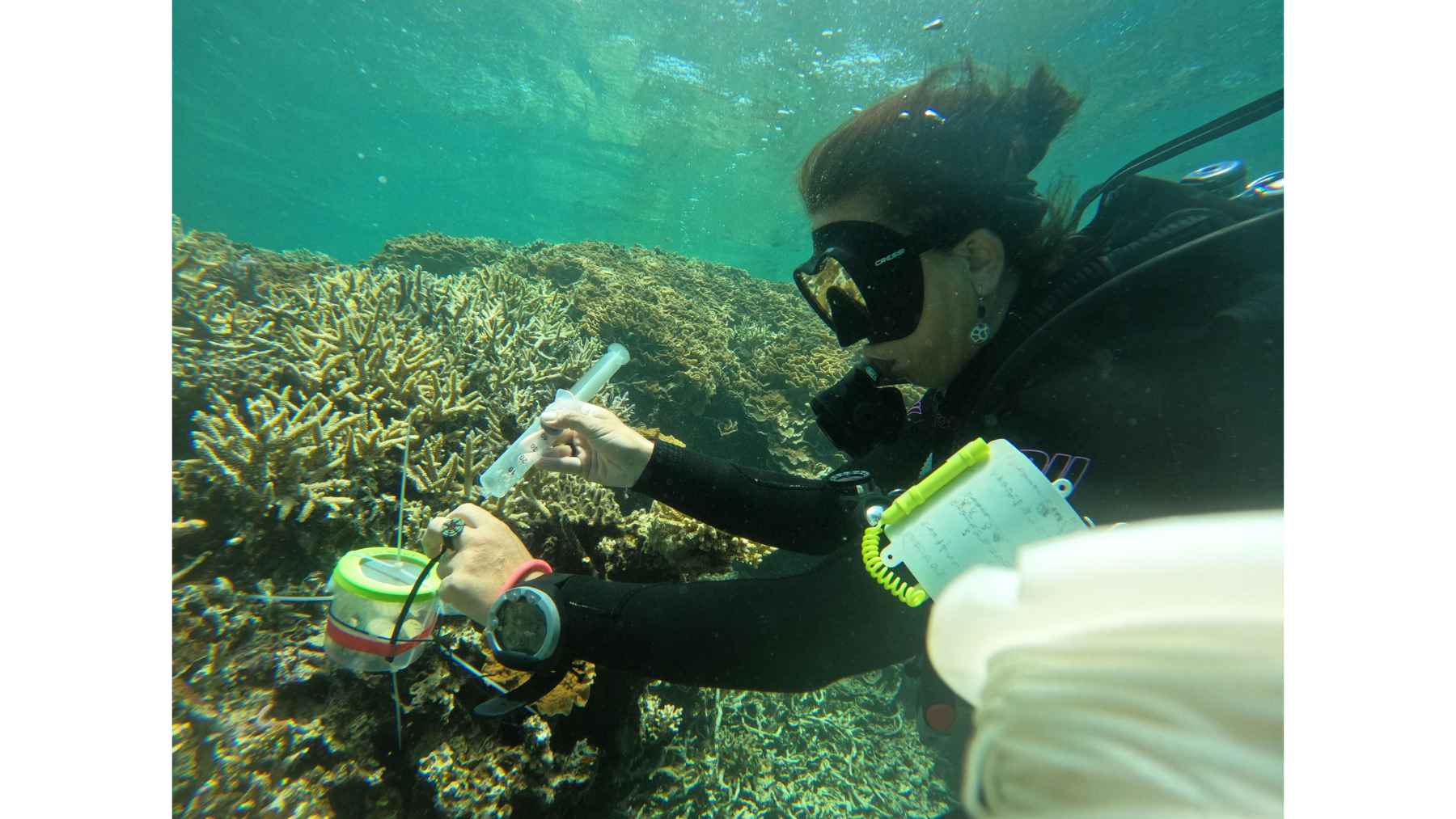
A researcher collects coral samples underwater in Majuro Lagoon, where the Super Reefs project is identifying heat-resistant corals that could help restore reefs damaged by marine heat waves.
Protection starts with Laura
Finding a tough reef is only half the job. Off Laura’s coast, a community of about 900 people is weighing whether to support a locally managed marine area around a promising reef, even though the site is also used for fishing. A marine protected area is a zone where activities such as fishing or anchoring can be limited to give wildlife room to recover.
This is where conservation gets real. People need dinner, fuel for boats, and a reason to believe that limits today could mean more fish tomorrow, not just another rule from far away.
The Marshall Islands Marine Resources Authority says its Reimaanlok process works with local governments and communities so people help manage their own natural resources using science, social data, and traditional knowledge.
That bottom-up approach matters because anchors, night fishing, trampling, and overuse can damage the same corals scientists hope will help rebuild other reefs.
A blue corridor for coral
Cohen’s bigger idea is a super reef blue corridor linking the Marshall Islands, Kiribati, and Tuvalu. Think of it as a current-powered nursery, where heat-tolerant corals release offspring that drift to other reefs and give them a better shot at recovery.
This is not a cure for global warming. It is a way to buy time, protect the best source reefs, and make restoration smarter while countries work on the larger causes of ocean heat.
The broader science is moving in the same direction. A recent global analysis reported about 64,000 square miles of potentially climate-resilient reefs across 71 countries and 100 territories, but less than a third of them are currently protected.
For now, Yellowfin’s bright hull is a reminder that the future of coral may depend on both high-tech maps and patient local talks.
The official Super Reefs work has been published by the Cohen Lab at Woods Hole Oceanographic Institution.