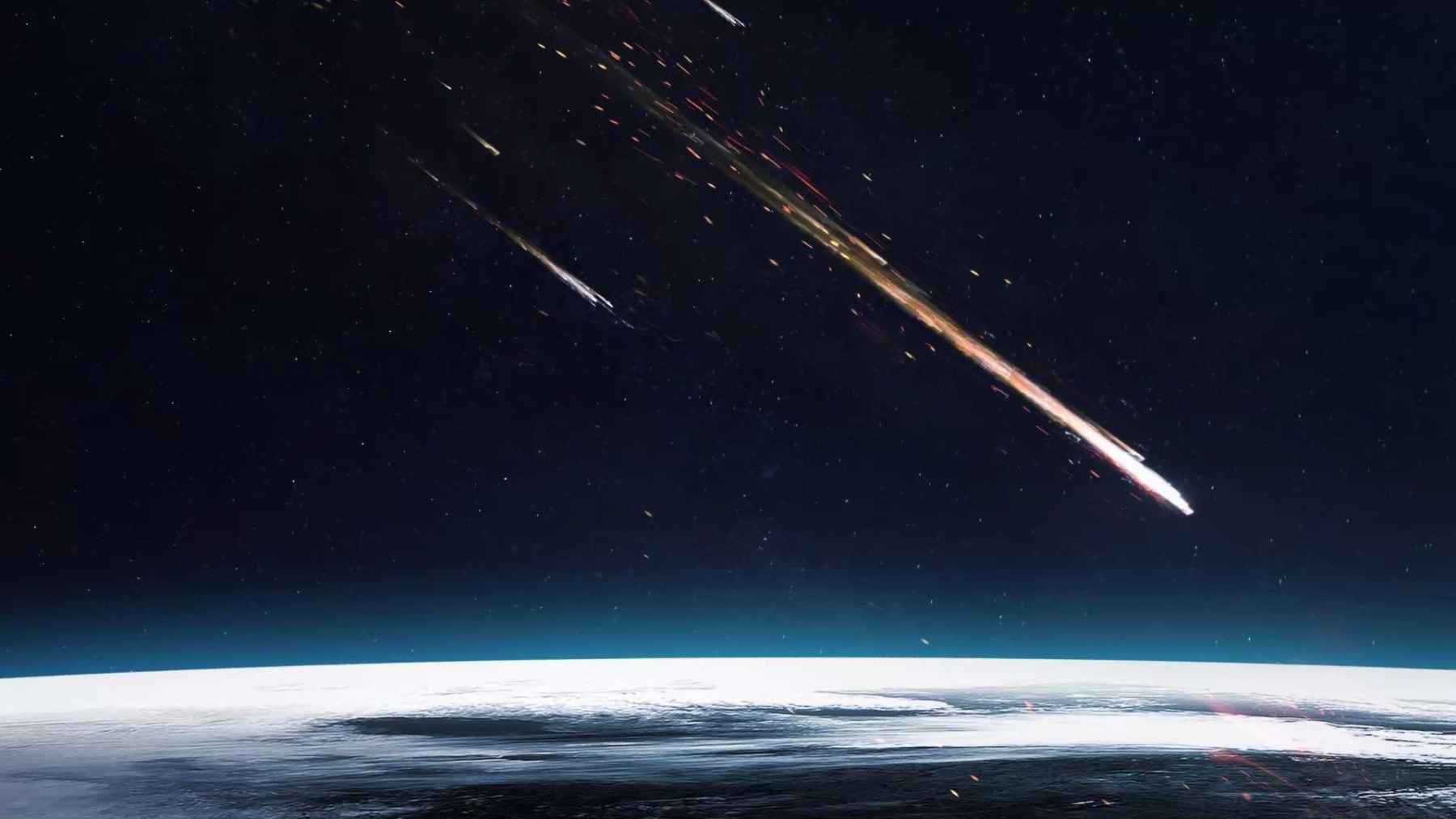
A sudden boom rattled parts of Massachusetts and New Hampshire on May 30, and for a moment, many residents had no idea what had just happened. It was not an earthquake, an explosion, or space junk.
NASA confirmed that a natural meteor had broken apart high in the atmosphere, releasing energy equal to about 300 tons of TNT.
The object was small by asteroid standards, but loud by human standards. Later NASA modeling suggests the Cape Cod Bay fall may have involved a strong iron meteoroid, with more than 1,200 lb. of surviving fragments likely resting under the bay.
That turns one startling afternoon noise into a reminder that Earth is always moving through a stream of ancient solar system debris.
How a meteor makes a sonic boom
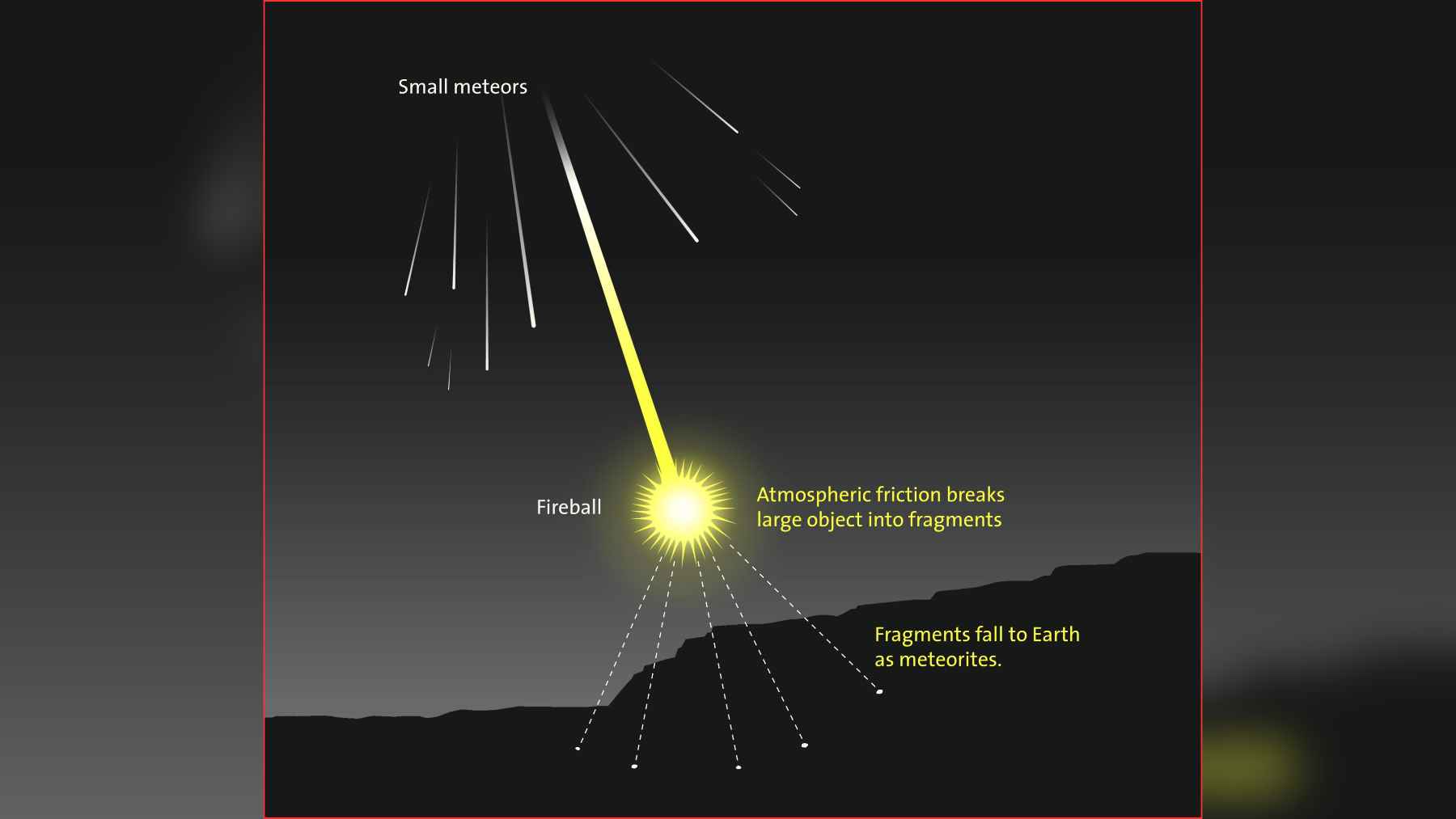
A meteor boom begins with speed. When a space rock enters the atmosphere far faster than sound can travel through air, it shoves the air aside so violently that pressure waves build up around it.
That pressure wave is what people hear as a sonic boom. In practical terms, it is similar to the crack of a supersonic jet, except the object is burning, breaking, and racing through the upper atmosphere all at once.
NASA reported the May 30 fireball was detected by eyewitnesses and NOAA’s GOES-19 satellite, then fragmented roughly 40 miles above northeastern Massachusetts and southeastern New Hampshire.
That height helped protect people on the ground, but the shock still traveled far enough to shake buildings and send residents checking phones, windows, and neighborhood chats.
Cape Cod Bay took the hit
NASA’s ARES team later modeled the fall and placed the meteorite landing area in Cape Cod Bay. The water there is about 100 ft. deep, which means any search would be difficult, though not impossible.
The numbers are striking. NASA’s Meteoroid Environment Office estimated the original meteoroid mass at about 12,300 lb., while the ARES page used a first-pass survival estimate of about 1,235 lb. of meteorites reaching the water.
That does not mean one giant rock is sitting on the seafloor. Radar signatures suggest pieces ranging from tiny pebble-sized fragments to rocks weighing several pounds, with ARES noting that the fall produced fewer small pieces than usual. In other words, this object may have been tougher than the average visitor.
Why the iron clue matters
NASA’s update points to a fascinating possibility. The event may have been an iron meteorite fall, based on radar behavior, density modeling, and separate analysis by colleagues cited by the ARES team.
Iron meteorites are not just space souvenirs. They are pieces of ancient parent bodies, often tied to the metallic cores of objects that formed early in the solar system.
That is why scientists care about recovering them. Each fragment can preserve chemical clues from a time long before Earth had oceans, forests, traffic jams, or anyone standing in a driveway wondering why the sky just boomed.
A busy season for fireballs
The New England event did not happen in isolation. Earlier this spring, Europe and parts of the United States also saw unusually dramatic fireballs, some bright enough to be noticed in daylight.
On March 8, the European Space Agency reported a very bright fireball seen over Belgium, France, Germany, Luxembourg, and the Netherlands. ESA said the object glowed for about six seconds, fractured into pieces, and may have dropped small meteorites in Germany.
Then, on March 17, NASA recorded a small asteroid about 6 ft. wide and 7 U.S. tons in mass over northern Ohio. It traveled at about 39,200 mph before breaking apart about 30 miles above Valley City, releasing energy equal to 250 tons of TNT.
The Texas roof scare
Only days after the Ohio fireball, another meteor crossed the sky north of Houston. NASA said the object was about 3 ft. wide, weighed about 1 U.S. ton, and broke apart after traveling at nearly 35,000 mph.
That breakup released energy equal to 26 tons of TNT and created sonic booms across the area. Reports also raised the possibility that a fragment pierced the roof of a home in Cypress Station, though no injuries were reported.
For most people, that is the unsettling part. A meteor is usually something we admire during a shower from a lawn chair or a dark country road. When it comes through a ceiling, the universe suddenly feels much closer.
Earth’s atmosphere is still our shield
For the most part, the atmosphere does an extraordinary job. Most incoming material is no larger than dust or sand and burns up as a harmless streak of light.
Larger objects are different, but size matters enormously. The 2013 Chelyabinsk meteor over Russia was far bigger than the Cape Cod Bay object, and NASA later described it as releasing energy equal to about 440,000 tons of TNT.
The air blast blew out windows over 200 square miles and injured more than 1,600 people, mostly because of broken glass.
That comparison helps put New England’s boom in context. It was dramatic, loud, and scientifically valuable, but it was not a Chelyabinsk-scale disaster.
What to do if you see one
If you ever see a bright fireball, do not chase it while driving or stare through a window after a flash. A shock wave can arrive later, and broken glass is a real risk in larger events.
The better move is simple. Note the time, direction, brightness, color, and whether you heard a sound, then report it to a meteor organization such as the American Meteor Society. NASA’s own event pages credit public reports and sensor data for helping reconstruct these falls.
At the end of the day, these booms are not just noise. They are brief messages from the leftovers of planet formation, and sometimes, those messages land close enough for scientists to map them.
The official fireball report was published on NASA’s Astromaterials Research and Exploration Science (ARES) website.