The climate fight has entered an awkward phase. Cutting pollution is still the main job, but scientists are now talking more openly about what happens if the world overshoots the Paris Agreement limit of 1.5°C, or 2.7°F.
The answer is not a magic vacuum in the sky. It is carbon dioxide removal (CDR), a broad set of methods meant to pull CO2 from the atmosphere and store it away, but researchers warn it must grow fast without becoming an excuse to keep burning fossil fuels.
A major scale-up
At a Milan conference this month, more than 260 researchers met to discuss the opportunities, risks, and trade-offs involved in scaling carbon dioxide removal. The event, hosted at Politecnico di Milano, brought together experts on forests, oceans, soils, policy, economics, and public opinion.
The latest State of Carbon Dioxide Removal report says the world currently removes about 2.4 billion U.S. tons of CO2 per year. To stay consistent with high-ambition pathways that bring warming back to 1.5°C by the end of the century, that figure would need to reach about 9.7 billion U.S. tons by 2050.
Not a license to pollute
Carbon removal is supposed to handle emissions that are especially hard to eliminate, such as those from aviation, farming, and some heavy industries. Think of it as cleaning smoke out of a room, not permission to keep filling the room with smoke.
Scientists have been clear on this point. CDR has to come alongside steep emissions cuts, because the less CO2 released today, the less future generations will have to drag back out of the sky later.
The State of CDR team defines carbon removal as capturing CO2 from the atmosphere and storing it for decades to millennia. That sounds straightforward, but in practical terms it raises hard questions about land, energy, cost, monitoring, and who gets to decide where projects are built.
Forests do most of the work
For now, carbon removal is mostly trees and land. The report finds that 99.9% of existing CDR comes from conventional, land-based methods, including tree planting and ecosystem restoration.
That matters. Forests cool neighborhoods, shelter wildlife, hold soil in place, and make sticky summer heat a little easier to live with. But they are not steel vaults.
Wildfires, droughts, pests, and future warming can send stored carbon back into the air. Researchers at the conference also noted big uncertainty in forest-based accounting, with current models and national inventories carrying uncertainty rates of about 20% and 30%, respectively.
New tools are still tiny
Because forests have limits, scientists are looking at other approaches. These include biochar, direct air capture, bioenergy with carbon capture and storage, enhanced rock weathering, ocean alkalinity methods, and direct ocean capture.
The trouble is scale. Novel CDR currently removes only about 2.2 million U.S. tons of CO2 per year, according to the report. It has been growing at about 40% annually, but from such a small base that it is still nowhere near the climate need.
Some of these technologies may prove valuable. Others may face high costs, energy demands, unclear rules, or environmental risks. That is why experts keep coming back to the same idea, the world needs a portfolio, not one shiny fix.
Oceans remember the heat
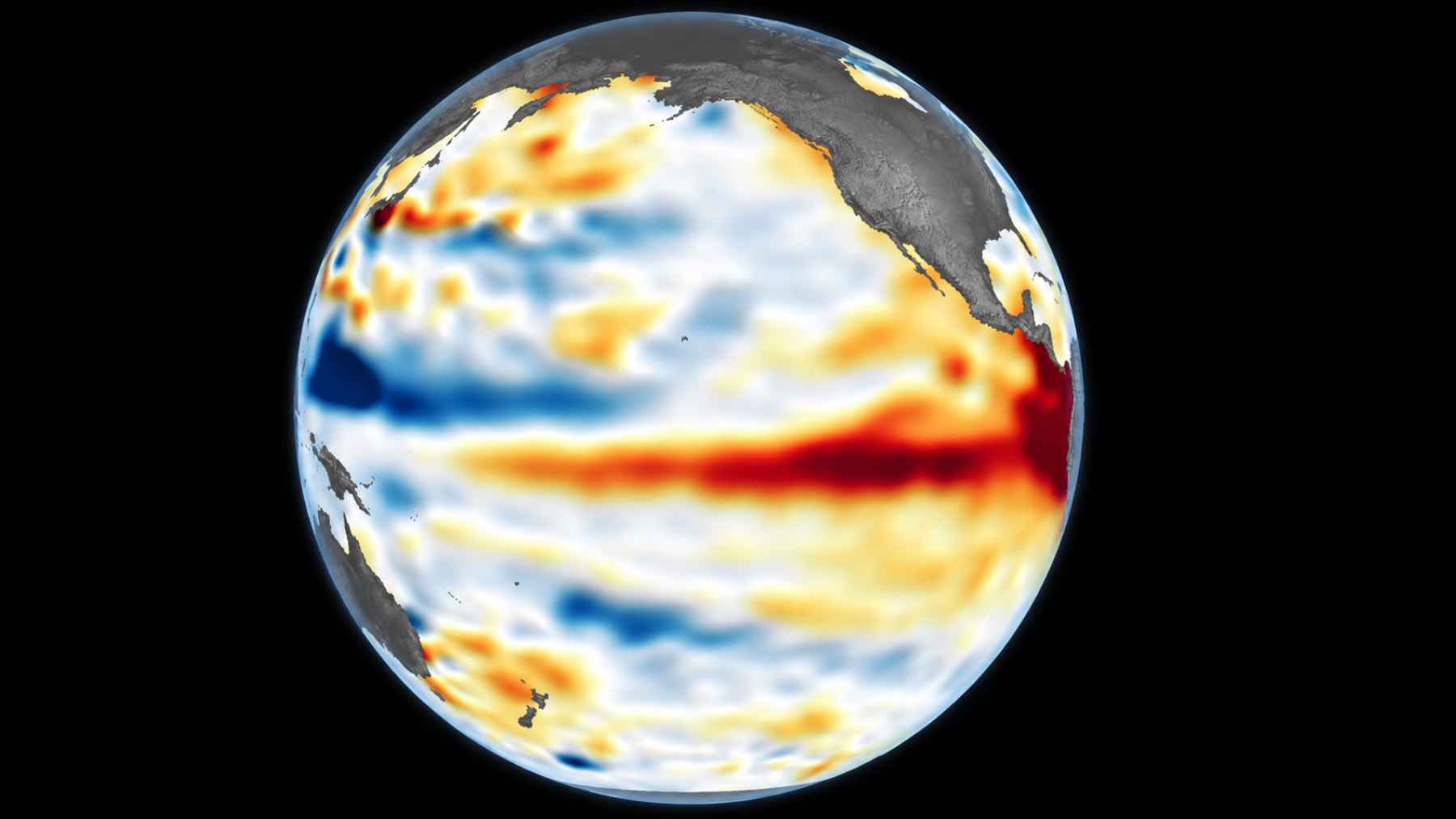
Even if humans eventually remove more CO2 than they emit, the planet may not respond as quickly as people hope. Oceans, in particular, move on a slower clock.
Research discussed at the conference suggests that if global surface temperatures start falling under net-negative emissions, the upper ocean may not cool for at least 30 to 40 years because of ocean inertia. Deeper waters would respond even more slowly.
One researcher described the ocean’s twilight zone, between about 656 and 3,281 feet below the surface, as continuing to warm for some time before leveling off. In other words, turning the climate thermostat down does not instantly cool the whole house.
Policy may decide the pace
Technology alone will not build a carbon removal industry. Governments may have to create demand through binding targets, public purchasing, tax incentives, markets, or obligations.
The European Union is currently ahead in one narrow sense. It has adopted a binding target of about 342 million U.S. tons of CO2 equivalent in annual net land-sector removals by 2030.
Dr. Steve Smith of the University of Oxford put it bluntly, saying CDR is a “public good” and is unlikely to reach gigaton scale through voluntary action alone. That comparison matters, because sewage systems, trash collection, and clean water rules did not appear simply because consumers wished for them.
Public trust comes next
There is another piece that can be easy to overlook. People have to trust this stuff.
A survey of more than 10,000 people in six countries found that support for CDR depends heavily on fairness, public scrutiny, expert review, and benefit-sharing. Put simply, communities will want to know who benefits, who carries the risk, and what happens if carbon storage fails.
That may be the real lesson from Milan. Carbon removal is no longer a far-off climate footnote, but it is not a miracle either. It is a difficult cleanup job, and the clock is moving faster than politics.
The report was published on The State of Carbon Dioxide Removal.