A metal detectorist in northern Poland has uncovered a bronze sword believed to be about 2,700 years old. But this wasn’t a typical buried artifact. The weapon was standing upright in the sandy ground. Why? That’s the mystery.
The sword was found in the Gdańsk Forest District near Poland’s Baltic coast. Officials date it to the Late Bronze Age, sometime between 900 and 700 B.C.
A sword sticking straight out of the ground
Hobbyist Marcin Wiśniewski made the discovery during a legal metal-detecting search. Once he realized what he had found, he stopped and contacted heritage officials rather than pulling the sword out himself. Good move.
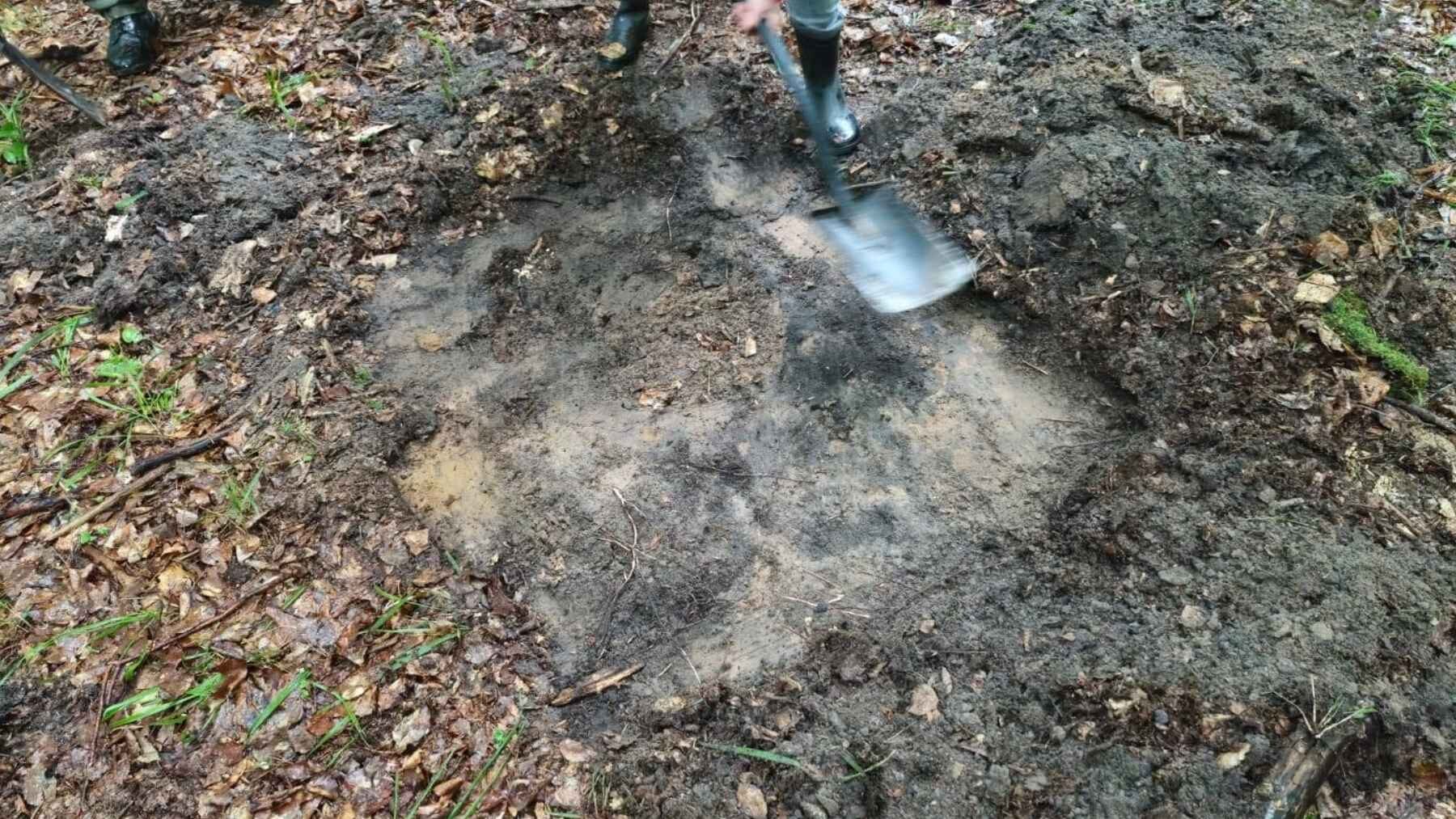
Specialists from the Pomeranian Provincial Heritage Conservator later recovered the artifact using archaeological methods while working alongside Wiśniewski. That helped preserve something archaeologists care about almost as much as the object itself. Its context.
Why the strange position matters
Finding a Bronze Age sword is already unusual. Finding one standing vertically in the ground? Even stranger.
Its position could potentially tell researchers something about how the weapon ended up there. Was it deliberately placed? Was it part of some kind of deposit? For now, nobody knows.
And that distinction matters. Archaeologists do not want to turn an odd position into a dramatic story without evidence.
A weapon from the Late Bronze Age
The sword dates to between 900 and 700 B.C., making it roughly 2,700 years old. Images released after the discovery show the bronze blade emerging from pale, sandy soil and still remarkably recognizable after centuries underground.
Bronze is an alloy usually made from copper and tin. In practical terms, mixing the two created a stronger material that ancient societies could shape into tools, ornaments and weapons.
A sword like this was not exactly an everyday object. Producing one required metal, skill and plenty of work.
The finder did the right thing
There is another important part of this story. Wiśniewski didn’t simply yank the sword from the ground and take it home. He reported it.
That gave archaeologists the chance to document the weapon exactly where it was found. Think of it like finding a sentence still sitting on the correct page of a book instead of finding one torn-out word on the floor. Location can change what an artifact tells us.
Polish heritage rules also regulate searches for historical objects using electronic equipment, making proper reporting especially important.
This isn’t the first sword found there
Oddly enough, the Gdańsk Forest District has produced Bronze Age swords before.
Officials say two bronze swords with antenna-shaped hilts were discovered in a peat bog at Rynarzewo during the 1920s. They were later transferred to the Provincial Museum in Gdańsk. Then history intervened.
Both artifacts disappeared during World War II and their current whereabouts remain unknown. That makes the newly discovered sword particularly valuable for researchers studying the region’s Bronze Age past.
What happens to the sword now?
The weapon still needs closer examination. Specialists should be able to say more about its construction, decoration and preservation once it reaches a museum and undergoes detailed study. But where will it go?
That had not yet been decided when officials discussed the discovery. Marcin Tymiński, press spokesperson for the Provincial Office for the Protection of Monuments in Gdańsk, said the Provincial Heritage Conservator would determine which museum receives the sword. So there are still plenty of unanswered questions.
Poland keeps turning up ancient weapons
Ancient weapons are not discovered every day in Poland, but this sword is not an isolated case.
Other notable finds have surfaced in recent years, including medieval weapons recovered from a lake in west-central Poland and a roughly 700-year-old sword pulled from the Vistula River by an angler.
Each find offers another small piece of the past. Sometimes literally.
The biggest question is still unanswered
For now, researchers know roughly when the sword was made and where it was found. What they still don’t know is perhaps the most interesting part. Why was it upright?
Further conservation and archaeological study may provide clues. Or the strange position may remain one of those details that never gets a completely satisfying explanation.
Either way, a 2,700-year-old sword sticking vertically out of the soil is hard to ignore.
The discovery was officially announced by the Pomeranian Provincial Heritage Conservator.