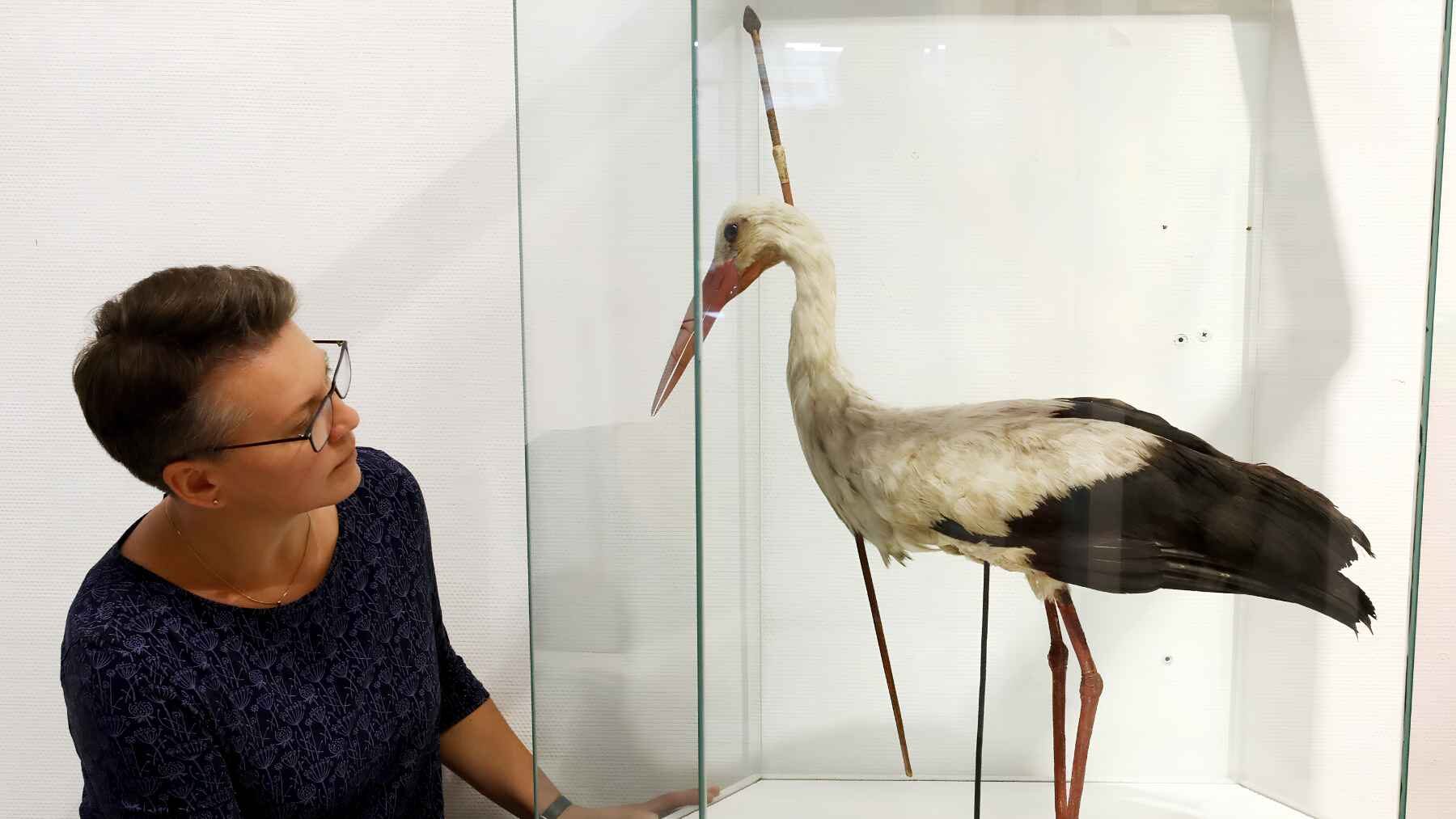
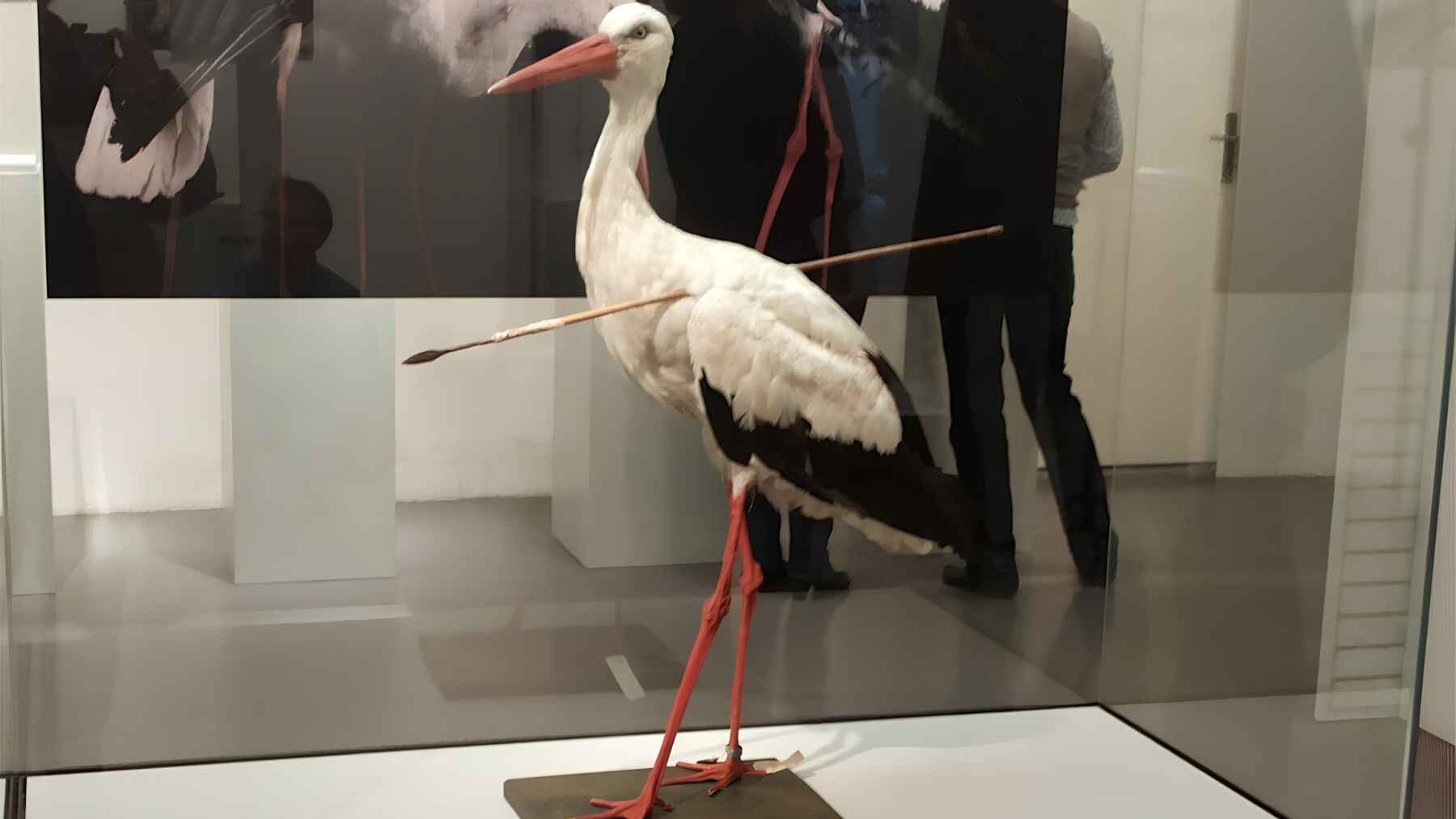
Before the early 19th century, there was little to no documented evidence of bird migration habits until something strange happened in the spring of 1822. People living at the palatial Baroque manor Bothmer, south of Klütz, Germany spotted a badly injured, large white bird. Lucky to be alive, this white stork was carrying a wooden spear of almost a yard long through its neck, a terrible wound that pointed to something even more astounding.
Upon further inspection, the spear was made of some tropical wood with a wide iron arrowhead tied onto the shaft with sinew, a design typically found in central Africa. Most likely, the stork had been hit by hunters while on its winter migration south, later returning to Europe. This earned the creature the nickname “Pfeilstorch” (arrow stork), and presented the best evidence of seasonal, intercontinental migration.
A mystery that lasted centuries
The seasonal journeys birds make in search of food, safe nesting and living conditions is not just because they do not like cold temperatures. Before bird migration was better understood, flocks of birds would disappear into the distance and leave no trace. Modern technologies have helped ornithologists track and predict these trips more accurately.
Some thinkers like Aristotle had already conjectured that birds were long-distance travelers (but he had also assumed some mistaken beliefs about other animals). Other wild explanations ran amok in Europe, such as swallows hibernating in icy lake water and that birds flew away to the moon.
The injured bird appears
In May of 1822, residents at Gut Bothmer noticed the poor stork on a rooftop, alive with the spear having miraculously missed any vital organs. Local proprietor Christian Ludwig (Count von Bothmer) shot the bird so that it could be studied up close.
With the spear still in the neck of the bird, it was transferred to a taxidermist in Ludwigslust typically patronized by dukes who collected specimens from hunting and other collectors. They preserved the bird to learn more about its journey and the origin of the spear.
The spear points south
Heinrich Gustav Flörke, botanist, examined the weapon and determined that its origin was central or equatorial Africa. A long way from the stork’s usual European breeding home, it was essentially carrying a travel document.
Although not quite as detailed as a stamped passport, it revealed one clear conclusion: some European storks spent much of the year in Africa before flying back north. Suspicions of migration now had its first hard evidence.
Why the proof mattered
Bird enthusiasts often describe the Pfeilstorch as the first real proof of this type of long migration, but author Scott Weidensaul knows it is not quite that simple. “There wasn’t necessarily an ‘aha’ moment,” he says, rather many discoveries that produced a big enough body of evidence.
Museum specimens play a big role in preserving biological and geographic data. This particular bit of evidence was more than just a pretty bird; it carried clues that helped change our understanding forever.
More arrow birds followed
The unlucky bird from 1822 was not the last transporter of forensic evidence into Europe. Over 20 cases were later reported where birds brought back battle scars and other deadly artifacts lodged in their bodies, further girding the knowledge of migration habits.
Ernst Schüz, German ornithologist, cataloged birds carrying arrow fragments in his 1969 paper. Since these attacks were not part of any controlled experiment, they could only provide vital clues, not document a full migration route. The technology to follow birds wherever they went was still some years away.
From metal bands to satellites
Over time, chance discoveries gave way to more systematic tracking methods. Attaching numbered leg bands helped researchers reconstruct routes and measure survival and return rates when a bird was found elsewhere. The U.S. Bird Banding Laboratory maintains one of the world’s biggest and oldest databases of banding and encounter records.
Today’s technology takes it even further–radar, satellite surveillance, radio tags, and sophisticated databases track birds and their surroundings like never before. It can examine how breeding and wintering habitats change over time and under what conditions, showing the relationship between climate anomalies and migration habits.
A museum specimen with a living legacy
The Pfeilstorch is still on display today at the Zoological Collection in Rostock, still sporting the projectile through its neck. A striking and gruesome sight, it marks the start of the untangling of a centuries-old question, helping us understand the connection between one dangerous flight and what would be the future of ornithology for the next two centuries.
Now, researchers do not have to wait for the next wounded bird to bring evidence–their journeys are well documented between Europe and Africa. The first clues always seem to come to light without sophisticated instruments, though, and this case was no exception.
The official historical account and collection record have been published by the University of Rostock.