Massachusetts
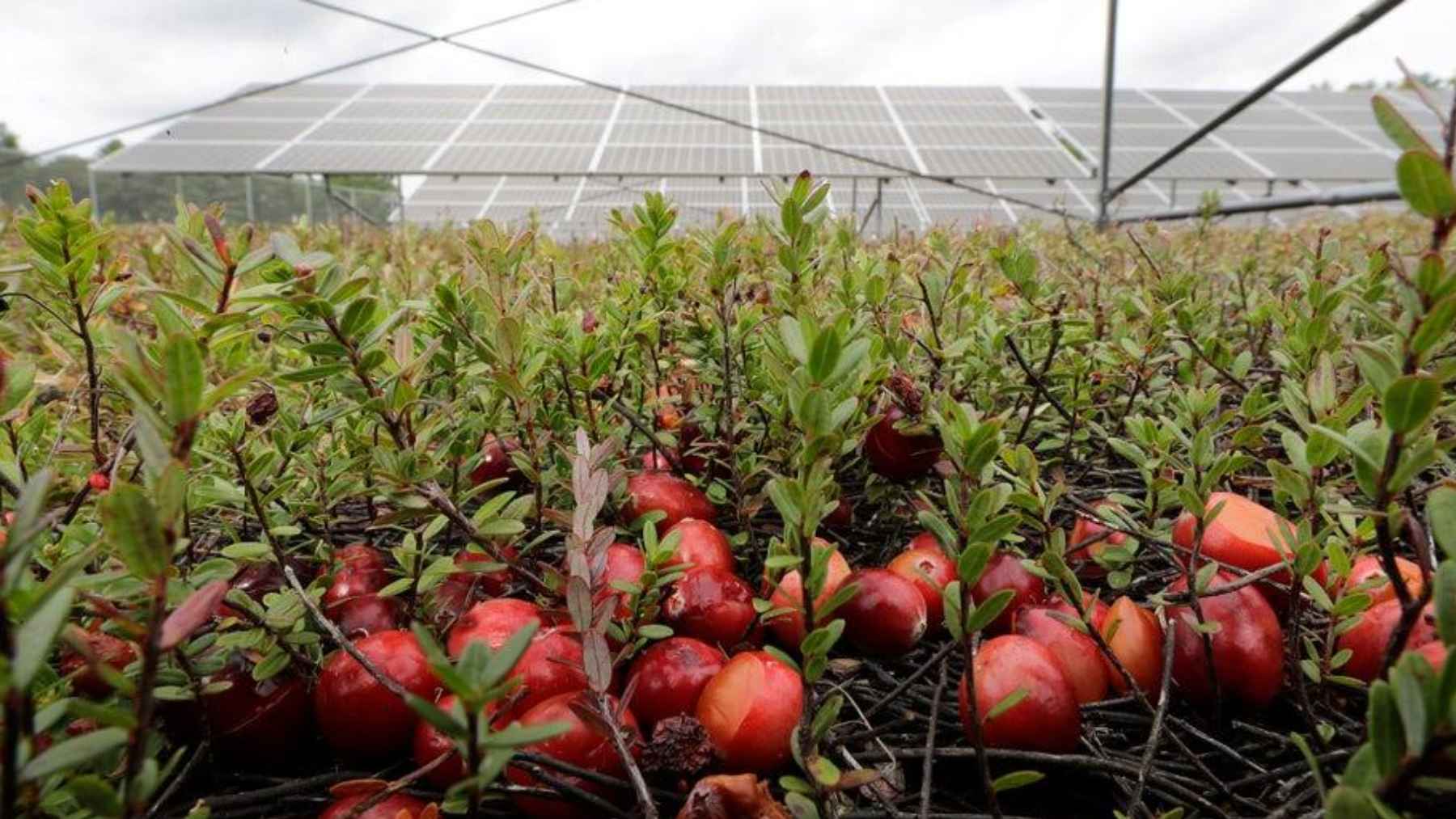
Can a cranberry bog be protected by a solar roof, while improving the harvest which grows under it? A field evaluation performed in Massachusetts may insinuate that moderate shade can reduce some environmental strain symptoms, but there is no direct evidence that the product becomes neither bigger in size, sweeter in taste, nor juicier.
Studies undertaken by scientists from the University of Massachusetts Amherst on “Howes” cranberry vines, placed them under stationary solar panels installed about 10 feet above a Plymouth commercial bog. During the first year of investigations, the results evidenced moderate results. While a small shade improved the plants ability to retain water and cell membranes had increased protection, a larger area of shade revealed both limited photosynthesis and reduced compounds directly related to the quality of the fruit.
What was really evaluated by the Massachusetts test
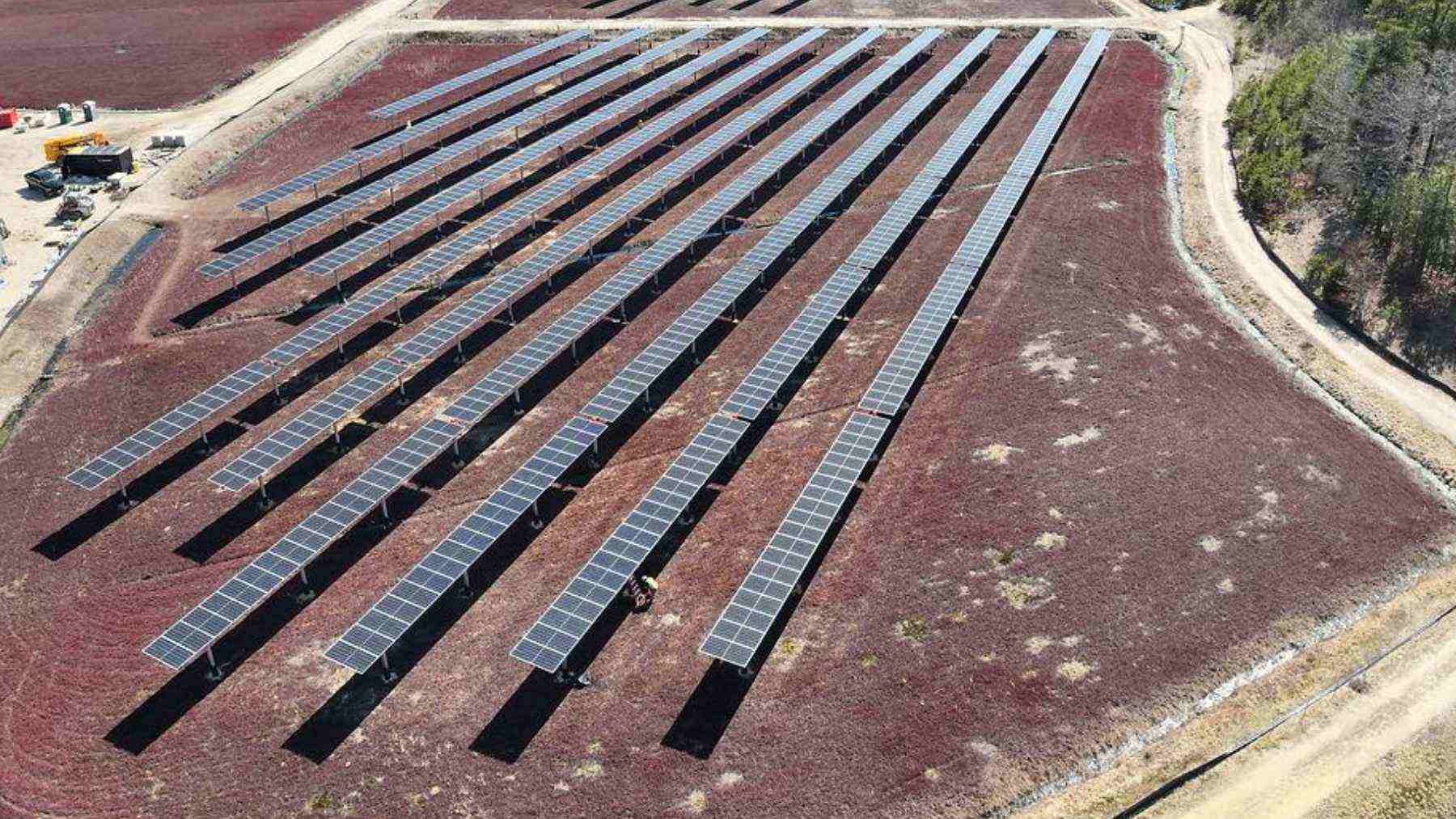
Lasting between November 2023 and March 2024, the installation included arrays of panels, with varied spacing between rows. Scientists compared a fully uncovered control area, with different plots which received around 30%, 35%, and 37% shade. They then tested the plants during different stages of their development: green, blush, and full-red.
Various different analyses were performed by the researchers: leaf gas exchange, water status, and activity on chlorophyll, flavonoids, phenolics, carbohydrates, and antioxidants. Important as these analyses are, the publication did not include results on either harvest weight, berry size, or consumer taste-test. This is important, given that physiological studies by themselves do not prove that consumers will find the product either bigger or tastier.
While reducing stress, moderate shade reduced photosynthesis
An improved leaf water content and reduced leakage of electrolytes was evidenced at both 30% and 35% shade. In practice, the plants seemed to be able to be more effective at retaining water, while there was less evidence of damage done by the environment to the cell membranes, like how an area of shade can diminish the effects of the summer afternoon Sun.
But, this same coverage also resulted in a reduction of both carbon reserves and photosynthetic activity, while also reducing the production of some compounds related to stress. These losses were even more prominent at a 37% shade coverage, implying its consequences can be too much. Shade is not a solution by itself, and the percentage is influential.
The evidence does not prove the berry to be more sweet
This story’s more striking version suggests that providing shade resulted in cranberries which were bigger, juicier and sweeter. But this conclusion is not directly supported by this year-long analysis, because it was aimed at the plant’s physiology and biochemistry, rather than crop yield. According to UMass Cranberry Station, in an update provided in June 2026, the results in both quality of the fruit and its productivity are still being analysed.
The results of research on cranberries suggest that more caution is needed. A 2026 scientific review found that previous studies reported berries grown with the use of solar panels, had lower levels of total soluble solids and greater titratable acidity. These results do not predict the final taste of each shaded cranberry, but they do challenge the generalized claim that shade from solar panels always produces sweeter fruit.
A more recent field study revealed another limitation. Cranberries exposed to greater shade tend to contain lower phenolic compounds and flavonoids. They also showed less antioxidant activity, in particular for the fruit with highest shade levels. This does not mean that agrivoltaics is not efficient. However, it is still too early to affirm that this system produces “better berries.”
Two Massachusetts solar stories blended together
The information seems to combine data from two different projects. The Czajkowski Farm project in Hadley has 832 panels placed 10 feet above a field of broccoli, which forms a 450-kilowatt solar array. According to the U.S. Department of Energy, this system was completed in July 2023.
Another project is Ring Road, located in Kingston. This one is a 4.4-megawatt solar installation, installed over active cranberry bogs, together with a battery system that can store 13.5 megawatt hours of energy. However, the UMass field study was carried out at a commercial “Howes” bog in Plymouth, so the solar energy project and the scientific trial took place in different sites and therefore, should not be presented as one.
That might seem just a minor geographic detail, but it does change the conclusion. Ring Road demonstrates that cranberry farming can share the same location, with solar panels and battery. On the other hand, the Plymouth experiment focuses on how different amounts of shade affect cranberry plants, but neither of them provides evidence that the berries are sweeter.
Useful conclusions for farmers
Agrivoltaics could be very useful for farms which deal with rising temperatures during summer, limited water, unstable crop income, and growing competition for land. Solar panels installed high above the ground allow crops to grow underneath while generating electricity above. However, each system must have its own tailored-design, depending on the needs of the crop instead of using the same one on every farm.
In the case of cranberry farms, the height of the panels only represents one factor. The results also depend on the space kept between rows, panel direction, the amount of shade and the effects of construction. Also, cranberry variety, and weather changes from year to year impact their results. There are still many years of research needed before reaching firm conclusions. Researchers have warned that installation work might have affected the fruits during the first season, so there are many aspects that need to be confirmed.
So, the real progress here has almost nothing to do with producing sweeter cranberries after just one season. It is really about finding the right amount of shade to help protect the plants from high temperatures and water loss without affecting photosynthesis process, changing the characteristics of the fruit, or reducing profits of the harvest.
The study was published in Frontiers in Horticulture.