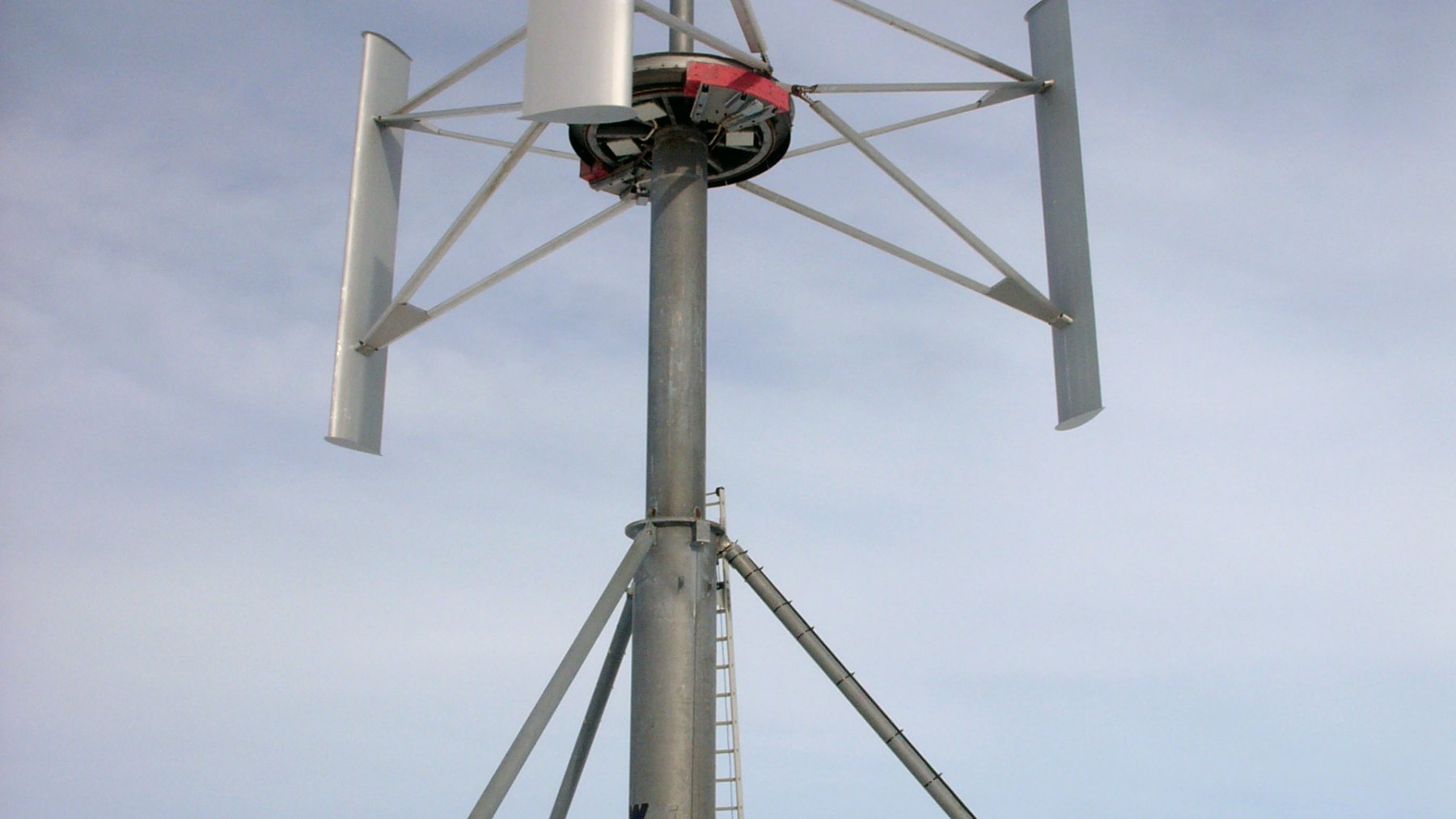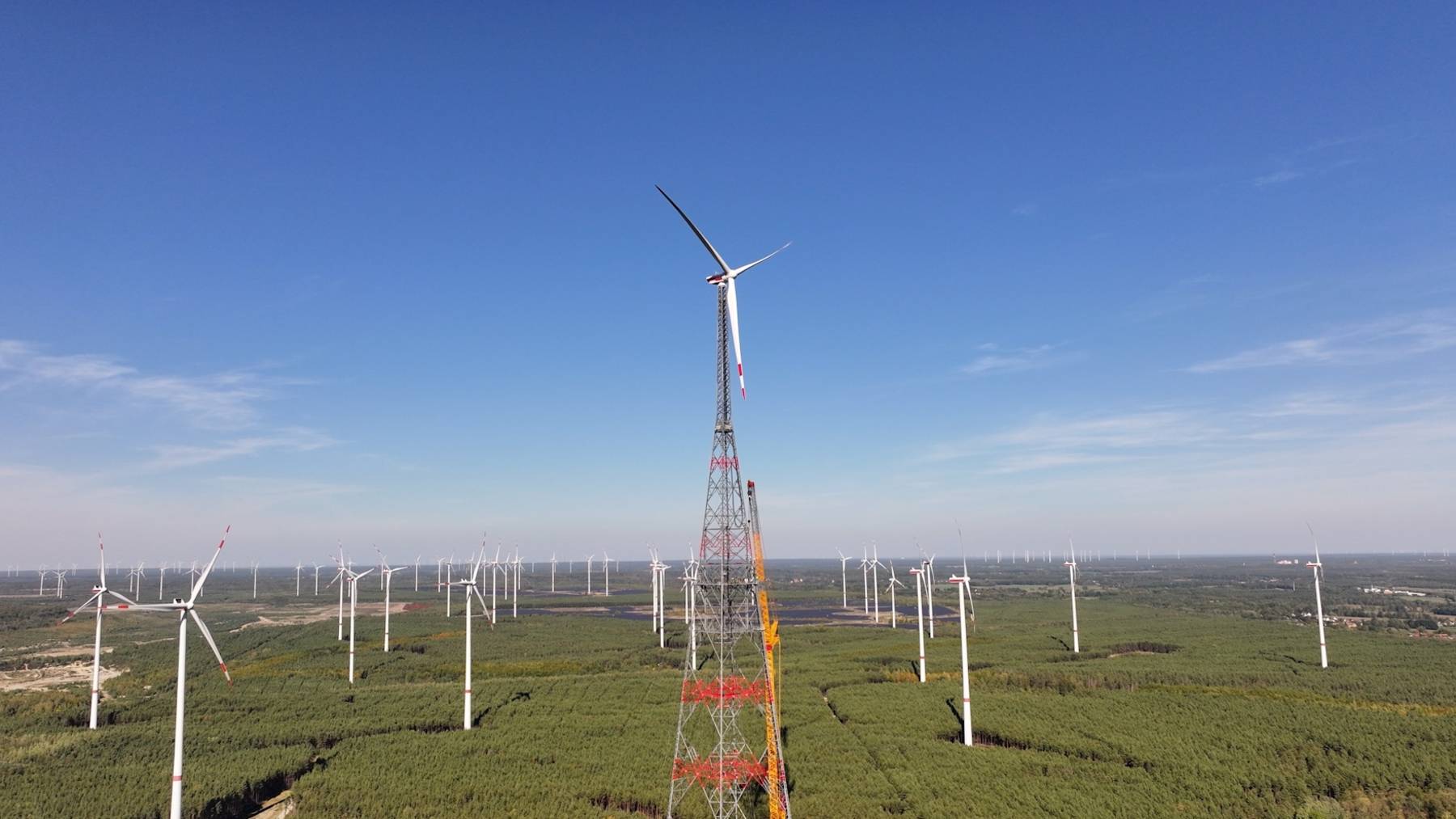
A wind turbine in Schipkau, a small town in the former lignite mining region of Lusatia in eastern Germany, reached its final height on September 28, 2026. With its blades included, the tallest wind turbine in the world now stands 1,198 feet (365 meters) high, making it the second-tallest structure in Germany after the Berlin TV Tower.
Its hub, the point where the three blades meet, sits 984 feet (300 meters) above the ground. The German Wind Energy Association, the country’s main wind industry group, also considers it the largest wind turbine in the world, according to the German news agency dpa.
The Dresden engineering company GICON built the pilot for SPRIND, Germany’s Federal Agency for Breakthrough Innovation. GICON projects that the tower can deliver roughly double the energy of a conventional turbine with the same rotor diameter, a figure that still has to be shown in operation, and official commissioning is planned for November.
A record set on old mining land
“365 meters: this is an overwhelming moment for our entire team,” said Jochen Großmann, founder and chairman of the GICON Board of Management, in SPRIND’s announcement. “What was long an ambitious idea and then an equally ambitious construction project now stands as a globally unique facility in Schipkau.”
Construction began in September 2024 and stopped over the winter after faulty steel parts from a subcontractor were found, with work resuming on March 2, 2026, according to the engineering trade site ingenieur.de. Strong gusts then pushed back the final lift by about a week. “Safety comes before speed,” Großmann told dpa in German.
Why engineers chase wind at 984 feet
Close to the ground, air has to flow around hills, forests and buildings, which slows it and makes it gusty. In Germany, turbine hubs usually sit between about 330 feet (100 meters) on the coast and around 490 feet (150 meters) inland, according to the Science Media Center Germany, a nonprofit that gathers expert comment for journalists.
“For physical reasons, a high-altitude wind turbine with a hub height of 300 meters will indeed deliver a higher yield than a conventional wind turbine,” Christoph Winkler, who leads the Global Energy Pathways team at Jülich Systems Analysis, Forschungszentrum Jülich, told the center. “The reason is that at low heights the wind is slowed by the ground, whereas at 300 meters this influence plays almost no role anymore.”
Winkler and the other researchers quoted here gave their comments in German, and their words have been translated.
What a year on the measuring mast showed
Before the turbine went up, SPRIND and GICON erected a 984-foot measuring mast on the nearby Klettwitz plateau. According to a technical report by Alp Yalcinkaya of GICON and colleagues from GICON, SPRIND and the SPRIND subsidiary BEVENTUM, the mast recorded wind from April 13, 2023, to April 12, 2024.
Two lidar units, ground-based laser instruments that measure wind speed from a distance, had been running at the site since September 2022.
Over that year, the mast measured an average wind speed of 19.0 mph (8.51 meters per second) at 984 feet, compared with 14.9 mph (6.66 meters per second) at 492 feet (150 meters).
The authors then modeled a hypothetical 9.5-megawatt Vestas V164 turbine at both heights. Its gross annual output rose from 22.4 to 36.6 gigawatt-hours, an increase of 63.4 percent, and its capacity factor, the share of its maximum possible output that a turbine actually delivers over a year, rose from 26.8 percent to 43.8 percent.
The time the model turbine would stand still fell from 12.28 percent of the year to 9.74 percent. All of the authors work for organizations involved in the project, and the turbine actually built in Schipkau is a smaller 3.8-megawatt machine.
Outside researchers find the numbers plausible
“The hope for a higher yield is justified, the published figures are plausible,” Stefan Emeis, a retired researcher who led the urban and eco-climatology working group at the Karlsruhe Institute of Technology’s Institute of Meteorology and Climate Research, told the Science Media Center Germany.
He pointed out that the mean wind speed at 300 meters was “almost 28 percent higher” than at 150 meters. He also said the 3.8-megawatt pilot will produce less energy than the 9.5-megawatt model turbine while running at a higher capacity factor, adding that he did not have exact figures. “Gicon only states about 40 percent additional yield compared with a normal wind tower,” Emeis said.
“Depending on the month, the measurement data from Schipkau confirm a mean wind speed about 15 to 39 percent higher at 300 meters compared with modern conventional wind turbines at 150 meters,” Winkler said. “The advantage is especially clear in winter, which is interesting for our energy system, because less solar power is produced in this season.”
In his view, “an additional electrical yield of around 60 percent, as stated for the high-altitude turbine, appears fundamentally plausible on the basis of the measurement data.”
A tower that works as its own crane
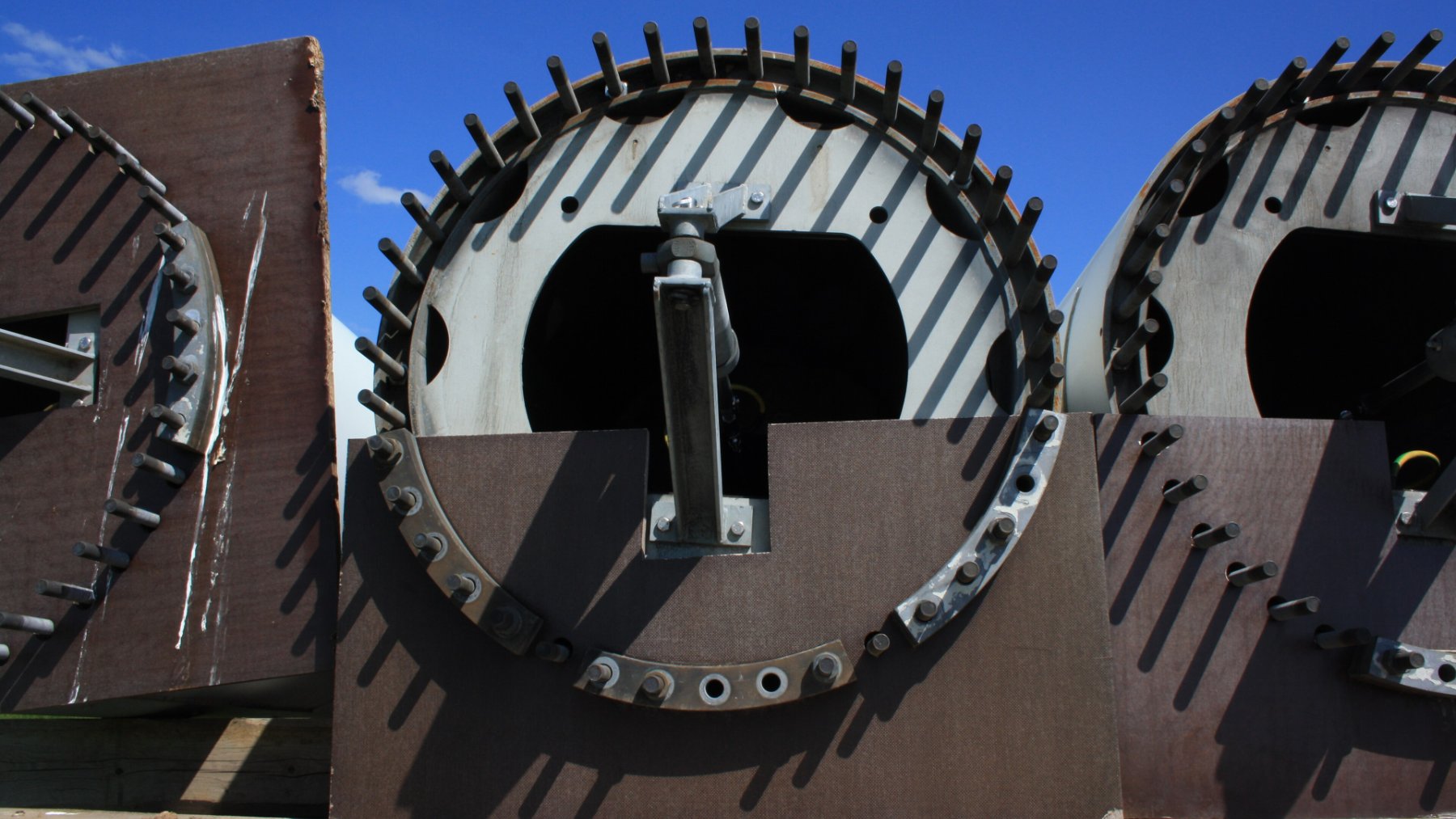
SPRIND says the reach of available cranes has been one of the key limits on building taller turbines, and moving ever-larger parts is already a headache for the industry, with one U.S. company designing a cargo plane to carry 344-foot wind turbine blades. GICON’s answer was a steel lattice tower with a slimmer inner tower nested inside a fixed outer one. In SPRIND’s words, “The high-altitude wind turbine serves as its own crane.”
Crews mounted the turbine on the inner tower while its hub was at about 492 feet. A strand jack system, a set of hydraulic jacks that pull bundles of steel cable step by step, then raised the inner tower and turbine to full height, where they were locked in place.
The lift moved at about 30 feet (9 meters) per hour and took around 24 hours, ingenieur.de reported. According to the Science Media Center, the tower can be lowered again for maintenance or repairs.
Po Wen Cheng, who heads the Stuttgart Wind Energy chair at the University of Stuttgart, described the project as “a major challenge, above all logistically.” He told the center that “maintenance and operation are also demanding, for example how to carry out the replacement of large components. But I consider these technical challenges solvable.”
Two wind farms stacked on one site
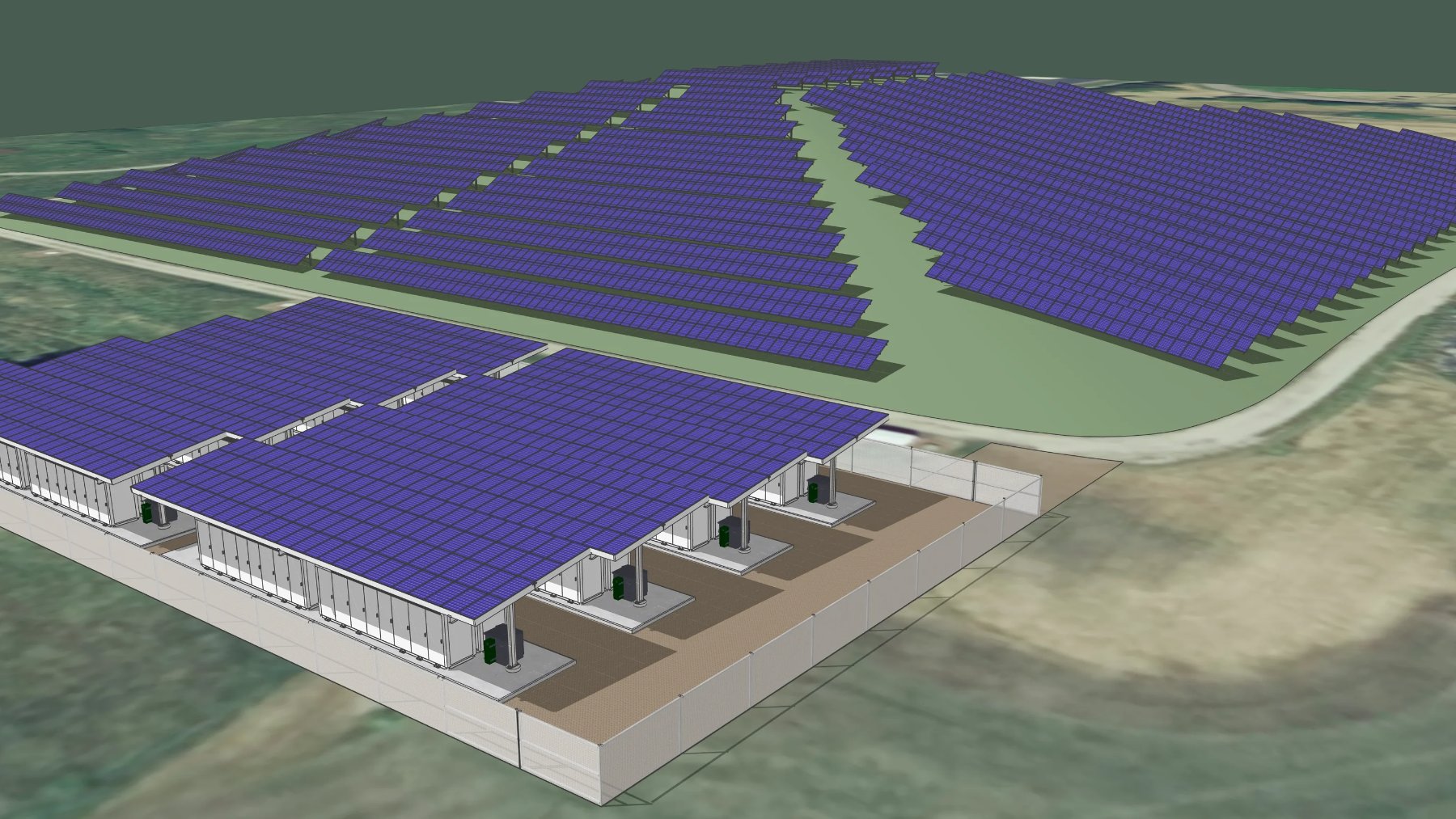
The larger plan is to add such towers to existing wind farms as a “second tier,” with their rotors turning above the blade tips of conventional machines. Based on current potential estimates, up to 4,000 high-altitude towers could be retrofitted into existing German wind farms, GICON and SPRIND say. That figure describes room for growth, and series production has not started.
Winkler sees value in the layout. “That allows high-altitude turbines to be placed between every two conventional wind turbines, doubling the installed capacity per area by, so to speak, building two wind farms on top of each other,” he said.
“We have the opportunity to distribute wind energy much more evenly across the country,” Martin Chaumet, an innovation manager at SPRIND, told dpa in German. He said that could save part of the grid expansion, “and thereby electricity becomes cheaper for everyone.”
Emeis added a condition tied to wakes, the slower and more turbulent air that trails behind a spinning rotor. “This additional benefit envisaged by Gicon only arises for smaller wind farms,” he said. In very large parks with “significantly more than ten by ten” conventional turbines and as many tall ones, he said, the yields of the lower turbines “would suffer greatly from the wakes of the upper wind turbines.”
Costs and a single year of data remain open
“Nevertheless, a direct economic viability cannot be derived from the material available to me, because construction costs rise much more steeply with height above ground than the expected yields,” Emeis said. He cited a GICON presentation estimating that a series tower would cost about 10.8 million euros, compared with 1 million euros for a standard turbine.
Winkler said the specific construction costs cited by the federal government are “still almost four times as high as for a ‘normal’ wind turbine in 2025,” and that costs per kilowatt would have to fall by about 60 percent to reach generation costs comparable to today’s turbines. He added that it is too early for a firm verdict, because the costs of this first prototype, with a comparatively low 3.8 megawatts, are not representative.
One year of measurements is also a short record. “To obtain climatologically robust data, there should really be measurement series covering 30 years,” Emeis said. Real output can drift from forecasts for ordinary reasons too, as when insects build up on turbine blades and cut power production.
Cheng said that at night, when the air is stably layered, the upper layers decouple from the ground and “so-called low-level jets, bands of strong wind, can form there.” Those jets can raise output but also bring strong wind shear and shifts in wind direction across the rotor. “The actual additional yield and the loads must therefore be confirmed through measurements during operation over a longer period,” he said, “and this is exactly where the great scientific value of the pilot plant lies.”
GICON announced the record in a press release dated September 28, 2026.
Chaumet said in SPRIND’s announcement that the technology “is intended to be deployed on a large scale in the coming years and make a substantial contribution to Germany’s energy security.” The first operating data from Schipkau, expected after commissioning in November, will show how much of that promise holds up.
Image: GICON / SPRIND